 July 2026 in “Frontiers in Immunology”
 This review summarizes recent findings on the role of lactylation, a novel post-translational modification, in skin diseases, suggesting its potential as a therapeutic target by linking metabolism, epigenetic regulation, and inflammatory processes.
 June 2026 in “Saudi Medical Horizons Journal”
 This review discusses the role of JAK inhibitors in treating atopic dermatitis, alopecia areata, and vitiligo, highlighting their effectiveness and safety considerations but stressing the need for further research on long-term safety and patient selection.
 May 2026 in “Scientific Reports”
 In this study, researchers overexpressed Lrig3 in mouse skin and observed hair loss linked to changes in skin protein profiles and signaling pathways, suggesting a potential role for Lrig3 in maintaining skin homeostasis.
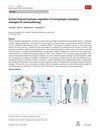
This review highlights that surface mechanical regulation can program macrophage behavior through specific mechanical cues on material surfaces, potentially advancing immunotherapies and regenerative medicine by enabling precise control over macrophage functions.
This article examines how digital technologies, drawing on Marshall McLuhan's concept of media as an "extension of man," transform design thinking by creating new possibilities without replacing it, emphasizing the need for a hybrid, reflective practice in design.

In this article, the author explores how digital technologies can expand the cognitive and creative capabilities of designers, noting that while technology transforms design thinking, it does not replace it but rather opens up new possibilities and requires a hybrid, reflective practice.
This study found that direct co-culture of human bone marrow-derived mesenchymal stromal cells with regulatory T cells enhanced osteogenic gene expression, alkaline phosphatase activity, and matrix mineralization, suggesting Treg's potential in promoting bone regeneration by modulating BMSC mechanobiology through the ROCK-myosin signaling pathway.
 January 2026 in “Frontiers in Pharmacology”
 This study demonstrated that SHFKO significantly accelerated healing in acute radiation-induced skin injuries, with mechanisms involving apoptosis inhibition, suppression of inflammation, and restoration of ROS balance, suggesting its potential as a novel multi-target therapy for radiodermatitis.
 September 2025 in “Frontiers in Cell and Developmental Biology”
 In this review, retinoids are highlighted as promising agents for promoting scarless skin regeneration by coordinating cellular and molecular processes that suppress fibrosis, enhance re-epithelialization, promote angiogenesis, and enable hair follicle formation, potentially advancing functional skin repair.
 September 2025 in “BULLETIN OF STOMATOLOGY AND MAXILLOFACIAL SURGERY”
 In this review, researchers explored the complex mechanisms behind chemotherapy-induced side effects like nausea, fatigue, and hair loss, and discussed potential strategies using natural agents to manage these toxicities, improving understanding for targeted adjunct therapies.
 September 2025 in “Nano Biomedicine and Engineering”
 This review summarizes recent advances in nanomedicine-based therapies for psoriasis, highlighting their potential to provide targeted and sustained therapeutic effects by modulating key cellular components and signaling pathways involved in the disease, offering novel perspectives for future treatment development.
 December 2024 in “African Journal of Biomedical Research”
 This review discusses various risk factors and potential therapeutic interventions for PCOS but reports no new clinical results.
 December 2024 in “Era s journal of medical research”
 This source reports that PCOS, a complex endocrinal condition, is characterized by hyperandrogenism, which leads to symptoms like hirsutism, acne, and alopecia; genetic factors and hypothalamic-pituitary-ovarian axis disruption play significant roles in its development, but more research is needed to understand these mechanisms fully.
 October 2024 in “Frontiers in Oncology”
 This review examines the potential of K18 as a diagnostic and prognostic marker in epithelial-derived tumors, highlighting its specific expression in tumor tissues and interaction with proteins involved in tumor progression, without reporting new clinical findings.

This study suggests that targeting the increased expression of SIX1 in systemic sclerosis may be a viable strategy for addressing dermal fibrosis.

This study suggests that the EULAR/ACR classification criteria for SLE may help predict organ damage, particularly in renal, cardiovascular, dermatological, and gonadal domains.
This study found that inhibiting AP-1 transcription factors in mice causes squamous tumors to transform into sebaceous tumors and regulates tumor cell lineage.

This study found that inhibiting AP-1 activity in mice can induce lineage transdifferentiation between squamous and sebaceous tumors, suggesting AP-1's role in maintaining tumor cell identity.
 January 2022 in “Kafkas Universitesi Veteriner Fakultesi Dergisi”
 In this study, differences in protein expression related to twin lambing were identified in Tibetan sheep, providing insights into the reproductive performance and fertility improvement strategy for sheep in the Qinghai-Tibet Plateau.
 March 2021 in “bioRxiv (Cold Spring Harbor Laboratory)”
 This study found that the absence of Hif-p4h-2 in specific mouse skin cells disrupted hair follicle development, leading to hair loss due to irregular keratin formation and pathway signaling.
 November 2020 in “Elsevier eBooks”
 This source outlines various antiandrogen and androgen inhibitor drugs used to treat cutaneous disorders of hyperandrogenism, detailing their mechanisms, uses, dosages, and side effects, with emphasis on spironolactone, finasteride, dutasteride, and oral contraceptives.
 January 2018 in “Elsevier eBooks”
 This article discusses the hypothalamus-pituitary-testis axis in androgen production and spermatogenesis but presents no new research findings.
 March 2017 in “bioRxiv (Cold Spring Harbor Laboratory)”
 This study found that auxin regulates reactive oxygen species-mediated root hair growth by activating transcription factors and enzymes that affect cell elongation.
 February 2010 in “ePrints Soton (University of Southampton)”
 This research found that androgen bioactivity plays a role in normal female sexual differentiation, suggesting females develop within a significant androgenic environment, with implications for understanding conditions like congenital adrenal hyperplasia.
 January 2008 in “Springer eBooks”
 Thyroid disease can cause hair loss and treating thyroid problems might help with hair disorders.
 January 2008 in “Annals of Nutrition and Metabolism”
 This study suggests that a specific region upstream of the TGF-β1 gene may play a key role in androgenetic alopecia by regulating gene expression in a cell-specific manner.
 1 citations
,
June 2025 in “Frontiers in Bioengineering and Biotechnology”
1 citations
,
June 2025 in “Frontiers in Bioengineering and Biotechnology” This review examines glycopeptide hydrogels as biomimetic materials for tissue regeneration and other biomedical applications, describing their design, properties, and potential uses, and highlighting future advancements in replicating natural tissue environments for precision medicine.
 December 2025 in “Nature Communications”
 This study demonstrated that skin organoids derived from human stem cells can model cutaneous tuberculosis, revealing that fibrosis development in Mycobacterium tuberculosis-infected organoids is linked to the PI3K-AKT and AP1 pathways in fibroblasts, and suggesting the potential for antifibrotic treatment evaluation.
 19 citations
,
September 2004 in “Reviews in gynaecological practice”
19 citations
,
September 2004 in “Reviews in gynaecological practice” This review discusses the management of hirsutism in women, highlighting promising treatments like metformin for polycystic ovarian syndrome, and emphasizes the importance of understanding hair growth cycles and realistic treatment expectations; it reports no new clinical results.
 179 citations
,
July 2016 in “Nature Reviews Molecular Cell Biology”
179 citations
,
July 2016 in “Nature Reviews Molecular Cell Biology” This review examines how epigenetic dysregulation affects adult stem cell function, noting that impacts range from minor to serious disruptions in tissue homeostasis and potential cancer development.