 July 2023 in “Journal of Plastic Reconstructive and Aesthetic Surgery”
 This study analyzed the professional backgrounds of 4,405 aesthetic practitioners in the UK, revealing that 32% are doctors, 24% are dentists, and 13% are nurses, with significant representation from plastic surgery and dermatology among specialists.
 22 citations
,
April 2018 in “Pharmaceutics”
22 citations
,
April 2018 in “Pharmaceutics” This special issue reviews current challenges and innovative solutions for enhancing the penetration of topical formulations for human skin, reporting no new results.
 12 citations
,
April 2025 in “Discover Pharmaceutical Sciences”
12 citations
,
April 2025 in “Discover Pharmaceutical Sciences” This review examines microneedle patches for drug delivery, detailing their designs, materials, manufacturing methods, and potential advantages, but reports no new clinical results.
September 2022 in “International Journal of Trichology” In this study, microneedling and intralesional corticosteroid injections in patients with alopecia areata showed similar hair regrowth effectiveness, with microneedling resulting in more uniform but less dense regrowth and fewer side effects.
October 2025 in “Transplantation” This study developed dutasteride-loaded microneedle systems using a specific polymer to enhance transdermal delivery, demonstrating efficient drug release and increased accumulation in hair follicles, thus supporting their potential for treating androgenic alopecia.
3 citations
,
December 2023 in “International Journal of Nanomedicine” Repaglinide-loaded liponiosomal hybrids improve blood sugar control and insulin release better than regular Repaglinide.
 33 citations
,
February 2021 in “Advanced Pharmaceutical Bulletin”
33 citations
,
February 2021 in “Advanced Pharmaceutical Bulletin” This article explains the preparation methods and applications for various vesicle and particle systems used in transdermal drug delivery, highlighting their effectiveness and potential for further development in this field.
 48 citations
,
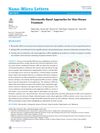
February 2025 in “Nano-Micro Letters”
48 citations
,
February 2025 in “Nano-Micro Letters” This review summarizes the application of microneedles in treating various skin diseases and highlights challenges like low drug loading, noting no new clinical results are reported.
 9 citations
,
March 2024 in “Journal of Biomaterials Applications”
9 citations
,
March 2024 in “Journal of Biomaterials Applications” This study developed dissolving microneedles using specific polymers for transdermal delivery of rizatriptan benzoate, demonstrating improved drug skin penetration and significant alleviation of migraine symptoms in vivo compared to passive diffusion, suggesting potential advantages over conventional treatment methods for acute migraine.
 7 citations
,
October 2023 in “Indian Journal of Plastic Surgery”
7 citations
,
October 2023 in “Indian Journal of Plastic Surgery” This study discusses the potential of robots to improve facial aesthetic procedures through enhanced precision and consistency, while noting significant challenges such as high costs and malfunctions that could lead to injuries.
 April 2017 in “The journal of investigative dermatology/Journal of investigative dermatology”
 This study found that Quantitative Mass Spectrometry Imaging offers precise localization and quantification of active compounds in skin tissues, demonstrating benefits over traditional LC-MS in drug penetration studies.
 6 citations
,
August 2021 in “International Journal of Pharmaceutics”
6 citations
,
August 2021 in “International Journal of Pharmaceutics” This study demonstrated that finasteride-loaded PLGA microspheres created using a novel microfluidic device exhibit extended drug release in beagle dogs, with modifications allowing for release up to 3 months.
 November 2024 in “Journal of Clinical Medicine”
 This study observed that six sessions of injections using a stabilized hyaluronic acid compound improved hair thickness, shine, density, and reduced hair loss in volunteers with moderate androgenetic alopecia, with excellent treatment tolerability and high satisfaction reported by 88.5% of participants.
7 citations
,
December 2024 in “International Journal of Pharmaceutics” In this study, researchers developed a new method for producing dissolving microneedle array patches containing mesoporous silica nanoparticles, successfully confirming nanoparticle deposition and release in both ex vivo and in vivo models.
 2 citations
,
July 2023 in “Journal of Education Health and Sport”
2 citations
,
July 2023 in “Journal of Education Health and Sport” This review article summarizes potential side effects of microneedle mesotherapy, including both infectious and non-infectious complications such as bruises, swelling, anaphylaxis, and skin necrosis, emphasizing that awareness and proper technique may mitigate these risks.
1 citations
,
April 2024 in “Plastic & Reconstructive Surgery Global Open” This study found that using a blunt cannula for lip augmentation is a safe and effective alternative to traditional needle methods, resulting in no bruising and high patient satisfaction, which may influence future cosmetic practices.
 10 citations
,
May 2016 in “Polymer”
10 citations
,
May 2016 in “Polymer” This study reports that novel core-ABS nanocarriers efficiently loaded with dexamethasone and finasteride show potential for dermal drug delivery, exhibiting non-toxic interactions with human keratinocyte cells and skin penetration.
July 2024 in “Journal of Investigative Dermatology” PH-762 shows promise in treating skin cancer by effectively targeting and silencing PD-1 in tumors with minimal side effects.
 13 citations
,
October 2012 in “InTech eBooks”
13 citations
,
October 2012 in “InTech eBooks” Nanocarriers could improve how drugs are delivered through the skin but require more research to overcome challenges and ensure safety.
 6 citations
,
July 2018 in “JAMA facial plastic surgery”
6 citations
,
July 2018 in “JAMA facial plastic surgery” This study found that injecting minced fat into the facial artery of rabbits was associated with higher rates of ophthalmic complications and mortality compared to fat granules or fat lipids.
January 2018 in “Refubium (Universitätsbibliothek der Freien Universität Berlin)” This study demonstrated that combining amorphization and nanonization of drugs enhances both saturation solubility and dissolution rate, potentially offering therapeutic benefits for formulations like dermal applications.
 14 citations
,
March 2022 in “Macromolecular Rapid Communications”
14 citations
,
March 2022 in “Macromolecular Rapid Communications” This review discusses the current state and potential future of polymer-based microneedles for transdermal drug delivery, without reporting new empirical results; it highlights their applications and existing challenges.
 September 2022 in “Journal of Plastic and Reconstructive Surgery”
 This article discusses the public interest in mesotherapy for rejuvenation, noting inconsistent evidence of its efficacy, and suggests that revised standards for injection depth may improve patient outcomes.
9 citations
,
January 2016 in “Journal of Controlled Release” This study found that applying controlled hypobaric stress to the skin significantly improved the in vitro and in vivo penetration of macromolecules, facilitating enhanced drug delivery.
 April 2024 in “International Journal of Dermatology”
 This study reviewed cases of filler-induced alopecia and found that hyaluronic acid injections were most commonly associated with this condition, highlighting that hyaluronidase treatments can rapidly restore hair density, while alternative interventions need further exploration.
September 2025 in “Cell Reports” This study found that a single instance of acute skin stretching can enhance immune surveillance and improve vaccine delivery by increasing skin permeability and promoting immune cell recruitment without causing tissue damage.
 July 2003 in “Hair transplant forum international”
 PEMA handles on syringes improve comfort and efficiency in hair transplant procedures.
 68 citations
,
March 2002 in “Journal of pharmaceutical sciences”
68 citations
,
March 2002 in “Journal of pharmaceutical sciences” This study found that nonionic liposomes were the most effective vehicle for delivering reporter genes into the skin of rat pups, compared to other liposome and nonliposome formulations.
 25 citations
,
December 2013 in “Journal of Investigative Dermatology Symposium Proceedings”
25 citations
,
December 2013 in “Journal of Investigative Dermatology Symposium Proceedings” This review discusses recent advancements in cutaneous drug delivery technologies and the potential of transfollicular pathways for improved treatment of skin conditions, but reports no clinical results.
16 citations
,
June 2015 in “Drug Design Development and Therapy” This study found that a gelatin microparticle-containing self-microemulsifying formulation combined with Soluplus improved the oral absorption of dutasteride.