 48 citations
,
June 2013 in “Journal of Dermatological Science”
48 citations
,
June 2013 in “Journal of Dermatological Science” This study found that valproic acid promoted human hair growth by increasing β-catenin levels, suggesting it may be a potential therapeutic option for alopecia.
 49 citations
,
August 2007 in “Dermatologic surgery”
49 citations
,
August 2007 in “Dermatologic surgery” This review discusses newer therapeutic techniques for treating postacne scarring, highlighting their effectiveness for particular grades of scars, and reports no new clinical results.
 35 citations
,
May 2015 in “Thrombosis Research”
35 citations
,
May 2015 in “Thrombosis Research” This review synthesizes knowledge on Prostaglandin E2's role in platelet biology and suggests that targeting PGE2 pathways could lead to personalized antiplatelet therapy without affecting hemostasis, but it presents no new results.
 27 citations
,
April 2013 in “Reviews in endocrine and metabolic disorders”
27 citations
,
April 2013 in “Reviews in endocrine and metabolic disorders” The document concludes that using LC-MS/MS for measuring androgens is more accurate than older methods, but it needs careful validation and standardized references to be most effective.
 11 citations
,
February 2019 in “Frontiers in Physiology”
11 citations
,
February 2019 in “Frontiers in Physiology” This review explores the complex interrelationships among different properties of natural hair fibers and underscores the need for a holistic taxonomy to improve data interpretation across disciplines, but it reports no new experimental results.
3 citations
,
January 2010 in “PubMed” This review discusses various conventional and experimental treatments for keloids and hypertrophic scars, noting the unknown pathogenetic mechanisms and need for further research into safety and efficacy, and reports no new clinical results.
2 citations
,
June 2025 in “Cosmetics” This study observed that a five-week topical treatment with cold-pressed Rosa canina seed oil significantly reduced mean wrinkle scores and UV-induced spots in volunteers, suggesting potential anti-aging and photoprotective benefits attributed to its high carotenoid content.
 1 citations
,
March 2019 in “Suez Canal University Medical Journal (Print)”
1 citations
,
March 2019 in “Suez Canal University Medical Journal (Print)” This review discusses the use of platelet-rich plasma (PRP) in clinical settings and notes the lack of standardization and consensus on its preparation and use; it reports no new clinical results.
1 citations
,
April 1990 in “PubMed” This review discusses alopecia areata, including its associations, challenges in treatment assessment, and various therapies tried, without reporting new clinical results.
January 2006 in “The Chinese Journal of Modern Applied Pharmacy” In this study, researchers developed a sensitive HPLC-MS method to measure finasteride in plasma, and found that its pharmacokinetics vary widely among healthy volunteers after taking a 5mg oral dose.
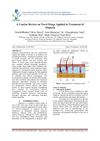
This review highlights new treatment options for alopecia, including JAK inhibitors and Wnt pathway-targeting therapies, which may offer better efficacy and safety than traditional treatments like minoxidil and finasteride, but notes the need for more research on long-term effects and patient-specific responses.
 130 citations
,
August 2015 in “Experimental Dermatology”
130 citations
,
August 2015 in “Experimental Dermatology” This review provides a comprehensive guide to serum-free human hair follicle organ culture methods, highlighting research opportunities, standardization efforts, and potential applications without reporting new empirical findings.
 48 citations
,
July 1996 in “Human & Experimental Toxicology”
48 citations
,
July 1996 in “Human & Experimental Toxicology” Human enzymes can detoxify harmful substances but might also increase their cancer risk.
6 citations
,
August 2024 in “The Laryngoscope” In this study, serial platelet-rich plasma injections improved voice quality and mucosal wave ratings in patients with vocal fold scar, with patient-reported outcomes showing a consistent positive trend.
September 2025 in “International Journal of Trichology” This study discusses the use of low-dose oral minoxidil for hair loss, noting that while it is popular and considered safe, it can mimic Cantú syndrome effects such as hypertrichosis and pericardial effusion, necessitating careful monitoring and caution during prescription.
122 citations
,
April 2020 in “American Journal Of Pathology” This review discusses the multiple factors contributing to skin aging, including cellular changes and environmental influences, and highlights its recognition as a disease with significant implications beyond cosmetic concerns, without reporting new research results.
 83 citations
,
April 1999 in “Dermatologic Surgery”
83 citations
,
April 1999 in “Dermatologic Surgery” This study found that hair transplant surgeons can use a new model to predict the number and distribution of follicular units in donor scalp areas based on patient hair density.
47 citations
,
July 1998 in “Journal of Investigative Dermatology” A new mutation, Glu402Lys, in hair keratin is linked to variable symptoms of monilethrix.
16 citations
,
August 2022 in “Drug Testing and Analysis” In this study, transdermal application of anabolic steroids demonstrated rapid and extended detectability in urine, suggesting potential implications for doping control considerations.
2 citations
,
October 2023 in “Animals” Lacto-fermentation changes amino acid profiles in bovine colostrum, but results are inconsistent.
1 citations
,
April 2009 in “Wiley Encyclopedia of Forensic Science” This article reviews the rationale and science behind forensic hair examinations and discusses the role of microscopic and DNA techniques in differentiating hair sources but reports no new findings.
November 2025 in “Wiley Interdisciplinary Reviews Forensic Science” This article reviews recent advancements in forensic hair testing, emphasizing its growing use for detecting past substance exposure, identifying emerging trends like micro-segmentation and hair scanning, and proposing standardized procedures to improve reliability and application in forensic toxicology.
26 citations
,
October 2002 in “Journal of Investigative Dermatology” This study identifies a mutation in the hairless gene that may impact thyroid receptor interaction, contributing to alopecia universalis congenita in an Arab Israeli patient.
 11 citations
,
July 2010 in “Journal of the American Academy of Orthopaedic Surgeons”
11 citations
,
July 2010 in “Journal of the American Academy of Orthopaedic Surgeons” This article reviews the varied clinical outcomes of using platelet-rich plasma for connective tissue healing, highlighting inconsistencies due to differences in PRP preparations and applications, and reports no new clinical findings.
10 citations
,
September 2021 in “American Journal of Medical Genetics Part A” This study on Qatari patients with Woodhouse-Sakati syndrome highlights the high incidence and diverse clinical presentation due to a specific genetic variant, emphasizing early diagnosis for effective management.
 14 citations
,
October 2020 in “Scientific reports”
14 citations
,
October 2020 in “Scientific reports” This study found that ATM protein plays a crucial role in protecting human hair follicle melanocytes from oxidative stress, which is linked to the greying of hair.
 88 citations
,
January 2019 in “Journal of Tissue Engineering and Regenerative Medicine”
88 citations
,
January 2019 in “Journal of Tissue Engineering and Regenerative Medicine” This review discusses current uses and advancements in mesenchymal stem cell-derived conditioned media as a potential regenerative therapy but does not present new clinical findings.
 2 citations
,
March 2004 in “Journal of the American Academy of Dermatology”
2 citations
,
March 2004 in “Journal of the American Academy of Dermatology” This study found that a 60-second timed hair count is a practical and reproducible method for women to document hair shedding and treatment response at home, with significant differences in hair shedding observed between age groups in follow-up results.
 October 2013 in “Journal of the American College of Cardiology”
 This study found that individuals with a nondipper blood pressure pattern had significantly higher 24-hour urinary aldosterone levels than those with a dipper pattern.
February 2025 in “Journal of Tissue Viability” This scoping review suggests that physiological differences in skin structure may affect how individuals with different skin tones respond to pressure ulcer development, emphasizing the need for targeted prevention strategies.