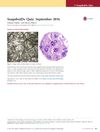
 August 2016 in “Journal of Investigative Dermatology”
 This quiz based on a Journal of Investigative Dermatology article reports no new clinical results but serves as an educational tool for diagnosing scalp conditions, including scalp psoriasis and psoriatic alopecia.
 April 2016 in “Journal of Aesthetic Nursing”
 This article explores the social and psychological factors driving male body hair grooming and the psychosocial effects of both hair removal and male pattern balding, without reporting new clinical findings.
This study developed a digital tool for quantitatively assessing hair in androgenetic alopecia, achieving an average accuracy of 79.45% for counting hairs and 68.19% for measuring hair size compared to human evaluation.
 February 2008 in “Basic and clinical dermatology”
 Photographic imaging is crucial for documenting and managing hair loss, requiring careful preparation and standardization to be effective.
 December 2002 in “Archives of Dermatology”
 This text does not provide a research abstract or study findings but outlines a website's use of cookies and offers access to medical publications and articles.

This review discusses the characteristics and management of adolescent androgenetic alopecia, noting a lack of FDA-approved treatments and reporting no new clinical results.
13 citations
,
January 2001 in “Skin pharmacology and physiology” This article discusses a new device for visualizing and quantifying skin distribution of a radioactively labelled compound, but reports no new clinical results.
 6 citations
,
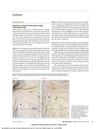
January 2016 in “JAMA Dermatology”
6 citations
,
January 2016 in “JAMA Dermatology” This article discusses the presence of dirty dots as a normal trichoscopic finding in children, noting they are not observed in adults or other age groups, and reports no new results.
 4 citations
,
May 2022 in “Frontiers in Medicine”
4 citations
,
May 2022 in “Frontiers in Medicine” The authors concluded that trichoscopic examination can be useful for diagnosing syphilitic alopecia in patients with idiopathic alopecia, though the findings are nonspecific and further studies are needed.
 1 citations
,
July 2025 in “The Ewha Medical Journal”
1 citations
,
July 2025 in “The Ewha Medical Journal” The Ewha Medical Journal is now in PubMed, has an AI article editor, and offers Korean reporting guidelines.
January 2026 in “JDDG Journal der Deutschen Dermatologischen Gesellschaft” This study developed a deep-learning model that accurately diagnosed alopecia areata with an accuracy of 88.92% and distinguished its activity levels with an accuracy of 83.33%, highlighting the potential for artificial intelligence in improving the diagnosis and treatment of this autoimmune hair loss condition.
April 2025 in “British Journal of Dermatology” This study identified three genetic loci influencing hair density in East Asian populations and found associations with demographic and lifestyle factors like age, sex, and BMI. The results also suggest possible genotype-specific responses to finasteride for managing hair disorders.
February 2022 in “arXiv (Cornell University)” This study introduces a novel method for capturing and digitally rendering the color appearance of physical hair samples using deep neural networks.
February 2022 in “Fibers” This study found that a sucrose-based crosslinker can effectively straighten hair and maintain durability in high humidity and through repeated washings without affecting the hair's tensile properties or causing surface damage.
January 2021 in “Skin Appendage Disorders” This article discusses the utility of trichoscopy in distinguishing hair disorders with similar clinical appearances but reports no new clinical results.

This study found that platelet-rich plasma injections significantly increased hair count and improved hair loss in patients with androgenic alopecia, with high patient satisfaction and no notable adverse effects.
 January 2000 in “Optics Letters”
 This study found that the maximum infrared temperature of laser-irradiated hair depends on melanin type, with eumelanin-rich hair reaching higher temperatures than pheomelanin-containing hair.
 3 citations
,
May 2010 in “Nursing Standard”
3 citations
,
May 2010 in “Nursing Standard” This article discusses autoimmune-associated alopecia areata, highlighting its psychological and social impact, but reports no new clinical findings.
 1 citations
,
September 2017 in “Journal of Investigative Dermatology”
1 citations
,
September 2017 in “Journal of Investigative Dermatology” This study reported that introducing the TERT and Bmi1 genes into mouse dermal papilla cells resulted in immortal cells capable of inducing new hair follicles in vivo, and human immortal DPCs were also developed.
 January 2024 in “JEADV clinical practice”
 This study reviewed research on the psychosocial effects of gender-affirming dermatology treatments in transgender populations, finding mostly positive associations but noting significant limitations and the need for more comprehensive studies to clearly understand these effects.
 May 2023 in “Indian journal of science and technology”
 This study found that an Attention-based Balanced Multi-Task Deep learning system achieved a 95.11% accuracy in classifying Alopecia Areata conditions using hair and scalp images, outperforming classical methods.
 March 2004 in “Journal of The American Academy of Dermatology”
 This study found that the TrichoScan effectively measures hair growth changes, showing significant increases in hair counts and thickness in men with androgenetic alopecia after 6 months of using 5% minoxidil solution.
In this study, centralised measurements provided more consistent and accurate results for assessing hair loss in mild-to-moderate alopecia areata, reducing error compared to local ratings.
 August 2023 in “The Kitakanto Medical Journal”
 Image analysis can effectively identify changes in scalps affected by chemotherapy-induced hair loss.
 2 citations
,
September 2017 in “Plastic and Aesthetic Research”
2 citations
,
September 2017 in “Plastic and Aesthetic Research” This study captured digital images of hair regions in healthy individuals and patients with androgenetic alopecia to analyze and compare the number of follicular units and hairs using software.
 June 2026 in “International Journal of Ayurvedic Medicine (Hyderabad)”
 This study reviewed trichoscopic images to assess hair loss, finding that ayurvedic signs (lakshanas) aligned with modern trichoscopic parameters, potentially aiding accurate diagnosis and management of hair conditions.
 January 2026 in “The Operating Room Global Journal”
 This review found that image-guided techniques in regenerative aesthetic procedures may enhance accuracy and patient outcomes compared to traditional methods, but more high-quality randomized trials are needed to establish standardized protocols.
 February 2024 in “Cosmetics”
 The correction fixes an image mistake in the original publication, but the findings on the hair treatment's effectiveness are unchanged.
January 2019 in “International Journal of Clinical & Medical Images” This clinical image report discusses a 50-year-old male with ethanol-related chronic liver disease who, despite showing signs of Dupuytren Disease, was asymptomatic and therefore did not receive treatment.
52 citations
,
March 2015 in “Tissue Engineering Part C Methods” This study presented 3D images of human dermis, revealing fewer elastic fibers near hair follicles compared to other regions, which may aid future skin engineering efforts.