In this study, researchers identified IL18R+ thymus-resident regulatory T cells in mice, demonstrating their unique molecular features and resistance to age- and stress-induced thymus involution, highlighting IL18 signaling's role in Treg migration and retention.
16 citations
,
April 2024 in “Proceedings of the National Academy of Sciences” This study found that selectively targeting HDAC4 and HDAC7 in mice can reduce Th17 cell-mediated intestinal inflammation, suggesting a potential treatment approach for Th17-related inflammatory diseases like ulcerative colitis.
 September 2022 in “The American Journal of Dermatopathology”
 This study found that IL-17 expression was significantly higher in perifollicular fibrosis of active Lichen planopilaris lesions, suggesting that targeting IL-17 could impact the disease's progression.
 1 citations
,
January 2022 in “bioRxiv (Cold Spring Harbor Laboratory)”
1 citations
,
January 2022 in “bioRxiv (Cold Spring Harbor Laboratory)” This study found that targeting IL-17 signaling in aged skin reduces inflammation and delays age-related traits, suggesting a potential strategy to prevent age-associated skin ailments.
This study evaluated interleukin-26's antimicrobial activity in Hidradenitis Suppurativa and explored its potential role in chronic skin inflammation.
September 2019 in “Journal of Investigative Dermatology” This study found that in chronic alopecia areata, increased IL-17 expression and CD8+CD49a-Trm cell infiltration in hair follicles were associated with more severe histopathologic gradings, while Foxp3+mTreg infiltration decreased.
July 2025 in “Journal of Investigative Dermatology” December 2025 in “AL-QADISIYAH MEDICAL JOURNAL” This study found that patients with alopecia areata had higher serum levels of interleukin-17 and interleukin-23 compared to healthy controls, suggesting these cytokines may play a role in the disease's pathophysiology.
 April 2021 in “Journal of Investigative Dermatology”
 This study suggests that rather than inhibiting IL-15, selectively stimulating IL-15Ra-mediated signaling could be beneficial for managing alopecia areata and possibly other inflammatory hair loss conditions, as IL-15 promoted hair growth and maintained immune privilege in human hair follicles.
70 citations
,
March 1997 in “Journal of Investigative Dermatology” July 2024 in “Journal of Investigative Dermatology” IL-13 protein is much higher in the skin of atopic dermatitis patients than in healthy skin.
 January 2023 in “Discovery immunology”
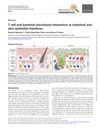
 T cells and bacteria in the gut and skin help maintain health and protect against disease.
December 2025 in “AL-QADISIYAH MEDICAL JOURNAL” The study conducted at Al-Diwaniya Teaching Hospital found that patients with alopecia areata exhibited significantly higher serum levels of interleukin-17 and interleukin-23 compared to healthy controls, suggesting these cytokines might play a role in the disease's pathophysiology.
January 2014 in “Journal of Jilin University” This study found that Th22 cells and their cytokine IL-22 may play an important role in the pathogenesis of systemic lupus erythematosus and could serve as bioindicators for monitoring disease severity.
11 citations
,
September 2023 in “Nature Communications” In this study, researchers found that the cell surface protein Lrig1 plays a crucial role in regulating the suppressive function of regulatory T cells, suggesting it as a potential target for treating autoimmune diseases, as evidenced by experiments in mouse models.
 November 2022 in “The journal of investigative dermatology/Journal of investigative dermatology”
 This study reported that IL-15 promotes human hair growth and protects hair follicle immune privilege, potentially stabilizing alopecia areata treatment outcomes when selectively stimulating IL-15Rα signaling.
 31 citations
,
February 2014 in “Inflammation Research”
31 citations
,
February 2014 in “Inflammation Research” This study found that reduced expression of CD200R1 on monocyte-derived macrophages in rheumatoid arthritis patients was significantly associated with higher disease severity and an imbalance in Th17/Treg cells.
318 citations
,
October 1998 in “The Journal of Cell Biology” This study found that ectopic expression of the lymphoid-enhancer factor can induce K17 protein in the skin, suggesting a link between skin development and wound repair processes in mice.
 1 citations
,
April 2024 in “Journal of Autoimmunity”
1 citations
,
April 2024 in “Journal of Autoimmunity” This study found that rhIL-15 promotes human hair follicle growth and regrowth in experimental settings and may have therapeutic potential for alopecia areata by restoring immune privilege guardianship.
89 citations
,
March 1996 in “Proceedings of the National Academy of Sciences” This study found that homozygous mutant mice with a hypomorphic CD18 mutation developed a chronic inflammatory skin disease resembling human psoriasis, potentially implicating additional genetic factors in disease susceptibility.
 July 2022 in “Journal of Investigative Dermatology”
 This study suggests that interleukin-15 plays a complex role in alopecia areata, potentially contributing to immune infiltration while also protecting against hair follicle immune privilege collapse and promoting hair growth.
 28 citations
,
February 2010 in “British journal of dermatology/British journal of dermatology, Supplement”
28 citations
,
February 2010 in “British journal of dermatology/British journal of dermatology, Supplement” This article reviews phenotypic variability linked to WNT10A nonsense mutations and does not present new research findings.
 3 citations
,
May 2018 in “European Journal of Dermatology”
3 citations
,
May 2018 in “European Journal of Dermatology” Photodynamic therapy may not work for erythroplasia of Queyrat and could lead to invasive squamous cell carcinoma.
 April 2018 in “Journal of Investigative Dermatology”
 This study found that twice-daily application of 5% Minoxidil did not significantly impact hair growth in Sinclair minipigs over 27 days.
 April 2018 in “Journal of Investigative Dermatology”
 This study suggests that weekly oral finasteride may be a promising alternative to isotretinoin for treating nodulocystic acne, showing substantial improvements with lower incidence of sexual dysfunction.
May 2006 in “The Journal of Cell Biology” In this study, researchers at Johns Hopkins University found that Keratin 17 plays a signaling role in cell growth during a wound response by aiding mTOR pathway activation, beyond its structural functions.
88 citations
,
June 2000 in “Journal of Investigative Dermatology” Keratin 17 is important for hair and nail structure and affects pachyonychia congenita symptoms.
July 2026 in “Dermatology Practical & Conceptual” This narrative review reports that IL-17 and IL-23 inhibitors, while effective for psoriasis and other inflammatory diseases, can cause a variety of skin reactions that resemble primary dermatoses, highlighting the need for careful diagnosis and varied management strategies.
 February 2009 in “Journal of The American Academy of Dermatology”
 Certain immune system genes are linked to a higher risk of psoriasis and psoriatic arthritis, while others may offer protection.
 1 citations
,
September 2025 in “Frontiers in Immunology”
1 citations
,
September 2025 in “Frontiers in Immunology” In this study, researchers using a Treg-specific HuR-deficient mouse model found that the RNA-binding protein HuR is crucial for stabilizing Foxp3 mRNA, affecting Treg function and immune regulation, with HuR disruption leading to impaired Foxp3 expression and potential autoimmune dysfunction.