2 citations
,
January 1989 This article discusses the history and understanding of Tay syndrome, recognizing it as a distinct condition related to ichthyotic erythroderma, mental retardation, and brittle hair but reports no new clinical results.
 July 2024 in “Journal of Dermatological Treatment”
 In this case report, a 6-year-old boy with hidrotic ectodermal dysplasia 2 caused by GJB6 mutations showed no significant hair improvement with age, despite treatment with botanical extracts and Minoxidil.
May 2011 in “International Society of Hair Restoration Surgery” This notice from the Surgical Assistants Program Chair shares details about the September 2011 ISHRS meeting in Anchorage but reports no new research findings.
166 citations
,
July 1999 in “American Journal Of Pathology” This study found that the loss of a functional hr gene in mice leads to premature and abnormal hair follicle regression, disrupting normal hair cycling and architecture.
December 2025 in “ILDS-DEV” 72 citations
,
January 2012 in “Annals of Dermatology” In this study, IGF-I was shown to enhance human hair follicle growth, maintain the anagen phase, and increase expression of certain growth factors and anti-apoptotic markers.
1 citations
,
July 2025 in “Scientific Reports” This study found that CD133-positive dermal papilla cells significantly enhanced hair growth in mice compared to CD133-negative cells, suggesting their potential for improving human hair follicle engineering.
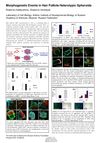
This study found that hyaluronic acid increased the size of hair follicle germ-like aggregates and the number of proliferative cells but did not maintain specific markers during the process.
 1 citations
,
August 2023 in “Nature communications”
1 citations
,
August 2023 in “Nature communications” In this study, researchers found that Hdac1 and Hdac2 are crucial for maintaining the quiescence and survival of dermal papilla cells in the hair follicle, regulating the hair cycle by controlling cell-cycle genes and Wnt signaling.
7 citations
,
February 2012 in “Journal of cutaneous pathology” This case report presents unique histopathological findings in skin lesions of hereditary mucoepithelial dysplasia that have not been previously documented.
 71 citations
,
October 2008 in “The journal of investigative dermatology/Journal of investigative dermatology”
71 citations
,
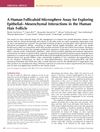
October 2008 in “The journal of investigative dermatology/Journal of investigative dermatology” This study presents a novel in vitro assay using human folliculoid microspheres to research hair growth, which may facilitate preclinical testing of hair growth-modulatory agents.
4 citations
,
July 2023 in “Frontiers in Microbiology” HGF combined with ADA is highly accurate for diagnosing tuberculous pleural effusion, especially in younger females.
 35 citations
,
April 2014 in “American Journal of Medical Genetics”
35 citations
,
April 2014 in “American Journal of Medical Genetics” The study reported a significant genotype–phenotype correlation in prepubescent males with XLHED, particularly in the severity of skin and hair manifestations between those with different EDA mutations.
27 citations
,
May 2011 in “Journal of Investigative Dermatology” TCHHL1 is a protein important for hair growth, found in hair follicles.
2 citations
,
May 2006 in “Archives of Pathology & Laboratory Medicine” This case report describes a 40-year-old woman with Birt-Hogg-Dubé syndrome diagnosed with multiple chromophobe renal cell carcinomas, highlighting the importance of recognizing associated dermatologic lesions for early intervention.
 November 2022 in “The journal of investigative dermatology/Journal of investigative dermatology”
 This study found that Imaging Mass Cytometry effectively visualizes multiple biomarkers in alopecia areata, enhancing analysis of immune cell and tissue interactions in hair pathology.
90 citations
,
April 2013 in “Dermatology online journal” This article reviews various medical treatments for hidradenitis suppurativa based on the author's experience with over 350 patients, but it reports no new clinical findings.
19 citations
,
August 2018 in “JAMA dermatology” This study found that skin mesenchymal stem cells from hidradenitis suppurativa patients overexpress proinflammatory and anti-inflammatory cytokines, suggesting their potential contribution to the disease's pathogenesis.
April 2026 in “Journal of Cutaneous Pathology” This case report describes the first known instance of alopecia associated with multicentric reticulohistiocytosis, evidenced by scalp biopsy findings of histiocyte infiltration in a 52-year-old woman.
 April 2017 in “Journal of evolution of medical and dental sciences”
 This study reports that polycystic ovary syndrome was the most common cause of hirsutism among Indian patients, with 70% of cases associated with this condition.
15 citations
,
May 2017 in “Journal of Cellular Biochemistry” This review discusses the role of the hairless protein (HR) in alopecia and cancer, noting its potential importance in cancer cell growth and survival, and reports no new experimental results.
March 2023 in “Journal of Drugs in Dermatology” This paper reviews the role of various hormonal therapies in treating hidradenitis suppurativa and does not report new clinical results.
April 2017 in “The journal of investigative dermatology/Journal of investigative dermatology” According to this study, human scalp hair follicles containing pluripotent stem cells demonstrated the ability to differentiate into cardiac muscle cells and other cell types, suggesting potential applications in heart and nerve regeneration.
 2 citations
,
January 2015 in “Hair transplant forum international”
2 citations
,
January 2015 in “Hair transplant forum international” This article discusses the introduction of human recombinant hyaluronidase in hair restoration surgery and presents no new clinical results.
354 citations
,
August 1991 in “Molecular Endocrinology” This study found that distinct isoenzymes of 3 beta-hydroxysteroid dehydrogenase are expressed in human adrenals and gonads compared to the placenta and skin.
September 2019 in “The journal of investigative dermatology/Journal of investigative dermatology” This study found that in hidradenitis suppurativa, the proteins SERPINB3/B4 and S100A7/A8/A9 were significantly overexpressed in lesional skin compared to nonlesional skin, suggesting new pathways in the disease's pathogenesis.
 January 2026 in “Zenodo (CERN European Organization for Nuclear Research)”
 This review discusses the characteristics, complications, and treatment options for hidradenitis suppurativa, a chronic skin disorder with systemic effects, without presenting new clinical findings.
 January 1995 in “Hair transplant forum international”
 This article argues that a proposed merger between ISHRS and AACS would be detrimental to the ISHRS, but it presents no new research findings.
 12 citations
,
July 2016 in “British journal of dermatology/British journal of dermatology, Supplement”
12 citations
,
July 2016 in “British journal of dermatology/British journal of dermatology, Supplement” This study observed phenotypic diversity in hair loss among Japanese individuals homozygous for the LIPH c.736T>A mutation and suggests that differences in hair thickness may contribute to varying severities.
September 2024 in “Annals of Dermatology” This study established an IRGDS model with diagnostic capability for alopecia areata, which may serve as an auxiliary marker for the condition.