 January 2026 in “Zenodo (CERN European Organization for Nuclear Research)”
 This abstract highlights that iron deficiency anemia, affecting over half of global anemia cases, poses significant challenges to health, especially in young children and women, with treatment focusing on iron supplementation and prevention strategies.
 1 citations
,
February 2021 in “Gastroenterology”
1 citations
,
February 2021 in “Gastroenterology” This report discusses a case of vesiculopustular eruption in a patient with ulcerative colitis, highlighting the effective use of ustekinumab for treatment and suggesting its consideration in similar cases of IBD-related skin lesions.
April 2010 in “Cancer Research” This study found significant upregulation of IDO-1 and IDO-2 in human basal cell carcinomas, suggesting that IDO production may confer immune privilege characteristics to the tumors, potentially impacting their growth.
January 2023 in “Przegla̧d dermatologiczny” July 2007 in “Hair transplant forum international” This meeting summary discusses the ISHR's focus on hair restoration, featuring Julius Caesar's image, but reports no new research findings.
 June 2017 in “Çocuk Enfeksiyon Dergisi/Journal of Pediatric Infection”
 This report describes two cases of urticarial id reaction linked to tinea capitis profunda, highlighting a potential new etiology for this rare condition.
July 2006 in “Hair transplant forum international” This abstract mentions the XI International Congress of the ISHR in Bari but reports no new research findings.
 2 citations
,
April 2019 in “Dermatologic Therapy”
2 citations
,
April 2019 in “Dermatologic Therapy” A patient with alopecia had hair regrowth with tofacitinib but developed a skin reaction, choosing to continue the treatment despite the side effect.
 April 2006 in “Journal of the Islamic Medical Association of North America”
 This article describes a personal movie from 1969 documenting skull trephination surgery by Gusii tribal surgeons in Kenya, without presenting new clinical results.
October 2024 in “The American Journal of Gastroenterology” This study described a case where both alopecia universalis and Crohn's ileitis in a 23-year-old man showed remarkable improvement with the JAK1 inhibitor upadacitinib, highlighting its potential as a treatment for patients with concurrent conditions.
2 citations
,
January 1989 This article discusses the history and understanding of Tay syndrome, recognizing it as a distinct condition related to ichthyotic erythroderma, mental retardation, and brittle hair but reports no new clinical results.
 1 citations
,
June 2021 in “Wal afiat Hospital Journal”
1 citations
,
June 2021 in “Wal afiat Hospital Journal” This study observed an association between body mass index and androgenetic alopecia, with the highest prevalence occurring in individuals with a normal BMI at 34.8%.
June 2025 in “Revista Foco” This review assessed randomised clinical trials on the efficacy and safety of topical and systemic JAK inhibitors for alopecia areata, finding significant hair coverage improvement with ritlecitinibe and baricitinibe, though prolonged treatment is often needed to maintain results.
44 citations
,
September 2011 in “Journal of Pediatric Gastroenterology and Nutrition” This study reported four new cases of NISCH syndrome in a Moroccan family, confirming genetic variability in liver disease severity and suggesting potential benefits from early UDCA therapy.
January 2006 in “Durham e-Theses (Durham University)” This study reports for the first time on the expression patterns of Id2 and Id3 proteins in developing hair follicles, suggesting a significant role for these proteins in hair follicle development and epithelial-mesenchymal interactions.
December 2002 in “Library, Museums and Press - UDSpace (University of Delaware)”  June 2021 in “International Ayurvedic Medical Journal”
 In this source, a case of a female patient with indralupta (alopecia areata) was successfully treated using Ayurvedic methods, specifically jaluaka, haridra, and nimbalepa, suggesting an effective alternative to corticosteroids, which have harmful side effects and are unsuitable for long-term use.
 May 2026 in “International Research Journal of Ayurveda & Yoga”
 This review explores the Charaka samhita's concept of Ashtanindita purusha, identifying eight physical constitutions traditionally regarded as undesirable due to their association with various diseases, and aims to correlate these with contemporary genetic, endocrinological, and metabolic disorders.
4 citations
,
September 2025 in “Journal of the American Academy of Dermatology”  March 2023 in “Jurnal Ilmiah Medicamento”
 In this study, herbal hair tonic made from Usada Bali ingredients significantly increased hair growth in mice without causing skin irritation compared to a negative control.
6 citations
,
January 2010 in “Journal of Biochemical and Molecular Toxicology” This study found that the ID2 gene was highly expressed in bulge-derived keratinocytes when exposed to contact sensitizers and may serve as a marker to distinguish sensitizers from irritants during in vitro testing.
 1 citations
,
July 2022 in “The journal of investigative dermatology/Journal of investigative dermatology”
1 citations
,
July 2022 in “The journal of investigative dermatology/Journal of investigative dermatology” In this open-label trial, Tofacitinib was well tolerated and improved IFN and cytokine scores, as well as overall skin pathology, in individuals with Down syndrome and immune skin conditions.
 May 2003 in “Hair transplant forum international”
 This abstract discusses an ISHRS event on hair transplantation but presents no new research findings.
 July 2022 in “International journal of KIU”
 This article outlines the scope, publication standards, and authorship responsibilities of the International Journal of KIU, but reports no new research results.
April 2025 in “International Ayurvedic Medical Journal” This case study on a 24-year-old male with Indraluptha (patchy hair loss) found that two cupping sessions followed by the application of Gunjapahala Lepa promoted new hair follicle growth and reduced lesion areas.
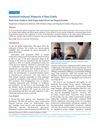 November 2022 in “The Indian journal of chest diseases & allied sciences”
 This case report documents a rare instance of hair loss associated with isoniazid initiation in a 32-year-old male undergoing antitubercular treatment.