This article reviews the history and dermatologic side effects of alkylating agents used in chemotherapy, noting that some agents like chlorambucil can cause recurrent symptoms upon rechallenge, whereas others are tolerated.
research News
February 2023 in “Chemistry & Industry” 20 citations
,
January 2010 in “Biological Trace Element Research” ![Synthesis and Structural Characterization of a New Dinuclear Platinum(III) Complex, [Pt2Cl4(NH3)2{μ-HN=C(O)Bu^t}2]](/images/assets/fcbeee85-f5bd-406e-936d-9134a0f200d4/small/36266.jpg) 2 citations
,
November 2022 in “Acta crystallographica. Section B, Structural science, crystal engineering and materials./Acta crystallographica. Section B, Structural science, crystal engineering and materials”
2 citations
,
November 2022 in “Acta crystallographica. Section B, Structural science, crystal engineering and materials./Acta crystallographica. Section B, Structural science, crystal engineering and materials” This study reports the synthesis and structural characterization of a novel dinuclear platinum(III) complex with potential antitumor and catalytic activity.
 9 citations
,
September 1947 in “Archives of dermatology and syphilology”
9 citations
,
September 1947 in “Archives of dermatology and syphilology” This article reviews historical approaches to electrolysis for permanent hair removal and suggests improvements in equipment, but reports no new clinical results.
 January 2013 in “Transactions of the Materials Research Society of Japan”
 In this study, carboxymethylalanyl disulfide keratin was shown to effectively prevent hair damage during repeated bleaching and permanent waving treatments.
25 citations
,
January 2019 in “Journal of Pharmacy And Bioallied Sciences” This study concluded that the formulated polyherbal shampoo is a chemical-free product with nourishing, conditioning, cleansing, and antimicrobial effects.
5 citations
,
February 2013 in “PubMed” In this case study, an 11-year-old girl with a Cladosporium scalp infection showed significant improvement in hair growth and appearance after treatment with itraconazole.
December 2023 in “Ukraïnsʹkij žurnal sučasnih problem toksikologìï/Ukraïnsʹkij Žurnal Sučasnih Problem Toksikologìï” This study found an increase in criminal and accidental thallium (Tl+) poisonings globally, particularly in Ukraine, partly due to online availability, underscoring the need for better control and diagnosis to prevent severe outcomes and potential misuse during ongoing conflicts.
20 citations
,
December 2006 in “Archives of dermatology”  111 citations
,
August 2002 in “Journal of Medicinal Chemistry”
111 citations
,
August 2002 in “Journal of Medicinal Chemistry” This study reports that 2-(1-Adamantyl)-4H-thiochromen-4-on-6-O-sulfamate is the most potent steroid sulfatase inhibitor identified so far, exhibiting 170-fold higher activity than the lead compound estrone sulfamate.
 10 citations
,
January 2003 in “Journal der Deutschen Dermatologischen Gesellschaft”
10 citations
,
January 2003 in “Journal der Deutschen Dermatologischen Gesellschaft” In this study, hydroxychloroquine treatment in patients with scleromyxoedema led to complete or partial remission of skin symptoms and improved mobility, though it did not affect paraproteinaemia.
 1 citations
,
February 2014 in “Analytical Letters”
1 citations
,
February 2014 in “Analytical Letters” This study developed a fast and sensitive ultra-high performance liquid chromatography method to quantify ketoconazole in antidandruff emulsions, showing comparable results to labeled concentrations.
 5 citations
,
September 2022 in “Antioxidants”
5 citations
,
September 2022 in “Antioxidants” This study found that the clionasterol-rich hexane fraction of Caulerpa racemosa may protect against particulate matter-induced skin damage by reducing oxidative stress and mitochondrial-mediated apoptosis in human keratinocytes and zebrafish.
4 citations
,
September 2020 in “Journal of Mind and Medical Sciences” This study synthesized a new organic sunscreen with broad photoprotective properties and demonstrated it to be non-toxic. The resultant cream, containing nanostructured lipid carriers, showed suitable application qualities and achieved a satisfactory SPF value of 16.
 4 citations
,
October 2022 in “Frontiers in public health”
4 citations
,
October 2022 in “Frontiers in public health” In this study on C57BL/6 mice, researchers found that cadmium chloride exposure led to metabolic disruption, accelerated skin aging, and impaired hair regeneration, with more severe effects observed at higher doses.
 December 2024 in “Media Farmasi Jurnal Ilmu Farmasi”
 In this study, the researchers developed an optimum liquid shampoo formula using chia plant components and found it to meet specific physical characteristics and stability requirements, with viscosity and foam height tested within acceptable ranges.
 118 citations
,
May 2015 in “European journal of pharmaceutics and biopharmaceutics”
118 citations
,
May 2015 in “European journal of pharmaceutics and biopharmaceutics” This study found that the pH-sensitive hydrogel HECHA13, containing isoliquiritigenin, effectively inhibited the growth of Propionibacterium acnes and showed promise for transdermal delivery in acne treatment.
 233 citations
,
February 2018 in “Polymers”
233 citations
,
February 2018 in “Polymers” This review examines the roles and benefits of chitosan in cosmetics and oral hygiene, highlighting its potential in the cosmeceutical market, but it reports no new results.
 11 citations
,
January 2017 in “Oxidative medicine and cellular longevity”
11 citations
,
January 2017 in “Oxidative medicine and cellular longevity” This study found that antroquinonol inhibited CD8+ T cell proliferation and reduced proinflammatory cytokine secretion in vitro, while also ameliorating H2O2-induced depigmentation and resisting reductions in hair follicle length, skin thickness, and tyrosinase expression in mice.
16 citations
,
May 2017 in “Journal of cosmetic dermatology” In this clinical study, the use of potentiated zinc pyrithione shampoo improved scalp health and hair surface characteristics, suggesting that unhealthy scalp conditions may negatively impact pre-emergent hair's cuticle surface.
10 citations
,
March 2005 in “International Journal of Cosmetic Science” This study found that photochemical and cosmetic chemical oxidation of hair causes surface damage by delipidation and acid formation, which can be characterized and quantified using microfluorometry and X-ray photoelectron spectroscopy.
 4 citations
,
December 2018 in “Macedonian Journal of Chemistry and Chemical Engineering”
4 citations
,
December 2018 in “Macedonian Journal of Chemistry and Chemical Engineering” This study developed a reliable RP-HPLC-DAD method, finding that amino acid concentrations in bleached hair decrease with higher hydrogen peroxide levels, notably affecting cystine.
1 citations
,
December 1913 in “Biochemical Journal” This article reviews the historical discovery and validation of isocholesterol, confirming its identity as a distinct sterol but reports no new research findings.
March 2023 in “Reactions Weekly” 10 citations
,
January 1994 This study discusses that permanent hair straightening can be achieved at neutral or acidic pH conditions, with varying effects on cystine and lanthionine levels, by inducing supercontraction of the hair fiber.
 8 citations
,
January 2013 in “Medicinal chemistry”
8 citations
,
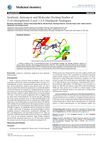
January 2013 in “Medicinal chemistry” This study reported that among 10 tested 2-(4-chlorophenyl)-5-aryl-1,3,4-oxadiazole compounds, compound 4c showed the highest activity against cancer cell lines, with a 95.37% average growth rate.
 June 2017 in “University of the Arts London Research Online (University of the Arts London)”
 This study compared the effects of three compounds on structural and sensory benefits for bleached hair when applied with or after bleaching, observing that their application may mitigate bleaching-induced damage.
12 citations
,
November 2019 in “South African Medical Journal” This study found that the pH levels of relaxers tested were corrosive to the skin and may contribute to alopecia in females with afro-textured hair.
 2 citations
,
May 2021 in “Clinical Pharmacology in Drug Development”
2 citations
,
May 2021 in “Clinical Pharmacology in Drug Development” This phase 1 study reported that after administering supratherapeutic doses of cortexolone 17α‐propionate, a topical antiandrogen intended for hair loss treatment, there was no effect on the QTc interval, indicating no measurable cardiac safety concerns in the concentration range tested.