25 citations
,
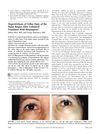
January 1978 in “JAMA” This case report describes a 45-year-old woman who developed Cushing's syndrome and hirsutism after using topically applied desoximetasone (Topicorte).
 15 citations
,
March 2004 in “American Journal of Ophthalmology”
15 citations
,
March 2004 in “American Journal of Ophthalmology” This case report found that topical bimatoprost in a female Hispanic patient with glaucoma led to increased hair growth and pigmentation in the malar region, which resolved after discontinuing use and epilation.
11 citations
,
March 2018 in “Journal of cosmetic and laser therapy” In this study, pneumatic injections of non-cross-linked hyaluronic acid were associated with improvements in skin texture, pores, wrinkles, and transepidermal water loss in healthy female volunteers.
9 citations
,
January 2016 in “Journal of Controlled Release” This study found that applying controlled hypobaric stress to the skin significantly improved the in vitro and in vivo penetration of macromolecules, facilitating enhanced drug delivery.
February 2023 in “European Journal of Medical Research” This study identified several drugs that may be potential candidates for repurposing as anti-hyperhidrosis treatments, based on their association with hypohidrosis or anhidrosis in the FDA Adverse Event Reporting System.
 14 citations
,
June 1952 in “The BMJ”
14 citations
,
June 1952 in “The BMJ” Phenobarbitone can cause severe and sometimes fatal skin reactions.
14 citations
,
March 2014 in “Acta anaesthesiologica Taiwanica” This report presents a case of Tapia's syndrome and pressure alopecia occurring simultaneously after open septorhinoplasty, emphasizing the need for awareness of these complications among anesthesiologists and surgeons.
 48 citations
,
January 2002 in “Dermatology”
48 citations
,
January 2002 in “Dermatology” In this study, hair pain (trichodynia) was reported by a significant portion of patients with hair loss, but it did not correlate with the cause or activity of the condition.
13 citations
,
September 2016 in “Journal of Cellular Biochemistry” This study found that under hypoxic conditions, hair follicle-associated pluripotent stem cells differentiated into cardiac muscle cells at a higher rate compared to normoxic conditions.
 81 citations
,
June 2014 in “Cold Spring Harbor perspectives in medicine”
81 citations
,
June 2014 in “Cold Spring Harbor perspectives in medicine” This article discusses recent advances in understanding the mechanisms of tactile end organs in the epidermis and hair follicles from studies of mouse hairy skin, but it reports no new clinical results.
 6 citations
,
September 2023 in “Experimental physiology”
6 citations
,
September 2023 in “Experimental physiology” In this study, researchers identified the PLD-mGluR protein in primary mechanosensory terminals as the homomeric GluK2 kainate receptor, functioning purely metabotropically, which is suggested to be common to various sensory endings.
 1 citations
,
December 2021 in “Journal of drugs in dermatology”
1 citations
,
December 2021 in “Journal of drugs in dermatology” In this double-blind study, a novel hyaluronic acid gel for lip augmentation was found to be as effective and safe as a commercially available gel, with similar adverse event profiles and high patient and investigator improvement ratings over six months.
13 citations
,
February 2024 in “Clinical Cosmetic and Investigational Dermatology” This study demonstrated that intradermal treatment with a medical device using Polynucleotides High Purification Technology (PN HPT) significantly improved skin surface, firmness, pigmentation, and radiance in 30 Asian subjects, with benefits lasting up to six months and no adverse events reported.
88 citations
,
April 2012 in “Journal of Investigative Dermatology” This study suggests that TRPV3 may play a key role in dry skin-related itch, indicating potential for TRPV3 antagonists in treating pruritus resistant to histamine H1R antagonists.
 February 2024 in “Curēus”
 In this study, researchers found that using regional nerve blocks (STN and SON blocks) for anesthesia in platelet-rich plasma treatment for hair regrowth resulted in significantly less pain and better analgesia compared to the more common ring block technique.
11 citations
,
March 2012 in “Journal of the American Academy of Dermatology” This study found that Nd:YAG laser-assisted hair removal achieved high satisfaction with minimal complications among individuals with dark-complexioned skin seeking unwanted hair reduction.
15 citations
,
July 1968 in “JAMA” This letter describes a case where severe pruritus without visible skin disease was a presenting symptom of hyperthyroidism in a 43-year-old woman, highlighting a less common association with the condition.
3 citations
,
January 2014 in “The Journal of Dermatology” This letter discusses a case of hapten-induced lymphadenosis benigna cutis following sensitization with squaric acid dibutylester for treating alopecia areata and reports no new clinical results.
1 citations
,
April 2023 in “Heliyon” In this study, a 68-year-old man with muscle-invasive bladder cancer and renal insufficiency achieved a partial radiological response to neoadjuvant therapy with gemcitabine and Disitamab Vedotin, without significant adverse events, highlighting a potential alternative for cisplatin-ineligible patients.
 6 citations
,
January 2015 in “International Journal of Pediatrics and Adolescent Medicine”
6 citations
,
January 2015 in “International Journal of Pediatrics and Adolescent Medicine” This report describes two cases of hair tourniquet syndrome successfully treated with hair removal cream, noting its effectiveness as a less invasive option compared to traditional methods like incisions or blunt probe cutting.
140 citations
,
February 2014 in “Neuron” This study found that the opioid system, particularly via the delta opioid receptor, broadly regulates cutaneous mechanosensation, including touch, and suggests targeting this receptor could alleviate injury-induced mechanical hypersensitivity.
 November 2023 in “Journal of Drugs in Dermatology”
 In this study, stabilized super-oxidized hypochlorous acid was used during and after hair transplant surgeries, reportedly reducing erythema and pruritus in over half of patients, with high compliance and no tissue necrosis observed.
 118 citations
,
May 2015 in “European journal of pharmaceutics and biopharmaceutics”
118 citations
,
May 2015 in “European journal of pharmaceutics and biopharmaceutics” This study found that the pH-sensitive hydrogel HECHA13, containing isoliquiritigenin, effectively inhibited the growth of Propionibacterium acnes and showed promise for transdermal delivery in acne treatment.
 6 citations
,
September 2021 in “Experimental Brain Research”
6 citations
,
September 2021 in “Experimental Brain Research” In this study, researchers found that the glabrous skin of the rat forelimb contains sparse Meissner corpuscles and Merkel complexes, with more slowly adapting afferents in the palm and rapidly adapting afferents in the digit extremity.
 101 citations
,
June 2005 in “Journal of The American Academy of Dermatology”
101 citations
,
June 2005 in “Journal of The American Academy of Dermatology” This study observed that postlaser hair removal hypertrichosis occurred in 0.6% of patients and appeared more common in darker skin types, but was a rare phenomenon overall.
2 citations
,
November 2024 in “Aesthetic Surgery Journal” This study found that vibration anesthesia significantly reduced pain during botulinum toxin injections for masseter reduction without affecting the injection's diffusion or causing adverse effects, and high patient satisfaction was also reported.
 3 citations
,
August 2020 in “Journal of The American Academy of Dermatology”
3 citations
,
August 2020 in “Journal of The American Academy of Dermatology” This study observed that patients with scalp dysesthesia frequently exhibited cervical spine degenerative changes, which localized predominantly in the lower cervical spine, and reported modest symptom improvement with neuropathic pain medications and physical therapy.
 31 citations
,
November 2016 in “Cell Reports”
31 citations
,
November 2016 in “Cell Reports” This study reveals that somatosensory neurons in mouse skin exhibit structural plasticity during hair-follicle regeneration, which may temporarily impair the reliability of encoding gentle touch.
 9 citations
,
July 2002 in “Journal of the European Academy of Dermatology and Venereology”
9 citations
,
July 2002 in “Journal of the European Academy of Dermatology and Venereology” This article discusses multiple minute digitate hyperkeratosis in a dermatological context and reports no new clinical findings; the authors focus on a descriptive review.
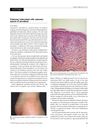
This report presents a rare case of lichen spinulosus in a 52-year-old woman, featuring hyperkeratotic follicular papules and a dense lymphohistiocytic infiltrate in affected skin areas.