 32 citations
,
December 1969 in “The Lancet”
32 citations
,
December 1969 in “The Lancet” This study found a significant shift to the telogen phase in the hair growth of children with classical marasmus compared to normal children, suggesting a connection to the chronicity of the condition.
 30 citations
,
June 2016 in “Journal of Human Genetics”
30 citations
,
June 2016 in “Journal of Human Genetics” This study found pathogenic mutations in genes EDA, EDA1R, and EDARADD in 101 out of 124 hypohidrotic ectodermal dysplasia patients, revealing 23 novel mutations and indicating genetic variability.
 30 citations
,
June 2014 in “Seminars in Immunology”
30 citations
,
June 2014 in “Seminars in Immunology” This review discusses recent advances in understanding the Eda pathway's role in developmental biology, and highlights ongoing trials and areas for further research, including Eda's potential involvement in cell processes and disease.
 22 citations
,
October 2014 in “International Journal of Trichology”
22 citations
,
October 2014 in “International Journal of Trichology” This retrospective analysis of male patients undergoing hair restoration surgery for androgenetic alopecia found that postoperative edema was the most common complication, occurring in 42.47% of cases.
 17 citations
,
August 2012 in “Journal of Medical Genetics”
17 citations
,
August 2012 in “Journal of Medical Genetics” This article reviews the genetic mutations associated with hypohidrotic ectodermal dysplasia and reports no new clinical results; the authors highlight the roles of EDA gene isoforms and related receptors.
 14 citations
,
November 1987 in “Journal of The American Academy of Dermatology”
14 citations
,
November 1987 in “Journal of The American Academy of Dermatology” A woman developed a severe skin reaction called toxic epidermal necrolysis after taking the antibiotic cephalexin.
 7 citations
,
December 2011 in “Elsevier eBooks”
7 citations
,
December 2011 in “Elsevier eBooks” The document concludes that early diagnosis and treatment are crucial for managing skin diseases in ferrets.

This report details a case of right fourth nerve palsy in a 47-year-old man following hair replacement surgery, hypothesized to be due to brainstem instability related to an anatomical variant and postoperative posture-induced cerebrospinal fluid shifts.
 January 2025 in “International Journal of Veterinary Sciences and Animal Husbandry”
 In this case report, a domestic shorthair cat with Trypanosoma evansi infection fully recovered after treatment with diminazene aceturate and supportive therapies, with no Trypanosoma detected in the blood following the treatment course.
 January 2020 in “Acta Scientiae Veterinariae”
 In this case report, a combination of ozone therapy, low-level laser, and herbal medicine gel effectively improved healing in a dog with chronic bite wounds.
 5 citations
,
February 2015 in “Dermatologic Surgery”
5 citations
,
February 2015 in “Dermatologic Surgery” Two cases of a rare skin condition were successfully treated with laser therapy, offering a non-surgical treatment option.
April 2019 in “Journal of the Endocrine Society” In this case study, the researchers reported that treating a woman with type B insulin resistance using rituximab, dexamethasone, and cyclophosphamide greatly reduced her insulin needs, but her hyperandrogenic state persisted, suggesting ovarian hyperthecosis.
18 citations
,
June 2010 in “Cell Stress and Chaperones” This study reported that heat treatment significantly increased the incidence of alopecia areata in C3H/HeJ mice, suggesting a role for induced HSPA1A/B expression in disease development.
 3 citations
,
January 2000
3 citations
,
January 2000 This chapter discusses various substances and therapies for dermatological applications, including heliotherapy, UVB, khellin, and others, but reports no new research findings.
This article discusses the health care process for patients with hyperthyroidism, emphasizing the critical role of nurses in educating patients and their families, but reports no new clinical findings.
65 citations
,
November 2008 in “Pediatric Dermatology” This study observed that phototherapy is an effective and well-tolerated treatment for childhood dermatoses, particularly for psoriasis and pityriasis lichenoides chronica.
 May 2023 in “The journal of sexual medicine”
 In this study, bilateral oophorectomy was reported as an effective treatment for normalizing androgen levels and resolving hypersexuality and related symptoms in a post-menopausal woman with ovarian hyperthecosis, suggesting its importance in addressing excess androgen production in such cases.
37 citations
,
October 2017 in “JEADV. Journal of the European Academy of Dermatology and Venereology/Journal of the European Academy of Dermatology and Venereology” This literature review reported that scalp hypothermia significantly decreases the occurrence of chemotherapy-induced alopecia, increasing effectiveness by 2.7-fold in controlled clinical trials and 3.9-fold in randomized trials, and highlighted a need for standard guidelines for its use.
 1 citations
,
January 2015 in “Journal of Pigmentary Disorders”
1 citations
,
January 2015 in “Journal of Pigmentary Disorders” This review discusses the complex relationship between melasma and factors like female sex hormones, genetics, and ultraviolet light exposure, but reports no new clinical findings.
 2 citations
,
March 2019 in “Experimental Techniques in Urology & Nephrology”
2 citations
,
March 2019 in “Experimental Techniques in Urology & Nephrology” This article reviews the dermatologic conditions associated with hemodialysis, such as pruritus, xerosis cutis, and skin infections, and does not present new findings.
 April 2018 in “Journal of Investigative Dermatology”
 This study found that DC-HIL+ myeloid derived suppressor cells are increased in the blood and skin of patients with cutaneous lupus erythematosus and show immunosuppressive properties.
 April 2020 in “Journal of the Endocrine Society”
 This case report highlights Leydig cell hyperplasia as a rare cause of increased testosterone and postmenopausal hirsutism, resolved after bilateral salpingo-oophorectomy in a 64-year-old woman.
 January 2018 in “The Kaohsiung journal of medical sciences”
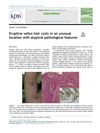
 This case report describes an atypical presentation of eruptive vellus hair cysts on the elbows, where standard diagnostic techniques were unreliable due to the loss of cystic structural integrity.
June 2025 in “JCEM Case Reports” In this case study, authors reported that a 43-year-old female patient initially showed persistently high testosterone levels due to immunoassay interference, later verified as normal using liquid chromatography-tandem mass spectrometry (LC-MS/MS), highlighting the need to consider assay artifacts in diagnosing hyperandrogenism without clinical signs.
 January 2026 in “International Journal of Homoeopathic Sciences”
 In this case study, a 26-year-old woman with hypothyroidism experienced significant improvements in energy, emotional balance, and physical discomfort after individualized homeopathic treatment with Kalium carbonium, demonstrating the potential benefits of a holistic approach to care.
May 2024 in “IntechOpen eBooks” In this study, the authors explored the efficacy of hyperbaric oxygen therapy for typical sports injuries and cosmetic surgical wounds, finding that a hormetic dose-response relationship could explain the observed successes, contrary to prevailing expert opinion that deemed this treatment ineffective for normal wounds.
 123 citations
,
September 1987 in “JAMA”
123 citations
,
September 1987 in “JAMA” This study observed that patients receiving IL-2 immunotherapy developed a skin eruption characterized by burning and pruritus, which resolved shortly after stopping the infusion, suggesting that IL-2 mediated these effects.
52 citations
,
June 1998 in “British journal of dermatology/British journal of dermatology, Supplement” This study found that normal mode ruby laser treatment for hirsutism is well tolerated and results in significant hair count reduction for at least six months, with multiple treatments offering greater effects.
 12 citations
,
January 2009 in “Gynecological Endocrinology”
12 citations
,
January 2009 in “Gynecological Endocrinology” This case report identified ovarian hyperthecosis as the cause of recent-onset androgenic symptoms in a 73-year-old woman, which was confirmed by ovary removal and led to symptom improvement.
December 2013 in “대한기계학회 춘추학술대회” This research demonstrates that a temperature controllable medical chilling device using thermal electric cooling technology effectively maintains constant cell temperatures, potentially improving tissue viability during hair transplant procedures.