 30 citations
,
April 1997 in “European journal of endocrinology”
30 citations
,
April 1997 in “European journal of endocrinology” The document concludes that managing hirsutism involves identifying the cause, using a scoring system for severity, combining cosmetic and medical treatments, encouraging weight loss, and providing psychological support, while noting the need for more research on drug treatments.
2 citations
,
March 2003 in “Endocrine Practice” The woman's symptoms and tests suggest her adrenal glands are producing too many male hormones.
 January 2025 in “International Journal of Reproduction Contraception Obstetrics and Gynecology”
 This hospital-based observational study of 300 women with hirsutism found that polycystic ovarian syndrome was the main cause of moderate hirsutism, with dietary habits and lifestyle factors, such as frequent consumption of meat, fried food, and alcohol, significantly associated with the condition.
2 citations
,
July 2024 in “Journal of the American Academy of Dermatology” Elderly patients have more severe hidradenitis suppurativa and may need different treatments.
 17 citations
,
September 2017 in “Journal of Cosmetic Dermatology”
17 citations
,
September 2017 in “Journal of Cosmetic Dermatology” In this study of women with PCOS, hirsutism strongly correlated with metabolic abnormalities, while acne and androgenic alopecia were not clear markers of biochemical hyperandrogenemia or metabolic dysfunction.
 January 2026 in “Forum Dermatologicum”
 This review analyzed scientific literature and found that dermatological symptoms, such as hirsutism and acne, frequently appear as early indicators of PCOS, reflecting hormonal imbalances and aiding diagnosis of the disorder.
July 2025 in “Colloids and Surfaces B Biointerfaces” This study found that the new delivery system HL@Mi enhanced the skin penetration, local bioavailability, and safety of minoxidil, supporting improved hair growth in an androgenetic alopecia animal model.
9 citations
,
December 1987 in “European journal of endocrinology” In this study, 12 months of cyproterone acetate and ethinyl oestradiol treatment significantly reduced hair growth rate and certain hormone levels in hirsute women, though hair density and prolactin levels remained unchanged.
 22 citations
,
August 2011 in “Endocrine Practice”
22 citations
,
August 2011 in “Endocrine Practice” This review discusses the etiology, diagnosis, and management strategies for hirsutism, noting that serious underlying disorders are rare and emphasizing targeted treatment to manage testosterone's effects.
 June 2025 in “Current Issues in Molecular Biology”
 In this laboratory study, Cucumis melo var. makuwa leaf extract significantly reduced DHT-induced apoptosis in human dermal papilla cells by modulating androgen receptor activity and gene expression, suggesting potential as a therapy for androgenetic alopecia.
 7 citations
,
February 2025 in “Stem Cell Research & Therapy”
7 citations
,
February 2025 in “Stem Cell Research & Therapy” In a study using a mouse model, HF-MSCs were reported to enhance ovarian function in cyclophosphamide-induced premature ovarian failure more effectively than HU-MSCs, potentially by preventing ferroptosis in granulosa cells via the KEAP1/NRF2/HO-1 pathway.
9 citations
,
December 1958 in “Journal of Investigative Dermatology” 9α-21-difluoro-21-desoxyhydrocortisone is the most effective at stopping hair growth in rats.
 33 citations
,
September 2008 in “Dermatologic therapy”
33 citations
,
September 2008 in “Dermatologic therapy” This review describes the clinical evaluation and management options for women with polycystic ovary syndrome, focusing on its endocrine and metabolic implications, but reports no new results.
April 2008 in “Experimental Dermatology” This article discusses the pathogenesis of hidradenitis suppurativa, highlighting follicular occlusion and inflammation as key factors in disease development, but reports no new clinical results.
 2 citations
,
December 2021 in “Cureus”
2 citations
,
December 2021 in “Cureus” This study found that cutaneous manifestations are prevalent in PCOS patients, with 68% experiencing symptoms like hirsutism and acne, highlighting the need for better awareness across medical specialties.
 5 citations
,
January 1984 in “Journal of psychosomatic obstetrics and gynecology/Journal of psychosomatic obstetrics and gynaecology”
5 citations
,
January 1984 in “Journal of psychosomatic obstetrics and gynecology/Journal of psychosomatic obstetrics and gynaecology” This study found that treatment with cyproterone acetate and ethinylestradiol in hirsute women reduced testosterone and androstenedione levels, decreased hair growth, and increased cortisol levels without changing catecholamine excretion.
 7 citations
,
December 2014 in “Australasian journal of dermatology”
7 citations
,
December 2014 in “Australasian journal of dermatology” In this study, insulin resistance was observed at similar rates in non-obese women with idiopathic hirsutism, those with PCOS, and healthy controls.
 1 citations
,
August 2012 in “Journal der Deutschen Dermatologischen Gesellschaft”
1 citations
,
August 2012 in “Journal der Deutschen Dermatologischen Gesellschaft” A woman's hyperandrogenism was caused by a genetic mutation leading to non-classic adrenogenital syndrome.
 1 citations
,
April 2018 in “Revista da Sociedade Portuguesa de Dermatologia e Venereologia”
1 citations
,
April 2018 in “Revista da Sociedade Portuguesa de Dermatologia e Venereologia” This article reviews the prevalence, causes, and associated conditions of hidradenitis suppurativa, a chronic inflammatory skin disease, but reports no new clinical findings.
October 2024 in “InnovAiT Education and inspiration for general practice” In this article, the authors review the causes, diagnosis, and treatment approaches for hirsutism in women, emphasizing diagnosis, hormonal therapies, lifestyle modifications, and cosmetic options for managing this condition in primary care settings.
 July 2023 in “Journal of the Mexican chemical society”
 This study found that Hibiscus rosa-sinensis dried leaves extract displayed the strongest pancreatic lipase inhibitory activity among 37 tested plant extracts, showing potential as an anti-obesity agent with effects comparable to the pharmaceutical drug orlistat in reducing plasma triacylglycerol levels in rats.
 1 citations
,
January 2001 in “Endocrine Practice”
1 citations
,
January 2001 in “Endocrine Practice” This study suggests that topical finasteride may benefit women with facial hirsutism, based on observations from a small sample.
 August 2021 in “Josai University Repository of Academia (Josai University)”
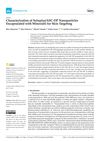
 This study found that Sol/ASC-DP nanoparticles could enhance the skin permeability of minoxidil due to improved stability and hydrophobic interactions in the nanoparticle structure.
 41 citations
,
June 2016 in “Reviews in endocrine and metabolic disorders”
41 citations
,
June 2016 in “Reviews in endocrine and metabolic disorders” This review discusses the role of hormonal dysregulation and metabolic syndrome in hidradenitis suppurativa and reports no new clinical results.
 1 citations
,
October 2018 in “International Journal of Research in Dermatology”
1 citations
,
October 2018 in “International Journal of Research in Dermatology” In this study from a south Indian hospital, idiopathic hirsutism was the most common cause of hirsutism, with a significant portion of affected women also displaying features of metabolic syndrome.
May 2018 in “DergiPark (Istanbul University)” This study found no significant relationship between urocortin 2, urocortin 3, AMH levels, and polycystic ovary syndrome in adolescents, suggesting further research is needed on this topic.
 50 citations
,
December 2010 in “Bjog: An International Journal Of Obstetrics And Gynaecology”
50 citations
,
December 2010 in “Bjog: An International Journal Of Obstetrics And Gynaecology” This study found that Sri Lankan women with polycystic ovary syndrome experienced higher psychological distress and poorer health-related quality of life, primarily linked to hirsutism rather than obesity.
This review reports no new results and discusses various topical treatments, noting that fluocortin butyl ester offers anti-inflammatory effects without systemic side effects, while combinations outperform single-agent therapies in managing hyperpigmentation.
October 2025 in “Journal of the Endocrine Society” This case series highlights the risk of iatrogenic Cushing syndrome and adrenal insufficiency among immigrant patients using over-the-counter medications from other countries, which often contain hidden glucocorticoids marketed as vitamins, prompting clinicians to perform thorough medication histories for accurate diagnosis and management.
Hirsutism is relatively common among young Greek women.