 9 citations
,
November 2013 in “Presse Medicale”
9 citations
,
November 2013 in “Presse Medicale” This article discusses clinical features and treatment options for hyperandrogenism in women and does not report new findings, highlighting current practices in diagnosis and management.
 6 citations
,
August 2018 in “BMJ open sport and exercise medicine”
6 citations
,
August 2018 in “BMJ open sport and exercise medicine” This review discusses studies on resistance training for improving PCOS symptoms and reports no new results, highlighting the need to consider diet alongside exercise and calling for more research.
 6 citations
,
January 2009 in “Elsevier eBooks”
6 citations
,
January 2009 in “Elsevier eBooks” This chapter discusses the structure and function of the skin, detailing its protective roles and the layers that comprise it, but reports no new research findings.
 4 citations
,
December 2009 in “Elsevier eBooks”
4 citations
,
December 2009 in “Elsevier eBooks” This review discusses the nutritional and medicinal benefits of breadfruit and highlights challenges in promoting its consumption, but reports no new empirical findings.
 2 citations
,
March 2016 in “InnovAiT”
2 citations
,
March 2016 in “InnovAiT” This article discusses the signs, symptoms, and associated risks of polycystic ovary syndrome, without providing new clinical results; it emphasizes the link between being overweight and increased metabolic risks.
 1 citations
,
April 2025 in “International Journal for Research in Applied Science and Engineering Technology”
1 citations
,
April 2025 in “International Journal for Research in Applied Science and Engineering Technology” In this study, researchers developed an herbal face pack using ingredients like turmeric and neem, assessing its safety and efficacy. They reported that the formulation's properties, such as pH and stability, support its potential as a safe and effective alternative to synthetic skincare products.
 1 citations
,
June 2024 in “International Journal of Drug Delivery Technology”
1 citations
,
June 2024 in “International Journal of Drug Delivery Technology” This review suggests that herbal hair serums, which are claimed to nourish the scalp and promote hair growth, may effectively treat alopecia without adverse effects, offering a natural alternative to allopathic medications that often have side effects.
 1 citations
,
January 2023 in “Journal of pharmaceutical and biological sciences”
1 citations
,
January 2023 in “Journal of pharmaceutical and biological sciences” This review examines ethosomal structures and their mechanisms as skin delivery systems, outlining preparation methods and applications but presents no new experimental findings.
 1 citations
,
October 2022 in “International Journal for Research in Applied Science and Engineering Technology”
1 citations
,
October 2022 in “International Journal for Research in Applied Science and Engineering Technology” This review discusses the diverse applications of algae in non-energy sectors, including pharmaceuticals, food ingredients, pigments, and cosmetics, and reports no new experimental results.
 1 citations
,
March 2012 in “Revue neurologique”
1 citations
,
March 2012 in “Revue neurologique” This study reports that both a 9-month-old with phenylketonuria on a phenylalanine-free diet and mice on a deficient diet exhibited severe health issues, highlighting the need for cautious dietary management.
 June 2026 in “International Journal of Ayurveda and Pharma Research”
 This study documented a case where Ayurvedic treatments for plaque psoriasis significantly reduced the severity of symptoms, as measured by an 84% improvement in the Psoriasis Area and Severity Index score from 6.5 to 1.04.
 May 2026 in “International Research Journal of Modernization in Engineering Technology and Science”
 This study developed an herbal shampoo using traditional plant ingredients, demonstrating its effective cleansing, conditioning, and protective properties while minimizing synthetic chemicals, aligning with consumer preferences for natural and sustainable personal care products.
 April 2026 in “International Journal of Drug Delivery Technology”
 In this study, phytochemical analysis and molecular docking suggested that bioactive compounds in several Ayurvedic herbs may interact persistently with hair growth and antifungal protein targets, indicating potential as plant-based treatments for dandruff and hair loss.
 January 2026 in “Indus journal of bioscience research.”
 In this study, Hibiscus rosa-sinensis extract was used to formulate and evaluate herbal cosmetic creams for their antioxidant properties, stability, and effectiveness. The formulations demonstrated strong antioxidant potential, stability under various conditions, and favorable cosmetic qualities, suggesting HRS as a beneficial ingredient in skincare products.
 November 2025 in “Frontiers in Pharmacology”
 This mini-review examines ethnopharmacological approaches to manage hair loss in postmenopausal women, highlighting promising botanical remedies like saw palmetto, rosemary oil, and ginseng. The authors underscore a need for more interdisciplinary trials and focus on traditional remedies' multifaceted benefits, while noting gaps in menopausal-specific evidence.
 November 2025 in “Journal of Ayurveda and Integrated Medical Sciences”
 This study evaluated an herbal hair dye made from plant-based ingredients, finding it stable, non-toxic, and effective in providing lasting color, improving hair texture, and reducing hair fall, making it a viable and eco-friendly alternative to chemical dyes.
 October 2025 in “Clinical Cosmetic and Investigational Dermatology”
 This study synthesizes knowledge of how dendritic cell signals, epithelial integrins, and fibroblast activity converge on TGF-β1 to maintain or disrupt skin healing, contrasting normal and fibrotic scar formation and suggesting possible integrin and immune-targeted treatments for skin fibrosis.
 September 2025 in “Acta Scientific Pharmaceutical Sciences”
 This paper examines the rising popularity and potential benefits of rice water for hair care, noting that while it contains beneficial compounds like inositol that may increase hair strength and decrease frizz, there is still no definitive scientific proof of its efficacy.
 June 2025 in “International Journal for Research in Applied Science and Engineering Technology”
 This study evaluated the physicochemical properties of an herbal shampoo formulated with natural ingredients like hibiscus and henna and compared it to a common marketed shampoo, finding it effectively replaced some chemical components with safer alternatives while maintaining similar characteristics.
 June 2025 in “INTERANTIONAL JOURNAL OF SCIENTIFIC RESEARCH IN ENGINEERING AND MANAGEMENT”
 This study assessed a herbal dry shampoo comprising natural ingredients like Shikakai and Reetha, finding it effectively passed physicochemical tests but highlighted the need for more research to optimize product quality and safety.
 May 2025 in “International Journal for Research in Applied Science and Engineering Technology”
 In this study, researchers prepared and evaluated a herbal hair oil using various plant parts, reporting that the oil met all tested parameters and suggested benefits such as promoting hair growth and preventing dandruff, offering an alternative to chemical products.
 April 2025 in “International Journal for Research in Applied Science and Engineering Technology”
 This study developed a herbal face pack using natural ingredients like neem, turmeric, and sandalwood, and concluded that it can be a safe and effective alternative to chemical-based skincare products after evaluating its stability, spreadability, and non-irritant properties.
 February 2025 in “International Journal of Advanced Research in Science Communication and Technology”
 This review highlights the potential benefits of fenugreek seed-based oils for hair health, suggesting they may enhance scalp health and hair growth while reducing conditions like dandruff and hair loss.
 January 2025 in “International Journal for Research Trends and Innovation”
 This study assessed a herbal hair oil made from various plant ingredients, observing it supported hair growth and maintained stability for 45 days, with the phytochemical profile indicating the presence of saponins, sulfur, and ascorbic acid.

This study reports that a polyherbal hair mask made from ingredients like strawberry, amla, and fenugreek demonstrates effectiveness as a non-toxic alternative to chemical hair products, promoting hair growth and scalp nourishment while offering ease of use and stability.
 January 2025 in “International Journal of Pharmacognosy and Clinical Research”
 This study reported the development of a scalp serum containing Beta-Sitosterol and nutrient-rich oils, showing stable physicochemical properties, suggesting potential for promoting hair growth and scalp health, though further clinical testing in humans is needed to confirm effectiveness.
 December 2024 in “Asian Journal of Pharmaceutical and Clinical Research”
 This study reviews the performance and safety of synthetic medications like minoxidil and finasteride compared to herbal remedies such as saw palmetto for treating alopecia, highlighting the need for more research to better understand their therapeutic roles and optimize patient care.
 May 2024 in “International Journal of Science and Research Archive”
 This study found that a herbal hair oil prepared using raw herbs in coconut oil may effectively address dandruff and hair fall, attributed to its components like saponins and antioxidants that enhance hair health.
 March 2024 in “World Journal Of Advanced Research and Reviews”
 This study highlights the potential benefits of herbal hair oil in improving hair health, controlling frizz, and preventing hair loss, with common ingredients like coconut, sesame, and mustard oils being frequently used.
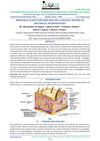 March 2024 in “International Research Journal Of Modernization In Engineering Technology And Science”
 This review highlights the beneficial effects of certain herbal drugs in treating skin diseases, such as their healing, antifungal, antiviral, antibacterial, anti-inflammatory, and antitumor-promoting activities, emphasizing recent technical advancements in the field over the past 17 years.