 3 citations
,
September 2019 in “Clinical and experimental dermatology”
3 citations
,
September 2019 in “Clinical and experimental dermatology” This study found that basal cell carcinoma cells differentiate along hair follicle lineages and may be influenced by hair follicle cycle modulators for potential therapeutic targeting.
March 2026 in “Journal of Pain” Preoperative stress markers alone don't predict chronic post-surgical pain.
 January 1999 in “American Journal of Medical Genetics Part A”
 This case report describes a rare occurrence of ectodermal dysplasia features in a 14-year-old with MBTPS1 gene variants, expanding the known spectrum of related disorders.
 April 2023 in “The journal of investigative dermatology/Journal of investigative dermatology”
 This study found that HPV8-induced actinic keratoses may mechanistically involve Lrig1+ hair follicle keratinocyte stem cells, with the E6 gene promoting downstream STAT3 activity in a mouse model.
September 2025 in “JCEM Case Reports” In this case report, a 46-year-old woman initially diagnosed with 21-hydroxylase deficiency congenital adrenal hyperplasia was later identified as having 3β-HSD2 deficiency after further investigation, highlighting the need for awareness of rarer CAH forms to prevent delayed diagnosis and insufficient treatment.
 21 citations
,
October 1980 in “Gastroenterology”
21 citations
,
October 1980 in “Gastroenterology” This report is the first to associate Cronkhite-Canada syndrome with multiple myeloma, describing regenerative pseudopolyps in a 58-year-old woman rather than true adenomatous polyps.
 72 citations
,
July 2008 in “Dermatologic Therapy”
72 citations
,
July 2008 in “Dermatologic Therapy” This article reviews central centrifugal cicatricial alopecia in African-descent females, discussing possible causes, associated styling habits, and potential treatments, but reports no new clinical findings; the authors call for further research.
10 citations
,
January 1989 in “Archives of Dermatological Research” The method effectively analyzes human hair proteins, especially nonfilamentous ones.
1 citations
,
March 2018 in “Journal of lasers in medical sciences” This study found that combining topical capislow with laser hair removal significantly enhanced hair reduction compared to laser alone, although the beneficial effects lasted only while capislow was applied.
 1 citations
,
February 2009 in “Clinical and Experimental Dermatology”
1 citations
,
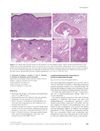
February 2009 in “Clinical and Experimental Dermatology” This study reports an improvement in lymphomatoid papulosis type A in a 52-year-old patient who concurrently used hormone-replacement therapy.
 December 2020 in “bioRxiv (Cold Spring Harbor Laboratory)”
 In this study, 25% of CCHCR1-deficient mice exposed to stress developed hair loss similar to human alopecia areata, suggesting CCHCR1 is a susceptibility gene for the disease.
 35 citations
,
March 2012 in “Experimental and Clinical Endocrinology & Diabetes”
35 citations
,
March 2012 in “Experimental and Clinical Endocrinology & Diabetes” This article discusses various causes of hyperandrogenism in women and highlights diagnostic considerations for conditions such as PCOS, NCCAH, Cushing's disease, and androgen-secreting tumors, without reporting new clinical results.
7 citations
,
August 2017 in “Genetic testing and molecular biomarkers” This report suggests that patients with primary spontaneous pneumothorax should be evaluated for FLCN mutations, as they may indicate Birt-Hogg-Dube syndrome and associated cancer risks.
6 citations
,
February 2023 in “Genes” This study found that overexpression of the CUX1 protein promotes proliferation of Hu sheep dermal papilla cells and affects key genes in the Wnt/β-catenin signaling pathway.
 January 2025 in “Turkish Journal of Cerebrovascular Diseases”
 This case report details two consanguineous patients with cerebral autosomal recessive arteriopathy, both having the same HTRA1 gene mutation, but exhibiting different clinical presentations, including one with epileptic seizures and lobar hemorrhages—previously undocumented in this condition.
 October 2007 in “Clinical Biochemistry”
 This study identified a new genotype, V281+I172N/V281L, linked to non-classical 21-hydroxylase deficiency, suggesting it should be considered in genetic panels for the condition.
 151 citations
,
December 2004 in “Annals of the New York Academy of Sciences”
151 citations
,
December 2004 in “Annals of the New York Academy of Sciences” This review discusses nonclassical 21-hydroxylase deficiency as the most common autosomal recessive disorder in humans and highlights the effectiveness of glucocorticoid treatment in reversing related symptoms.
 4 citations
,
November 2016 in “Journal of Cutaneous Pathology”
4 citations
,
November 2016 in “Journal of Cutaneous Pathology” This letter discusses three plasmacytoid dendritic cell-related parameters that may help differentiate lupus alopecia from lichen planopilaris, but it reports no new study results.
2 citations
,
October 2018 in “Skin appendage disorders” This case report describes a 2-year-old boy with uncombable hair syndrome-like hair changes that resolved spontaneously after 9 months, with genetic analysis revealing a PLCD1 gene variant.
 4 citations
,
June 2016 in “Journal of Pharmacopuncture”
4 citations
,
June 2016 in “Journal of Pharmacopuncture” This study found that Cornu cervi pantotrichum pharmacopuncture solution significantly promoted hair growth in mice by enhancing hair follicular cell proliferation and up-regulating FGF-7 expression.
9 citations
,
October 2020 in “Journal of the American Academy of Dermatology” Patients with central centrifugal cicatricial alopecia may have a higher risk of breast and colorectal cancer.
September 2026 in “British Journal of Dermatology” This study identified 11 genes associated with non-syndromic hereditary hypotrichosis in a Chinese cohort and proposed a preliminary framework for phenotype-driven candidate-gene prioritization to aid clinical evaluation.
 March 2024 in “Stem cell research & therapy”
 This study found that conditioned medium from human dental pulp stem cells (particularly under hypoxic conditions) improved keratinocyte survival and hair regrowth in a chemotherapy-induced alopecia mouse model and did not promote tumor growth, suggesting potential for safe therapeutic use.
166 citations
,
July 1999 in “American Journal Of Pathology” This study found that the loss of a functional hr gene in mice leads to premature and abnormal hair follicle regression, disrupting normal hair cycling and architecture.
 15 citations
,
January 2015 in “Skin Pharmacology and Physiology”
15 citations
,
January 2015 in “Skin Pharmacology and Physiology” This study indicates that targeting the PTH/PTHrP receptor may potentially stimulate hair growth, particularly for chemotherapy-induced alopecia, as observed in hairless and cyclophosphamide-treated mice.
 April 2017 in “Journal of Investigative Dermatology”
 In this study, HPH-15, a newly synthesized compound, demonstrated potential in reducing skin fibrosis in a mouse model by targeting underlying pathogenic mechanisms and exhibited a good safety profile, warranting further clinical trials for fibrotic skin disorders like systemic sclerosis.
11 citations
,
February 2011 in “The Journal of Dermatology” This study observed four consanguineous families with congenital atrichia with papular lesions and identified three novel mutations in the hairless gene, which may contribute to the disorder.
 28 citations
,
August 2018 in “Dermatologic Surgery”
28 citations
,
August 2018 in “Dermatologic Surgery” This abstract is a listing of affiliations and funding, with no new study or results reported.
 3 citations
,
February 2020 in “The journal of gene medicine”
3 citations
,
February 2020 in “The journal of gene medicine” This study found a recurrent nonsense mutation in the HR gene linked to atrichia with papular lesions in two Kashmiri families, suggesting whole exome sequencing as an efficient method for diagnosis and genetic counseling.
 February 2026 in “Chromatographia”
 This study used advanced chromatographic and mass spectrometric techniques to develop a method for reliably detecting 17 hair growth compounds in consumer products, aiming to enhance regulatory compliance and ensure consumer safety against illicit compounds.