This study mapped the curly mutation in mice to a specific region on chromosome 11, identifying it as a candidate model for studying human genetic hair disorders.
 1 citations
,
August 2012 in “Journal der Deutschen Dermatologischen Gesellschaft”
1 citations
,
August 2012 in “Journal der Deutschen Dermatologischen Gesellschaft” A woman's hyperandrogenism was caused by a genetic mutation leading to non-classic adrenogenital syndrome.
 October 2024 in “Journal of the Endocrine Society”
 This study examined uncharacterized CYP21A2 gene variants related to non-classic congenital adrenal hyperplasia and found that several mutations reduce enzyme activity, which may help improve diagnostic and treatment strategies.
2 citations
,
November 1992 in “Journal of dermatology” This study found that cells isolated from human scalp hair follicles proliferated well in a specific culture medium and possessed keratins characteristic of hair-forming cells.
 January 2006 in “Advances in developmental biology”
 This review discusses the roles of the hairless (HR) protein as a corepressor, particularly its impact on RORα-mediated transcriptional repression, and reports no new experimental findings.
10 citations
,
January 2004 in “Journal of Investigative Dermatology” Krt6a-Cre transgenic mice help study gene effects on hair follicle development and tumor suppression.
April 2020 in “The journal of investigative dermatology/Journal of investigative dermatology” This source reports that a study by Liu et al. analyzed genetic factors influencing adalimumab response in hidradenitis suppurativa, finding a specific genetic variant (SNP rs59532114) associated with an inadequate response to the treatment due to increased abscess and inflammatory nodule counts.

In a case report, this study identified a new genetic variant in a six-year-old girl from Saudi Arabia with hypotrichosis and juvenile macular dystrophy, expanding the understanding of the genetic spectrum of this rare condition in the region.
5 citations
,
February 2016 in “Hanbang an i bi inhu pibugwa hakoeji/Hanbang an'i'bi'in'hu pibu'gwa haghoeji” This study found that HRHDT combined with microneedle therapy improved hair growth in a mouse model of alopecia more effectively than microneedle therapy alone.
13 citations
,
February 2024 in “Clinical Cosmetic and Investigational Dermatology” This study demonstrated that intradermal treatment with a medical device using Polynucleotides High Purification Technology (PN HPT) significantly improved skin surface, firmness, pigmentation, and radiance in 30 Asian subjects, with benefits lasting up to six months and no adverse events reported.
8 citations
,
April 1997 in “Experimental Dermatology” This study found that hHbl gene expression is localized in the cortical cells of the human hair shaft and is notably high in pilomatricoma cells transitioning to hair shaft keratinocytes.
 24 citations
,
May 2019 in “PLOS genetics”
24 citations
,
May 2019 in “PLOS genetics” This study reports that compound heterozygous loss-of-function mutations in the HEPHL1 gene in a child were associated with abnormal hair and cognitive issues, linking altered ferroxidase activity to hair disorders.
 November 2022 in “Journal of Investigative Dermatology”
 This study found that human scalp hair follicles produce neurohormones and responded to GHRH stimulation by prolonging hair growth, suggesting a functional peripheral HPS neuroendocrine signaling axis in the skin.
 1 citations
,
October 2012 in “The Journal of Dermatology”
1 citations
,
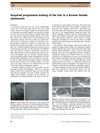
October 2012 in “The Journal of Dermatology” This letter to the editor describes a case of acquired progressive kinking of the hair in a Korean female adolescent, but no new research findings are reported.
38 citations
,
October 2001 in “British Journal of Dermatology” This study identified a new keratin, K6irs, as a potential histological marker for the inner root sheath of hair follicles in mice and humans, and as a candidate gene for hereditary hair defects.
1 citations
,
April 2015 in “International Journal of Pediatrics and Adolescent Medicine” This case report describes a patient with hemophagocytic lymphohistiocytosis who developed hypertrichosis and eyelash trichomegaly, likely linked to cyclosporine-A and prednisolone therapy, with expected resolution after stopping treatment.
54 citations
,
February 1994 in “Journal of Investigative Dermatology” 60 citations
,
March 2006 in “Journal of Medical Genetics” This study identified a homozygous missense mutation in the KRTHB5 gene linked to pure hair–nail ectodermal dysplasias in a large consanguineous Pakistani family, providing new insights into the condition's molecular pathogenesis.
January 2002 in “Agritrop (Cirad)” This study found that mutations in exon 3 of the hr gene are strongly associated with congenital hypotrichosis in Valle del Belice sheep, suggesting a potential genetic link to the disorder.
 1 citations
,
December 2023 in “Curēus”
1 citations
,
December 2023 in “Curēus” This study observed that five out of fourteen individuals aged 13-16 years, who were homozygous for the p.C282Y mutation related to hemochromatosis, had increased liver and phlebotomy-mobilized iron levels.
130 citations
,
April 2001 in “Journal of Investigative Dermatology” This study reports the first keratin gene mutation affecting the tail domain, leading to a unique cytoskeletal abnormality and severe epidermal hyperkeratosis, highlighting the tail domain's critical role in keratin organization.
March 2025 in “Multidisciplinary Science Journal” This study found that Sonic hedgehog pathway expression strongly correlates with tail regeneration in house geckos, peaking early and decreasing afterward.
 April 2020 in “Journal of animal research”
 In this study, researchers identified hair follicle stem cells in the bulge region of canine hair follicles, suggesting potential applications for future translational research.
110 citations
,
February 2024 in “Journal of Chemical Information and Modeling” This study describes the PandaOmics platform, which uses AI and bioinformatics to identify new therapeutic targets and biomarkers for various diseases, demonstrating validation in laboratory and animal studies.
88 citations
,
August 2019 in “Frontiers in immunology” This review discusses the role of tyrosine kinase signaling pathways in autoimmune and inflammatory skin diseases and reports no new clinical results, highlighting ongoing research into small-molecule tyrosine kinase inhibitors as potential treatments.
81 citations
,
September 2013 in “PLoS ONE” This study identified gene expression differences between dermal papilla cells from primary and secondary hair follicles in Cashmere goats, highlighting their roles in hair follicle morphogenesis.
40 citations
,
July 2024 in “Bioengineering” This review found significant progress in 3D bioprinting for surgery, noting advances in creating complex tissue constructs, while highlighting ongoing challenges like vascularization and integration with host tissue, emphasizing the need for further research and regulatory development.
37 citations
,
May 1999 in “Annals of pharmacotherapy/The annals of pharmacotherapy” This review describes psychotropic drug-related hair loss as a possible but uncommon side effect, with resolution typically achieved by discontinuing the medication, and emphasizes clinician-patient discussions for managing the condition.
34 citations
,
August 2019 in “Journal of Allergy and Clinical Immunology” mTORC2 is crucial for healthy skin barrier by regulating lipids and filaggrin.
 26 citations
,
July 2021 in “Frontiers in Cell and Developmental Biology”
26 citations
,
July 2021 in “Frontiers in Cell and Developmental Biology” This review discusses mesenchymal stromal cell-conditioned medium for various skin conditions and found improvements in wound healing, hair restoration, and more, but emphasizes the need for further research to validate these findings.