 36 citations
,
September 2009 in “Journal of Cellular and Molecular Medicine”
36 citations
,
September 2009 in “Journal of Cellular and Molecular Medicine” This review addresses the role of skin-resident adult stem/progenitor cells in skin homeostasis, disease, and cancer development, and reports no new research results.
 31 citations
,
July 2015 in “Clinical, Cosmetic and Investigational Dermatology”
31 citations
,
July 2015 in “Clinical, Cosmetic and Investigational Dermatology” This article discusses the challenges and possible solutions in hair restoration surgery, focusing on donor hair availability, hair survival, and concealing surgical evidence, and reports no new clinical results.
 30 citations
,
July 2004 in “Fertility and Sterility”
30 citations
,
July 2004 in “Fertility and Sterility” Amenorrhea is when a woman doesn't have periods, with primary amenorrhea starting by age 15 or within five years of breast development, and secondary amenorrhea when periods stop for three months. It affects 3-4% of women not pregnant, breastfeeding, or in menopause, mainly due to polycystic ovary syndrome, hypothalamic amenorrhea, hyperprolactinemia, and ovarian failure.
 28 citations
,
October 2013 in “Cornea”
28 citations
,
October 2013 in “Cornea” This review discusses the strategies and progress in developing bioengineered organ replacement therapies but reports no new clinical results, highlighting the potential for future regenerative solutions.
 27 citations
,
June 2023 in “Nature”
27 citations
,
June 2023 in “Nature” In this study using genetic mouse models, researchers discovered that senescent melanocytes in nevi secrete osteopontin, which activates hair stem cells, enhancing hair growth; this process is mirrored in human hairy nevi, suggesting a potential therapeutic target for regenerative disorders.
 23 citations
,
February 2004 in “Clinical and Experimental Ophthalmology”
23 citations
,
February 2004 in “Clinical and Experimental Ophthalmology” This case report describes a 68-year-old woman with metastatic breast cancer who experienced significant improvement in visual acuity after stopping tamoxifen, which was associated with bilateral optic neuropathies.
 22 citations
,
September 2004 in “Journal of The European Academy of Dermatology and Venereology”
22 citations
,
September 2004 in “Journal of The European Academy of Dermatology and Venereology” Bimatoprost can cause longer, thicker, darker eyelashes and eyebrows.
 22 citations
,
June 1980 in “International Journal of Dermatology”
22 citations
,
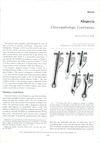
June 1980 in “International Journal of Dermatology” The document concludes that correct diagnosis of alopecia types is crucial, scalp biopsies are important, and more research is needed.
 21 citations
,
September 2015 in “Journal of the European Academy of Dermatology and Venereology”
21 citations
,
September 2015 in “Journal of the European Academy of Dermatology and Venereology” This review examines the diagnostic significance of yellow and orange colors in skin lesions and concludes that their role is often underrepresented in the literature.
 21 citations
,
August 2011 in “Clinics in Dermatology”
21 citations
,
August 2011 in “Clinics in Dermatology” This review discusses skin signs that can indicate systemic diseases and provides no new clinical results; it aims to aid physicians in diagnosing these conditions.
 21 citations
,
September 2004 in “Fertility and Sterility”
21 citations
,
September 2004 in “Fertility and Sterility” Amenorrhea, or the absence of periods, should be evaluated by age 15 or within five years of early breast development, and is most commonly caused by conditions like polycystic ovary syndrome and hypothalamic amenorrhea.
 20 citations
,
February 2004 in “Clinical and Experimental Ophthalmology”
20 citations
,
February 2004 in “Clinical and Experimental Ophthalmology” This paper presents two cases of rare intraorbital ophthalmic artery aneurysms associated with arteriovenous malformations and discusses their clinical presentation, pathogenesis, and management, but reports no new clinical outcomes.
 17 citations
,
December 2019 in “Stem Cell Research & Therapy”
17 citations
,
December 2019 in “Stem Cell Research & Therapy” This study found that their system effectively supports the rapid formation of human hair follicle organoids, providing a platform for studying hair regeneration and drug screening.
 16 citations
,
February 2018 in “BMC Genomics”
16 citations
,
February 2018 in “BMC Genomics” This paper reviews genome-based personalized medicine developments using Web services for analyzing SNPs in reproductive potential but reports no new clinical findings.
 16 citations
,
January 2007 in “JEADV. Journal of the European Academy of Dermatology and Venereology/Journal of the European Academy of Dermatology and Venereology”
16 citations
,
January 2007 in “JEADV. Journal of the European Academy of Dermatology and Venereology/Journal of the European Academy of Dermatology and Venereology” A man had an allergic reaction to minoxidil, which stopped after he discontinued use and started corticosteroids.
 14 citations
,
September 2016 in “Journal of Cutaneous Pathology”
14 citations
,
September 2016 in “Journal of Cutaneous Pathology” This review discusses the classification and diagnosis of primary scalp alopecia, focusing on scarring and non-scarring types, and reports no new clinical results; it emphasizes simplified diagnostic pathways and tissue processing techniques.
 14 citations
,
October 2006 in “Journal of The American Academy of Dermatology”
14 citations
,
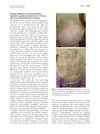
October 2006 in “Journal of The American Academy of Dermatology” This report highlights a case where a woman's use of the dopamine agonist pramipexole for Parkinson's disease was associated with hair loss, which improved after discontinuing the drug.
 13 citations
,
February 2004 in “Clinical and Experimental Ophthalmology”
13 citations
,
February 2004 in “Clinical and Experimental Ophthalmology” This report describes the clinical and histopathological features of lipoid proteinosis in a brother and sister with lid lesions, highlighting the importance of recognizing such lesions for diagnosis.
 12 citations
,
February 2012 in “New England journal of medicine/The New England journal of medicine”
12 citations
,
February 2012 in “New England journal of medicine/The New England journal of medicine” This clinical case report describes a 72-year-old man who experienced significant weight loss and frequent loose stools over eight months, presenting with fatigue.
 12 citations
,
May 1989 in “Postgraduate Medicine”
12 citations
,
May 1989 in “Postgraduate Medicine” This article discusses treatments for male pattern baldness, noting that minoxidil is effective for improving baldness at the scalp vertex in young men, and reports no new clinical results.
 11 citations
,
July 2017 in “Regenerative Medicine”
11 citations
,
July 2017 in “Regenerative Medicine” This study found that the patch assay effectively reconstituted mature hair follicles using culture-expanded human fetal cells and may serve as a method to assess cell trichogenicity.
 11 citations
,
August 2013 in “Facial Plastic Surgery Clinics of North America”
11 citations
,
August 2013 in “Facial Plastic Surgery Clinics of North America” This review discusses the history and challenges of hair follicle regeneration using follicular fragments and dissociated cells, without presenting new clinical results.
 11 citations
,
May 2011 in “World Journal of Pediatrics”
11 citations
,
May 2011 in “World Journal of Pediatrics” The document emphasizes the importance of correctly identifying and classifying genetic hair disorders to help diagnose related health conditions.
 11 citations
,
September 2010 in “American Journal of Medical Genetics - Part A”
11 citations
,
September 2010 in “American Journal of Medical Genetics - Part A” This study reports a mutation in the U2HR gene causing Marie Unna hereditary hypotrichosis in a Turkish family and notes eyebrow loss as a diagnostic clue.
 11 citations
,
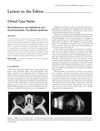
February 2004 in “Clinical and Experimental Ophthalmology”
11 citations
,
February 2004 in “Clinical and Experimental Ophthalmology” In this case report, the authors suggest an association between prolonged finasteride use and anterior subcapsular cataracts, as observed in a 43-year-old man, marking the first reported instance.
 11 citations
,
May 1998 in “Child's nervous system”
11 citations
,
May 1998 in “Child's nervous system” This case report describes a 5-day-old male infant with a constellation of symptoms, including leptomeningeal angiomatosis, hair follicle nevus, and congenital alopecia, potentially representing a novel neurocutaneous syndrome.
 10 citations
,
November 2012 in “The journal of investigative dermatology/Journal of investigative dermatology”
10 citations
,
November 2012 in “The journal of investigative dermatology/Journal of investigative dermatology” This study reported higher dihydrotestosterone and testosterone levels in balding Korean and Caucasian subjects compared to non-balding controls, with variations suggesting racial differences in androgen metabolism.
 9 citations
,
February 2004 in “Clinical and Experimental Ophthalmology”
9 citations
,
February 2004 in “Clinical and Experimental Ophthalmology” This report documents the second known case of Castleman's disease in the lacrimal gland, diagnosed in an 84-year-old woman through histological examination after excising a left upper lid mass.
 7 citations
,
December 2016 in “British Journal of Dermatology”
7 citations
,
December 2016 in “British Journal of Dermatology” This report presents evidence that alopecia areata incognita may be a possible mechanism of hair loss in patients with Cronkhite–Canada syndrome.
 7 citations
,
April 2012 in “Biomolecular concepts”
7 citations
,
April 2012 in “Biomolecular concepts” This article reviews the role of keratins in epithelial function and structure, discussing their involvement in growth control, organelle functions, and pathomechanisms of disorders, but reports no new clinical results.