This source highlights Amla's potential as a natural remedy due to its high vitamin C, fiber, iron, and antioxidant content, marking its benefits in slowing aging, enhancing hair and skin health, managing diabetes, and exhibiting anticancer, antioxidant, and immunomodulatory effects.
 October 2025 in “International Journal of Research and Review”
 This study highlights the potential benefits of herbal soaps and shampoo bars as eco-friendly alternatives to conventional cosmetics, noting their antibacterial, antifungal, and antioxidant properties as well as sustainability advantages such as reduced plastic use and avoidance of synthetic chemicals.
 May 2024 in “International Journal of Advanced Research in Science Communication and Technology”
 In this study, the preparation of herbal hair oil from ingredients like Amla, Hibiscus, and Bhringraj was reported to show anti-hairfall properties, along with beneficial effects such as anti-dandruff activity and improved scalp blood circulation, while meeting standard evaluation criteria for stability and organoleptic properties.
 July 2018 in “International journal of research - granthaalayah”
 In this clinical trial, the authors observed that Dravanti beeja lepa may be safe and effective for promoting hair regrowth in patients with Indralupta (Alopecia Areata).
January 2024 in “Molecules/Molecules online/Molecules annual” In this study, researchers identified eight compounds in Suaeda glauca and reported that its extract may improve hair loss by affecting VEGF, IGF-1 expression, and Wnt/β-catenin signaling, especially compound 4, in human cell models.
4 citations
,
January 2018 in “Research journal of pharmacy and technology” This study found that Wera leaf extract, particularly its n-hexane fraction, significantly stimulated hair growth, suggesting its potential as an antialopecia treatment.
 1 citations
,
September 2022 in “Evidence-based Complementary and Alternative Medicine”
1 citations
,
September 2022 in “Evidence-based Complementary and Alternative Medicine” In this study, Gardenia florida fruit extract promoted hair growth in vitro and in vivo by enhancing hair growth-promoting gene expression and increasing hair follicle number, size, and depth in mice.
 October 2024 in “Bangladesh Journal of Botany”
 This study found that cinnamic acid stress inhibited root growth more in cucumber seedlings than in figleaf gourd, potentially due to differences in hormone content and production rates.
 2 citations
,
October 2024 in “Tropical Journal of Pharmaceutical and Life Sciences”
2 citations
,
October 2024 in “Tropical Journal of Pharmaceutical and Life Sciences” This review explores Dracaena trifasciata, known as mother-in-law's tongue, detailing its botanical properties, traditional medicinal uses, and the pharmacological and phytochemical characteristics observed in various studies.
 March 2023 in “Journal of pharmacognosy and phytochemistry”
 This study identified numerous nutraceutical components in unripe fruits of three Musa species, potentially valuable for developing pharmaceuticals that promote human health.
 November 2015 in “Indian drugs”
 This study found that the aerial roots of Ficus benghalensis Linn contain flavonoids, phenolics, and saponins, with an ethyl acetate extract being particularly rich in flavonoids.
 May 2024 in “Jurnal Lmu Farmasi dan Kesehatan/”
 In an experimental study, researchers evaluated shampoo formulations using celery leaf extract (Apium graveolens L) for hair growth and found that a 2% extract concentration provided the most favorable physical and chemical properties compared to other formulations.
December 2020 in “Jurnal Kedokteran Hewan” In this study, researchers found that cayenne leaf extract significantly enhanced hair length and quantity in mice, with a 10% concentration being the most effective for stimulating growth.
 March 2026 in “Zenodo (CERN European Organization for Nuclear Research)”
 This study evaluated a polyherbal hair growth serum containing Carica papaya leaves, Aloe vera gel, sesame seed oil, and neem leaves, finding it significantly improved hair density, reduced hair fall, and enhanced scalp health, suggesting it as a promising alternative for managing hair loss.
 March 2026 in “Mammalogy Notes”
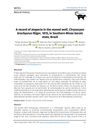
 In this report, the sighting of a maned wolf in a rural area of Brazil with severe hair loss, likely due to alopecia, was documented, and it was suspected that the condition resulted from disease transmission from domestic dogs.
 13 citations
,
May 2019 in “Cancer Prevention Research”
13 citations
,
May 2019 in “Cancer Prevention Research” This study found that a three-month regimen of leucoselect phytosome, a grape seed extract complex, was well tolerated and significantly reduced bronchial proliferation markers in heavy active and former smokers.
 July 2026 in “International Journal of Drug Delivery Technology”
 This study evaluated a Piper betle leaf emulgel for topical use and found it to have good stability, non-irritant properties, and significant hair growth activity in albino mice, suggesting its potential for dermatological and hair growth applications.
22 citations
,
September 2013 in “Science international” This review summarizes the health benefits of various leafy spices, highlighting their nutritional and medicinal properties, but it presents no new research findings and emphasizes the need for further studies to develop medicines from these herbs.
September 2023 in “Zenodo (CERN European Organization for Nuclear Research)” This source compiles information on Calotropis gigantea, an Asclepiadaceae plant used in traditional medicine for treating conditions like leprosy, asthma, vertigo, and hair loss, highlighting its diverse medicinal potential.
 April 2026 in “SHILAP Revista de lepidopterología”
 In this study, Myrtus communis leaf extract significantly reduced IL-1α expression and increased VEGF expression in human keratinocytes, which the researchers suggest may be linked to its traditional use in treating hair loss and wound healing. Further investigation is needed to clarify its mechanisms.
December 2023 in “International Journal of Health and Pharmaceutical” This study investigated the effects of a derma pen treatment using green betel leaf extract cream on hair development in female Wistar rats, highlighting the antioxidant and anti-inflammatory properties of betel leaves that may aid in hair growth and condition.
1 citations
,
October 2015 in “Interest : Jurnal Ilmu Kesehatan” In this study, both gel and microemulsion formulas containing waru leaves and Java Tamarind extracts were found to have similar in vivo hair growth activity in rabbits.
 37 citations
,
January 1993 in “Yakugaku zasshi”
37 citations
,
January 1993 in “Yakugaku zasshi” This study found that a 70% ethanolic extract from Ginkgo biloba leaves promotes hair regrowth in C3H mice.
 2 citations
,
August 2010 in “Journal of Scientific Research”
2 citations
,
August 2010 in “Journal of Scientific Research” This study provides detailed macro and microscopical observations of Tridax procumbens Linn. leaf, which could aid in its identification.
 December 2025 in “Zenodo (CERN European Organization for Nuclear Research)”
 This review highlights the potential of ridge gourd (Luffa acutangula) in promoting healthy hair growth due to its nutrients and antioxidants, with suggestions of benefits such as follicle strengthening and delaying graying, though it calls for more clinical studies to verify these effects.
 4 citations
,
September 2017 in “International research journal of pharmacy”
4 citations
,
September 2017 in “International research journal of pharmacy” This study found that in vitro, the methanolic extract of Musa Acuminata bract was effective against both Gram-positive and Gram-negative bacteria, suggesting potential use for treating bacterial infections.
July 2023 in “Belarusian State Pedagogical University repository (Belarusian State Pedagogical University)” This study found that litchi twig water and ethanol extracts exhibited protective effects against DHT-induced damage in androgenetic alopecia models, suggesting potential for use in hair growth promotion and waste reduction.

In this study, researchers found that cosmetic formulations containing guaraná extract effectively controlled oiliness in oily skin and hair by reducing sebaceous gland activity and lipid content without compromising skin barrier function, making them promising for managing excessive sebum production.
 August 2025 in “Journal of the Korean Society of Cosmetology”
 In this study, a 5% Gymnema sylvestre leaf extract formulation applied to C3H mice showed significantly delayed hair regrowth by increasing TGF-β1 and TGF-β2 expression while reducing β-catenin levels, suggesting its potential as a natural hair growth inhibitor.
 April 2026 in “Inflammopharmacology”
 This study found that Punica granatum ethanolic leaf extract may alleviate skin fibrosis in rats by modulating inflammation-related pathways and reducing dermal alterations.