3 citations
,
August 2004 in “Veterinary Dermatology” This study reported that canine recombinant IFNγ (KT‐100) significantly improved atopic dermatitis symptoms in dogs compared to placebo, and it appeared to be safe during the study period.
July 2010 in “学術講演梗概集. A-1, 材料施工” This study found that in Taiwanese men with androgenetic alopecia, finasteride 1 mg/day over 1 year slowed hair loss and promoted hair growth, with minimal adverse effects.
 May 2022 in “Journal of Immunology”
 In this study, a TGF-β mimic molecule from Heligmosomoides polygyrus was observed to enhance wound healing in mice, with improved tissue regeneration and specific immune cell recruitment without increased scarring.
 3 citations
,
August 2023 in “Drug safety”
3 citations
,
August 2023 in “Drug safety” This source reports that trastuzumab deruxtecan improves outcomes in HER2-positive and HER2-low metastatic breast cancer, emphasizing the need for careful adverse event monitoring, particularly for interstitial lung disease, and managing emetic risk to maximize benefits.
January 2006 in “Journal of Liaoning University of Petroleum & Chemical Technology”  2 citations
,
August 2025 in “Scientific Reports”
2 citations
,
August 2025 in “Scientific Reports” This study analyzed pexidartinib-associated adverse events from FDA data and reported common events such as hepatic issues and systemic reactions. It highlighted sex-specific susceptibilities and reinforced the need for risk mitigation and long-term monitoring in tenosynovial giant cell tumor management.
February 2026 in “European Urology” September 2023 in “Journal of the American Academy of Dermatology” CTP-543 is generally safe for treating alopecia areata.
1 citations
,
May 2017 in “Journal of Clinical Oncology” This study found that applying BPM 31543 twice daily was safe, well-tolerated, and showed signs of reducing chemotherapy-induced alopecia in women receiving taxane-based chemotherapy.
 November 2022 in “CARDIOMETRY”
 This article discusses the potential benefits of GcMAF and oral MAF, developed by "Saisei Mirai", for cancer and other conditions, but reports no new clinical results.
 2 citations
,
September 2012 in “Asian Journal of Pharmaceutical Analysis”
2 citations
,
September 2012 in “Asian Journal of Pharmaceutical Analysis” This study developed and validated a second derivative spectrophotometric method for accurately estimating tamsulosin and finasteride in bulk and pharmaceutical formulations.
February 2026 in “Cosmetics” 4 citations
,
August 2025 in “Bőrgyógyászati és Venerológiai Szemle” This study applied a novel method to the Italian economy and found that declining labor productivity from 1981-2004 was mostly due to a fall in total factor productivity growth.
January 2010 in “The Chinese Journal of Dermatovenereology” This study found that the prevalence of androgenetic alopecia in the Liangshan district was 15.5%, with significantly higher rates in males and Chinese Han compared to females and Chinese Yi.
 September 2022 in “Canadian journal of animal science”
 This study found that polymorphisms in KRTAP13.1, KRTAP27-1, and KRTAP24-1 were significantly associated with fiber diameter in Jiangnan cashmere goats, which may aid future breeding and conservation efforts.
 January 2022 in “Figshare”
 I cannot summarize the document because it cannot be parsed.
198 citations
,
May 2021 in “Advanced Materials” This review discusses triboelectric nanogenerator (TENG) devices for body-integrated electrical stimulation therapy and suggests they may revolutionize personalized healthcare, but it reports no new clinical results.

The document's conclusion cannot be summarized because the content is not available.
 October 2022 in “The American journal of gastroenterology”
 This case report details a patient with myasthenia gravis and a malignant thymoma whose rising liver function tests, initially thought to be related to antibiotic use, were ultimately attributed to thymoma-associated multiorgan autoimmunity.
January 2025 in “Journal of Ethnopharmacology” This study found that external application of DGD activates the Wnt/β-catenin signaling pathway, promoting hair follicle anagen phase entry, and is a more effective and safer treatment for androgenetic alopecia in mice compared to oral administration.
This study found that the Wnt10b gene promotes, while the SFRP2 gene inhibits, hair growth in Wanxi Angora rabbits, influencing the hair growth cycle and follicle regeneration.
Managing telogen effluvium is challenging due to limited scientific evidence.
 41 citations
,
December 2015 in “JAMA Dermatology”
41 citations
,
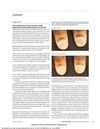
December 2015 in “JAMA Dermatology” Tofacitinib citrate improved nail dystrophy and pain in patients with alopecia universalis without causing side effects.
1 citations
,
October 2015 in “Interest : Jurnal Ilmu Kesehatan” In this study, both gel and microemulsion formulas containing waru leaves and Java Tamarind extracts were found to have similar in vivo hair growth activity in rabbits.
 January 2024 in “Genetics in Medicine Open”
 In this report, two adult patients with Tatton-Brown-Rahman syndrome exhibited new cardiac features, such as atrial fibrillation and ventricular and atrial dilatation, highlighting the importance of cardiovascular follow-up in adults with this condition.
 58 citations
,
June 2018 in “Scientific reports”
58 citations
,
June 2018 in “Scientific reports” This study identified novel genetic associations with skin phenotypes such as age-spots, freckles, and hair characteristics in Japanese women, providing insights into the genetic basis of these traits.
This study investigated the effect of Astragalus membranaceus extract on hair regrowth in C57BL/6 mice with natural hair loss in the telogen phase, but specific results are not provided in the abstract.
1 citations
,
September 2015 In this report, two cases of non-small cell lung cancer treated with gefitinib showed unexpected hair growth, suggesting a potential new application of EGFR-TKIs for alopecia.
 4 citations
,
February 2016 in “Clinical Pharmacology & Therapeutics”
4 citations
,
February 2016 in “Clinical Pharmacology & Therapeutics” Hair follicle samples effectively show how well the drug MK-0752 targets and engages with the Notch pathway.
October 2021 in “The journal of investigative dermatology/Journal of investigative dermatology” This study found that the proprietary aptamer TAGX-0003 significantly inhibited IFNγ-induced effects in pre-clinical human models of alopecia areata, promoting hair regrowth and potentially preventing disease relapse.