September 2019 in “Journal of Investigative Dermatology” CCCA in women of African ancestry may be caused by PADI3 gene mutations and intense hair grooming.
16 citations
,
May 2023 in “Journal of the American Statistical Association” This study applied a novel Cox regression subsampling method to massive datasets, demonstrated using UK-biobank colorectal cancer data, effectively reducing computation time and memory usage while building a risk-prediction model under certain conditions involving right-censored and potentially left-truncated data with rare events.
 April 2026 in “Zenodo (CERN European Organization for Nuclear Research)”
 In this study, Dodatek A operationalizes the Functional Androgen Axis framework by defining three system-level indices and an efficiency metric to describe androgen function, incorporating key methodological improvements and acknowledging significant limitations for future empirical validation.
This study developed a digital tool for quantitatively assessing hair in androgenetic alopecia, achieving an average accuracy of 79.45% for counting hairs and 68.19% for measuring hair size compared to human evaluation.
January 2011 in “Junshi yixue” This study established a murine chronic graft-versus-host disease model with scleroderma features, showing typical skin changes and cellular infiltrates associated with the condition.
 April 2018 in “Journal of Investigative Dermatology”
 This study found that keratin filament networks in SG1 cells of mice undergo dynamic changes during cornification, impacting the barrier function of the stratum corneum.
 January 2024 in “Wiadomości Lekarskie”
 In this study, researchers developed a novel computational framework using deep reinforcement learning to identify strategies for cellular reprogramming in gene regulatory networks, showing its effectiveness in a model of immune response against infection.
1 citations
,
January 2018 in “International Journal of Clinical and Developmental Anatomy” This study highlights that including scalp dermoscopy in diagnosing patients treated with the Regenera® protocol revealed that expected outcomes were often overestimated for those with poor prognosis.
 9 citations
,
October 2022 in “Nature Communications”
9 citations
,
October 2022 in “Nature Communications” In this study, researchers developed a new photoactivatable Cre recombinase mouse model, DiLiCre, which allows precise light-induced genetic modifications and cell tracing, demonstrating its effectiveness for advancing biological and biomedical research.
March 2026 in “Journal of Investigative Dermatology” This study found that GPT-4o demonstrated high concordance with in-person and image-based provider assessments in generating SALT scores for alopecia areata, suggesting its potential as an adjunct tool in clinical practice for automating these assessments.
 September 2011 in “Clinical Biochemistry”
 The demineralized bone matrix scaffold is better for cell attachment than the mineralized bone allograft.
This study reports that using stamps to mark scalp incisions with gentian violet ink and a barrier film improved incision symmetry and maintained slot visibility for hair graft insertion in the frontal region.
13 citations
,
July 2014 in “Cell stem cell” This study identified a novel phase of stem cell quiescence, GAlert, in mice, regulated by mTORC1, that primes stem cells for injury response.
3 citations
,
September 2024 in “International Journal of Molecular Sciences” This review examines how mathematical modeling of the MAPK pathway, enhanced by single-cell proteomic data, improves understanding of regulatory mechanisms, predicts system behavior, and guides experimental research, emphasizing recent developments in modeling and inference.
4 citations
,
April 2023 in “bioRxiv (Cold Spring Harbor Laboratory)” This study presents an improved reference genome for the African spiny mouse, which may aid in understanding its tissue regeneration at the molecular level.
 6 citations
,
March 2018 in “Hair transplant forum international”
6 citations
,
March 2018 in “Hair transplant forum international” This article notes the importance of graft quality in hair restoration surgery, particularly in Follicular Unit Excision, but offers no new research findings.
106 citations
,
June 2009 in “BMC Genomics” This study identified specific gene expression profiles during the intestinal regeneration of sea cucumbers, highlighting potential novel genes and advancing the understanding of regenerative biology in echinoderms.
 November 2022 in “Journal of Investigative Dermatology”
 This study explores the role of cell competition in maintaining genomic quality in epidermal stem cells and proposes that this process might influence cancer development in skin tissues.
15 citations
,
March 2007 in “BioTechniques” This study introduced a new in vivo angiogenesis assay using Gelfoam implanted in ND-GFP transgenic mice to efficiently identify angiogenesis stimulators and inhibitors through GFP visualization.
3 citations
,
June 2023 in “Modern Pathology” This study found that GLI1 RNA CISH was highly sensitive and specific for distinguishing basal cell carcinoma from nonfollicular epithelial neoplasms but not from most benign follicular tumors.
1 citations
,
August 2012 in “Research in Pharmaceutical Sciences”  6 citations
,
February 2025 in “Scientific Reports”
6 citations
,
February 2025 in “Scientific Reports” This study found that MEGA PROTAC improved the prediction of ternary structures with higher maximum DockQ scores compared to the BOTCP method in 16 out of 22 test cases.
5 citations
,
March 2022 in “Clinical Cosmetic and Investigational Dermatology” This study proposed a model that accurately predicts skin condition using genotype information and machine learning, suggesting potential for creating customized cosmetics.
 April 2023 in “Journal of Investigative Dermatology”
 This study found that using 3D total body imaging with convolution neural networks accurately identifies risk phenotypes for melanoma, suggesting improved objective stratification for early detection and prevention.
 April 2023 in “Journal of Investigative Dermatology”
 In this study, the KPAI and KP-IGA scoring systems for assessing keratosis pilaris showed excellent interrater and intrarater reliability, offering standardized measures for clinical and research use.
477 citations
,
March 2004 in “Proceedings of the National Academy of Sciences” This study reports that the DMI3 gene, essential for nodule formation in legume-rhizobial symbiosis, encodes a calcium/calmodulin-dependent protein kinase, highlighting its role in multiple plant symbioses.
January 2021 in “Figshare” This study used Density Functional Theory to calculate finasteride's molecular properties, finding the GGA/PW91 method aligns well with experimental data and identifying key reactive sites for chemical interactions.
 2 citations
,
May 2018 in “International Society of Hair Restoration Surgery”
2 citations
,
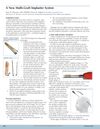
May 2018 in “International Society of Hair Restoration Surgery” The new system makes hair transplants faster and more precise.
1 citations
,
October 2013 This dissertation proposes a framework for analyzing medical images on mobile devices but presents no new research findings, focusing instead on development methodologies and their applications to hair transplant and glaucoma contexts.
28 citations
,
September 2016 in “Future oncology” In this study, a UK expert panel discussed strategies for managing common side effects of vismodegib, a hedgehog pathway inhibitor used for advanced basal cell carcinoma, concluding that adverse events like taste disturbances and muscle cramps can be effectively managed to optimize treatment duration.