2 citations
,
May 2019 in “International Journal of Molecular Sciences” This study suggests that in gp91phox-knockout mice, tranexamic acid administration led to brown hair by increasing MGRN1 and collagen XVII levels, while the retention of black hair appears to rely on the gp91phox/ROS/IL-1β/TGF-β pathway.
 165 citations
,
September 2001 in “Genes & development”
165 citations
,
September 2001 in “Genes & development” This study found that Cutl1 mutant mice experienced retarded lung differentiation and abnormal hair follicle morphogenesis, indicating the vital role of CDP in lung development and hair follicle cell-lineage specification.
 February 2016 in “The journal of allergy and clinical immunology/Journal of allergy and clinical immunology/The journal of allergy and clinical immunology”
 This study reports a novel mutation in the TP63 gene associated with T and B cell lymphopenia in an EEC patient, suggesting that EEC diagnosis should include TREC assay and evaluation for immunodeficiency.
 April 2023 in “Journal of Investigative Dermatology”
 This study found that PX-12 inhibited the NLRP3 inflammasome and reduced psoriasis-like symptoms in a mouse model, suggesting its potential as a treatment for psoriasis.
 43 citations
,
August 2016 in “International Journal of Nanomedicine”
43 citations
,
August 2016 in “International Journal of Nanomedicine” This study found that a eupafolin nanoparticle delivery system improved water solubility and skin penetration, enhancing its antioxidant and anti-inflammatory effects against particulate matter-induced stress in skin cells.
 24 citations
,
January 2012 in “Journal of Cellular Biochemistry”
24 citations
,
January 2012 in “Journal of Cellular Biochemistry” This study found that C-reactive protein may enhance monocyte adhesion to endothelial cells through NOX-mediated oxidative stress, suggesting a potential mechanism for atherogenesis.
 14 citations
,
October 2018 in “Brain Research Bulletin”
14 citations
,
October 2018 in “Brain Research Bulletin” This article reviews the role of exosomes in promoting axonal regeneration and discusses recent findings on how exosome-borne molecules might influence the PTEN-mTOR pathway in injured neurons; it reports no new experimental results.
 12 citations
,
March 2004 in “International Journal of Dermatology”
12 citations
,
March 2004 in “International Journal of Dermatology” This case report describes a 16-year-old girl initially diagnosed with chronic telogen effluvium, later reassessed with Ludwig Stage 1 androgenetic alopecia, for which she began spironolactone treatment.
 12 citations
,
March 2004 in “International Journal of Dermatology”
12 citations
,
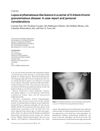
March 2004 in “International Journal of Dermatology” A woman with X-linked chronic granulomatous disease developed lupus-like skin lesions, improved with treatment, suggesting a unique skin condition in carriers.
 2 citations
,
October 2015 in “Human Gene Therapy”
2 citations
,
October 2015 in “Human Gene Therapy” The congress highlighted new gene therapy techniques and cell transplantation methods for treating diseases.
 October 2023 in “Frontiers in endocrinology”
 This review examines the role of androgens and androgen receptors in regulating glucose and lipid metabolism, focusing on their effects on mitochondrial content and function; it also discusses the sex-dimorphic influence of androgens and provides theoretical insights into their mechanisms.
5 citations
,
July 2023 in “Microorganisms” This study analyzed skin biopsies from human monkeypox virus (hMPXV1) cases and found characteristic pustular stage features, including epidermal necrosis, shadow cell appearance, ballooned keratinocytes, and a dense inflammatory infiltrate, expanding histological knowledge crucial for understanding this disease and related Orthopoxvirus infections.
 97 citations
,
March 2002 in “Molecular and cellular biology”
97 citations
,
March 2002 in “Molecular and cellular biology” This study found that mice with a mutant CDP/Cux protein lacking the homeodomain showed severely impaired growth, high postnatal mortality, and reduced fertility, highlighting CDP/Cux's role in developmental regulation.
 2 citations
,
June 2021 in “Notulae Botanicae Horti Agrobotanici Cluj-Napoca”
2 citations
,
June 2021 in “Notulae Botanicae Horti Agrobotanici Cluj-Napoca” This review examines the role of root hair specification and nutrient acquisition in plants, emphasizing the need for further genetic research to understand the mechanisms influencing root hair development and growth.
 December 2017 in “International Journal of Current Research in Biosciences and Plant Biology”
 This paper discusses how various nutrients and phytohormones affect root hair growth and suggests further research to understand the genetic and signaling mechanisms involved, but it reports no new experimental findings.
 April 2016 in “The journal of investigative dermatology/Journal of investigative dermatology”
 The researchers reported that disrupting the RPGRIP1L gene in mice impaired desmosome function, causing skin blistering, and their findings suggest that PKCβII inhibition could help treat pemphigus.
89 citations
,
March 1996 in “Proceedings of the National Academy of Sciences” This study found that homozygous mutant mice with a hypomorphic CD18 mutation developed a chronic inflammatory skin disease resembling human psoriasis, potentially implicating additional genetic factors in disease susceptibility.
32 citations
,
January 2024 in “The Journal of Experimental Medicine” This study found that CXCL12+ fibroblast subsets in mouse skin play a critical role in recruiting neutrophils and defending against S. aureus infection, with similar fibroblast activity observed in human psoriatic skin.
 1 citations
,
March 2023 in “Science Translational Medicine”
1 citations
,
March 2023 in “Science Translational Medicine” The researchers reported that targeting glycoprotein 130's signaling site in animal models promoted tissue regeneration and reduced osteoarthritis progression through anti-inflammatory and protective effects.
November 2025 in “Journal of Investigative Dermatology” A new genetic mutation causing Xeroderma Pigmentosum was found in an 8-year-old girl, affecting her DNA repair.
2 citations
,
May 2024 in “International Journal of Molecular Sciences” This study found that in a mouse model of psoriasis, depleting CD169+ macrophages led to milder symptoms and decreased inflammation, suggesting these macrophages play a crucial role in psoriasis development.
 July 2026 in “Current Issues in Molecular Biology”
 This study found that Plerixafor, a CXCR4 antagonist, promotes melanogenesis in melanocytes by increasing MITF and tyrosinase expression and enhancing melanocyte migration, and it effectively restores pigmentation in a mouse depigmentation model without toxicity, highlighting its potential for treating pigmentary disorders.
 138 citations
,
November 2015 in “Journal of Pharmacology and Experimental Therapeutics”
138 citations
,
November 2015 in “Journal of Pharmacology and Experimental Therapeutics” This review discusses the mechanisms associated with protoporphyrin IX in living cells and reports no clinical results; the authors emphasize its potential in cancer diagnosis and the risks of toxicity.
 March 2026 in “Preprints.org”
 In this study, plerixafor was found to enhance melanogenesis and promote repigmentation by engaging a β-arrestin–β-catenin–MITF signaling axis in melanocytes, and showed effectiveness in restoring depigmentation in a murine model without causing systemic toxicity.
1 citations
,
January 2010 in “Acta Chirurgica Latviensis” In this study, researchers found that psoriasis patients with untreated lesions showed increased activation of defensins, matrix metalloproteinases, and neuropeptides, which may be stimulated by specific inflammation pathways.
18 citations
,
January 2021 in “Theranostics” This study found that actively targeted AN2728-loaded nanocarriers reduced inflammation and improved skin condition in a mouse model of psoriasiform inflammation compared to free drug and non-targeted nanoparticles.
14 citations
,
August 2014 in “The FASEB Journal” This study found that the catalytically inactive serine protease CAP1/Prss8 can still induce skin disorders in mice and is subject to inhibition by nexin-1, independent of its catalytic activity.
 January 2022 in “bioRxiv (Cold Spring Harbor Laboratory)”
 This study found that inhibiting the gp130 Y814 signaling module promotes tissue regeneration and may prevent pathological outcomes after injury in animal models.
 26 citations
,
August 2019 in “Stem Cell Research & Therapy”
26 citations
,
August 2019 in “Stem Cell Research & Therapy” This study found that PBX1 enhances the proliferation and reprogramming of hair follicle mesenchymal stem cells by activating the AKT/GSK3β signaling pathway, promoting NANOG expression, and inhibiting apoptosis.
 April 2023 in “Journal of Investigative Dermatology”
 This study found that NIMP-R14-conjugated nanoparticles, loaded with roflumilast, effectively targeted neutrophils to reduce inflammation and improve symptoms in a mouse model of psoriasiform dermatitis, suggesting potential for targeted therapy in autoimmune skin diseases.