 January 2026 in “RSC Advances”
 This study used a zebrafish model and advanced mass spectrometry to identify 11 metabolites of epristeride, revealing significant effects on purine metabolism and aromatic amino acid biosynthesis, which may aid in developing anti-doping detection methods.
 November 2025 in “Frontiers in Endocrinology”
 This review examines the potential of apigenin and ellagic acid as adjunct or alternative treatments for PCOS, but reports no new clinical results and highlights the need for further trials to confirm their efficacy and optimize dosing and delivery.
 September 2025 in “BULLETIN OF STOMATOLOGY AND MAXILLOFACIAL SURGERY”
 In this review, researchers explored the complex mechanisms behind chemotherapy-induced side effects like nausea, fatigue, and hair loss, and discussed potential strategies using natural agents to manage these toxicities, improving understanding for targeted adjunct therapies.
 August 2025 in “Fabad Journal of Pharmaceutical Sciences”
 This review highlights that bicalutamide, a non-steroidal antiandrogen used in prostate cancer treatment, is mainly effective through its (R)-enantiomer and emphasizes the need to monitor its adverse effects despite its targeted antiandrogenic action.
 March 2025 in “Journal of Endocrinology and Metabolism”
 This study found that while rat models treated with letrozole and dihydrotestosterone exhibit altered sterol, leukotriene, and steroid hormone profiles similar to human PCOS, significant differences remain.
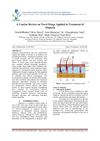
This review highlights new treatment options for alopecia, including JAK inhibitors and Wnt pathway-targeting therapies, which may offer better efficacy and safety than traditional treatments like minoxidil and finasteride, but notes the need for more research on long-term effects and patient-specific responses.
 August 2024 in “Journal of Ayurveda and Integrated Medical Sciences”
 This review explores the effectiveness of Murdha Tailam methods, particularly in Panchakarma treatments, for illnesses related to the head and neck, highlighting the advantage of scalp drug absorption due to anatomical features that facilitate treatment outcomes.
 June 2023 in “Oriental Journal of Chemistry/Oriental journal of chemistry”
 This study demonstrated that derivatives of dehydroepiandrosterone (2a-b, 3a-f, and 4a-f) significantly reduced viable LNCaP prostate cancer cells, suggesting potential therapeutic use for metastatic prostate cancer, while finasteride did not alter cell viability.
 October 2022 in “Gadua Journal of Pure and Allied Science”
 In this study, Trichophyton tonsurans and Microsporum canis were identified as the primary causes of tinea capitis, with terbinafine treatment showing the highest cure rate. Non-commercial kits surpassed real-time PCR commercial kits in specificity and sensitivity for diagnosis.
 January 2022 in “Journal Of Biotechnology And Crop Science”
 This review explores the pharmacological effects of Glycyrrhiza glabra, or liquorice, highlighting its antioxidant, anti-inflammatory, antimicrobial, and antiviral properties, but reports no new experimental results.

This study found that Nubian ibex have developed genetic adaptations in response to their desert environment, including enhanced skin barrier, DNA repair, viral response, and metabolism of toxic compounds.
 November 2020 in “Elsevier eBooks”
 This source outlines various antiandrogen and androgen inhibitor drugs used to treat cutaneous disorders of hyperandrogenism, detailing their mechanisms, uses, dosages, and side effects, with emphasis on spironolactone, finasteride, dutasteride, and oral contraceptives.

This chapter reviews pharmacodynamic evaluations in endocrine disorders focusing on oral antidiabetics, insulin analogues, and hormone interactions, but reports no new results.
 October 2015 in “Elsevier eBooks”
 Finasteride helps hair growth and prostate issues but may cause sexual side effects and increase tumor risk.
 15 citations
,
January 2022 in “Journal of Oleo Science”
15 citations
,
January 2022 in “Journal of Oleo Science” This study found that a phytosomal delivery system improved the bioavailability of Cuscuta reflexa extract compared to the plain extract, suggesting enhanced potential for this formulation.

In this study, low-dose oral minoxidil was found to have a favorable safety profile for treating alopecia, with mostly mild side effects, in both general and hypertensive populations.

This study developed a new analytical method to identify a wide range of endocrine disrupting compounds in full-term amniotic fluid, revealing diverse substances with potential endocrine activity.
 September 2022 in “Tropical grasslands-Forrajes tropicales”
 This study observed that smallholder cattle farmers in West Nusa Tenggara, Indonesia using leucaena as feed managed more cattle and focused more on fattening rather than breeding, but leucaena toxicity led to illnesses such as hair loss and, in a few cases, reproductive issues.
 47 citations
,
September 2016 in “Reviews in endocrine and metabolic disorders”
47 citations
,
September 2016 in “Reviews in endocrine and metabolic disorders” This review discusses the steroidogenic properties of human skin and suggests that impaired steroidogenesis may be linked to conditions like acne, rosacea, atopic dermatitis, and androgenic alopecia, but reports no new clinical results.
 1 citations
,
May 2025 in “Discover Chemistry.”
1 citations
,
May 2025 in “Discover Chemistry.” This review highlights that although mangiferin, a polyphenol from the mango tree, faces challenges like low solubility and bioavailability, delivery vehicles such as nanoparticles and complexes have the potential to enhance its therapeutic effectiveness in treating various diseases.

This research reports that transglucosylation significantly improved the water solubility of baicalin through the synthesis of baicalin glucosides, with BG1 and BG2 showing enhanced solubility and potential biological activity similar to baicalin in antioxidant and anti-glycation assays.
44 citations
,
January 1984 in “Molecular and Cellular Biochemistry”  83 citations
,
July 2008 in “Current Opinion in Chemical Biology”
83 citations
,
July 2008 in “Current Opinion in Chemical Biology” This review discusses the structural and functional advances in understanding sulfotransferases and sulfatases, highlighting new insights into enzyme mechanisms and inactivation by clinically relevant aryl sulfamates, but provides no new experimental results.
36 citations
,
June 2012 in “Alcoholism Clinical and Experimental Research” This study found that patients with decreased kidney function had significantly higher hair levels of ethyl glucuronide compared to healthy individuals, suggesting these results should be cautiously interpreted.
5 citations
,
January 2015 in “Molecular Genetics and Metabolism” 54 citations
,
January 1984 in “Molecular and Cellular Biochemistry” 12 citations
,
November 2022 in “Toxics” This review describes how liver and kidney diseases and diabetes may affect ethyl glucuronide levels in hair, impacting forensic and clinical interpretations, but reports no new experimental results.
1 citations
,
August 2013 in “International Conference on Alcohol, Drugs and Traffic Safety (T2013), 20th, 2013, Brisbane, Queensland, Australia” This study reported that patients with decreased kidney function had significantly higher levels of ethyl glucuronide in hair compared to healthy volunteers, suggesting caution when using hair EtG levels to assess driving qualifications.
63 citations
,
May 2015 in “PloS one” This study found that GALT5 and GALT2 are redundant enzymes essential for O-glycosylation of AGPs, with mutations leading to significant growth and development defects in plants.
9 citations
,
December 2018 in “Journal of Analytical Toxicology” This study found that exposure to artificial sunlight led to variable changes in ethyl glucuronide levels in hair, with both increases and decreases observed depending on hair characteristics.