 November 2019 in “Harper's Textbook of Pediatric Dermatology”
 This review discusses potential causes of alopecia and hair overgrowth in pediatric patients, detailing diagnostic techniques and treatments, but presents no new research findings.
 January 2019 in “LASER THERAPY”
 Laser technologies improve medical treatments and outcomes.
Surgeons should evaluate new technologies critically, offer a range of services including non-surgical options, and be aware of marketing influences to meet patient needs and maintain a successful practice.
 January 2017 in “Springer eBooks”
 The document explains various skin conditions and their treatments.
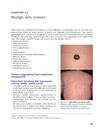
This chapter classifies various benign skin tumors and discusses their characteristics, treatment indications, and potential for recurrence, but reports no new clinical findings.
 September 1999 in “The Journal of The British Menopause Society”
 This review discusses how menopause and hormone replacement therapy affect skin aging in women but reports no new clinical findings.
 December 2025 in “IP Indian Journal of Clinical and Experimental Dermatology”
 This review reports that the treatment of androgenetic alopecia is shifting from single therapies to personalized, multimodal approaches incorporating both traditional and emerging pharmacologics, regenerative strategies, nutraceuticals, cosmeceuticals, and device-based interventions, with combination regimens showing improved outcomes.
 January 2019 in “ARC journal of pharmaceutical sciences”
 This review traces the historical understanding and treatment of acne across ancient Egyptian, Greek, and Roman civilizations, but provides no new clinical findings.
December 2018 in “Zenodo (CERN European Organization for Nuclear Research)” This review of low-level laser therapy for patterned hair loss found that red-spectrum light may be effective for hair growth, but larger case-controlled studies are needed to further support this conclusion.
 53 citations
,
February 2020 in “Expert Opinion on Pharmacotherapy”
53 citations
,
February 2020 in “Expert Opinion on Pharmacotherapy” This review discusses pharmacologic and non-pharmacologic treatments for androgenetic alopecia, noting that current medications like finasteride and minoxidil can slow hair loss but only partially restore hair growth, with early treatment offering better outcomes.
 46 citations
,
October 2012 in “Dermatologic Clinics”
46 citations
,
October 2012 in “Dermatologic Clinics” This review discusses treatment options for female pattern hair loss, emphasizing the importance of early intervention and the benefits of combined therapies, but reports no new clinical results.
 22 citations
,
March 2018 in “American Journal of Clinical Dermatology”
22 citations
,
March 2018 in “American Journal of Clinical Dermatology” New acne treatments show promise as alternatives to traditional therapies.
4 citations
,
December 2021 in “Applied sciences” This study observed that a combination of micro-needling and low-level light/laser therapy significantly increased hair density in patients with mild to moderate androgenic alopecia, showing an increase of 12 hairs/cm² after 16 weeks, compared to baseline.
 2 citations
,
August 2020 in “Dermatologic Therapy”
2 citations
,
August 2020 in “Dermatologic Therapy” This study found that increasing energy fluence, session duration, and using pulsed irradiation significantly enhance hair regrowth in androgenetic alopecia when using low-level laser therapy, while the number of diodes does not affect outcomes.
 November 2025 in “Medical alphabet”
 This study highlights that physiotherapeutic methods like low-intensity laser therapy, radiofrequency, and electrical stimulation show promising effectiveness in stimulating hair growth and treating telogen effluvium by enhancing cell activity, ATP synthesis, and transdermal drug delivery.
 February 2024 in “Lasers in Medical Science”
 This review discusses laser and energy-assisted drug delivery as a treatment for alopecia and concludes that although all studies show positive effects, some reports indicate no superiority over existing monotherapies.
 August 2023 in “Journal of Cosmetic Dermatology”
 This study found that combining fractional ablative erbium YAG laser with minoxidil led to slightly better dermoscopy scores than minoxidil alone in male patients with moderate to severe androgenetic alopecia, although no significant difference was observed in photography scores between the two groups.
 January 2023 in “Skin appendage disorders”
 This study's review of existing research found insufficient data to determine the impact of skin type on the effectiveness of low-light laser therapy for hair growth in androgenetic alopecia, with a notable lack of data on darker skin types.
 January 2018 in “Clinical approaches and procedures in cosmetic dermatology”
 This review discusses clinical studies on low-level laser therapy for various types of hair loss and suggests it may be promising for those unresponsive to conventional treatments, but reports no new clinical results.
 January 2017 in “Clinical approaches and procedures in cosmetic dermatology”
 This review explores clinical studies on low-level laser therapy (LLLT) for alopecia and suggests it may benefit patients unresponsive to conventional treatments, but larger studies are needed to confirm efficacy.
May 2014 in “Hanbang an'i'bi'in'hu pibu'gwa haghoeji” This study reviewed and analyzed existing research on laser therapy for alopecia, suggesting both low-level and high-level lasers may serve as effective treatment alternatives.
March 2023 in “Medical lasers” Low-level laser therapy is a safe and effective treatment for hair loss.
 11 citations
,
February 2008 in “British journal of nursing”
11 citations
,
February 2008 in “British journal of nursing” This article reviews idiopathic hirsutism, focusing on its definition, diagnosis, causes, and treatment options, without presenting new clinical findings.
January 2022 in “Advances in Clinical Medicine”  58 citations
,
September 2012 in “Dermatologic Clinics”
58 citations
,
September 2012 in “Dermatologic Clinics” This article reviews current knowledge on the causes, diagnosis, and medical treatments for androgenetic alopecia, particularly in men, and reports no new findings.
 36 citations
,
June 2018 in “Journal of Dermatology”
36 citations
,
June 2018 in “Journal of Dermatology” This article updates Japanese guidelines for diagnosing and treating male and female-pattern hair loss, recommending specific drugs and therapies while advising against certain treatments for female-pattern hair loss.
 26 citations
,
March 1986 in “Clinical and Experimental Dermatology”
26 citations
,
March 1986 in “Clinical and Experimental Dermatology” Scalp hair grows at 0.37 mm/day, forearm hair at 0.18 mm/day, and thigh hair at 0.30 mm/day, with no significant differences found in people with certain hair conditions.
21 citations
,
April 2019 in “Journal of cosmetic and laser therapy” This review examines the devices, mechanisms, risks, side effects, and regulatory differences in laser hair removal, particularly highlighting the lack of regulation in South Africa and its implications for patient safety.
 21 citations
,
May 2016 in “The Cochrane library”
21 citations
,
May 2016 in “The Cochrane library” This review found that while topical minoxidil is effective for treating female pattern hair loss, finasteride showed no more effectiveness than placebo, and low-level laser therapy increased hair count but with inconsistent results.
 14 citations
,
October 2020 in “Natural Products and Bioprospecting”
14 citations
,
October 2020 in “Natural Products and Bioprospecting” This review discusses current topical treatments, natural products, and complementary therapies for androgenetic alopecia, but it reports no new clinical results.