 21 citations
,
January 2018 in “PLoS Genetics”
21 citations
,
January 2018 in “PLoS Genetics” This study found that certain keratin gene mutations associated with pachyonychia congenita are linked to altered enamel structure and increased risk of dental caries.
 21 citations
,
January 2018 in “Anticancer Research”
21 citations
,
January 2018 in “Anticancer Research” This study suggests that NBCCS and BFHS may be the same genetic condition, which could help improve identification and management of misdiagnosed cases with specific surveillance strategies.
21 citations
,
June 2017 in “Case Reports in Dermatology” This case report describes a 57-year-old Japanese female who developed scarring alopecia linked to gefitinib, an EGFR inhibitor, with improvement in hair loss after reducing the drug dosage.
21 citations
,
December 2015 in “Development Growth & Differentiation” This study introduces genital sex differentiation parameters (GSDP) to analyze sexual differences in external genitalia and perineum development in mice, revealing varied sensitivity to androgen inhibition in genital structures.
 21 citations
,
November 2014 in “Journal of Endocrinological Investigation”
21 citations
,
November 2014 in “Journal of Endocrinological Investigation” This review discusses cross-sex hormone therapy for managing gender dysphoria in transsexual individuals and reports no new clinical results; it highlights the need for education and culturally sensitive training for healthcare professionals.
 21 citations
,
September 2013 in “Journal of circadian rhythms”
21 citations
,
September 2013 in “Journal of circadian rhythms” In this study, heavy nighttime physical exercise delayed the circadian phase of clock gene expression by 2 to 4 hours in a professional fighter, suggesting potential implications for managing circadian disorders.
21 citations
,
December 1991 in “Annals of the New York Academy of Sciences” This study suggests that hair keratin gene mutations in mice may be linked to specific loci on chromosomes 11 and 15, potentially influencing keratin expression or structure.
 21 citations
,
April 1982 in “Genetics Research”
21 citations
,
April 1982 in “Genetics Research” In this study, researchers observed that mice with the naked gene showed frequent absence of hair cuticle and cortical cells during follicle growth, with abnormal keratin deposition also noted.
20 citations
,
November 2021 in “Frontiers in cell and developmental biology” This review discusses the current state of research on skin organoids, highlighting their potential for replicating complex skin structures and comparing recent studies on stem cell microenvironments.
 20 citations
,
October 2021 in “PLoS ONE”
20 citations
,
October 2021 in “PLoS ONE” This study found significant differences in gene expression between newborn and adult skin, with infant skin notably increasing processes related to ECM organization, cell adhesion, and collagen fibril organization.
 20 citations
,
June 2019 in “Experimental Dermatology”
20 citations
,
June 2019 in “Experimental Dermatology” This study identified 14 genes affected by copy number variants that may contribute to alopecia areata, including four genes notably involved in autophagy and chromatin remodeling.
 20 citations
,
September 2021 in “Nature communications”
20 citations
,
September 2021 in “Nature communications” In this study, researchers identified a gene expression pre-pattern and implicated the Wnt inhibitor Dickkopf 4 in the formation of color patterns in domestic cat embryos.
20 citations
,
March 2021 in “Cancers” This study found that rare germline pathogenic variants in BRCA2, BRCA1, and ATM are associated with increased risk of aggressive prostate cancer.
 20 citations
,
May 2020 in “Experimental Dermatology”
20 citations
,
May 2020 in “Experimental Dermatology” This review discusses age-related changes in scalp skin and their potential effects on hair follicle aging, but reports no new clinical results, calling for further investigation.
20 citations
,
January 2017 in “Genetica” This study suggests that the methylation degree of HOXC8 exon 1 in the hair follicle may influence cashmere fiber growth in Liaoning cashmere goats.
 20 citations
,
August 2014 in “Therapeutic delivery”
20 citations
,
August 2014 in “Therapeutic delivery” This article reviews potential applications and challenges of using the transfollicular route for drug delivery but does not present new clinical findings; it calls for further exploration and development in this field.
20 citations
,
March 2014 in “Molecular Endocrinology” This study suggests that NFIB and STAT5 work together to control cell-specific genetic programs in mammalian tissues, particularly in mammary and hair follicle stem cells.
 20 citations
,
January 2012 in “Journal of Steroids & Hormonal Science”
20 citations
,
January 2012 in “Journal of Steroids & Hormonal Science” The document concludes that there are still unknowns about the effectiveness, risks, and detection of performance-enhancing drugs, and doping remains a challenge.
20 citations
,
May 2011 in “Journal of Clinical Investigation” In this study, a transgenic mouse model was used to demonstrate that targeted cell loss in different tissues led to varying degrees of regenerative outcomes, including reversible impaired glucose tolerance, irreversible hair loss, and permanent moderate deafness.
 20 citations
,
June 2010 in “Genes and Immunity”
20 citations
,
June 2010 in “Genes and Immunity” This study found distinct gene expression patterns in the blood of alopecia areata patients, suggesting involvement of immune processes and new pathways like Wnt signaling and apoptosis in disease pathogenesis.
 20 citations
,
May 2007 in “Asian-Australasian Journal of Animal Sciences”
20 citations
,
May 2007 in “Asian-Australasian Journal of Animal Sciences” This study found that polymorphisms in the KAP8.2 gene in Chinese Inner Mongolia cashmere goats are associated with variations in cashmere fibre diameter, suggesting its potential as a molecular marker for this trait.
 20 citations
,
March 1994 in “Clinical and Experimental Dermatology”
20 citations
,
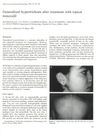
March 1994 in “Clinical and Experimental Dermatology” In this case report, a 16-year-old girl developed generalized hypertrichosis after using excessive doses of topical minoxidil for diffuse alopecia, which resolved four months after stopping treatment.
20 citations
,
March 1975 in “Journal of steroid biochemistry/Journal of Steroid Biochemistry” This study found a direct correlation between the testicular feminization gene and decreased androgen receptor activity, potentially explaining the androgen insensitivity in affected individuals.
19 citations
,
January 2023 in “Genes” This study identified genomic regions and genes associated with wool, live weight, body condition, and reproduction traits in Uruguayan Merino sheep, highlighting potential genetic factors influencing these characteristics.
19 citations
,
June 2020 in “General and comparative endocrinology” This study found that hair cortisol concentration is a promising stress indicator in cattle but not in pigs, where external factors and lower cortisol response may interfere with its validity.
19 citations
,
August 2018 in “Clinics in plastic surgery” This review discusses surgical techniques for facial and neck modifications in gender dysphoria and reports no new clinical outcomes.
 19 citations
,
April 2015 in “International Journal of Molecular Sciences”
19 citations
,
April 2015 in “International Journal of Molecular Sciences” This study identified distinct gene expression patterns in wool follicle bulbs that may play important roles in wool follicle cycling and regeneration in sheep.
 19 citations
,
February 2012 in “International Journal of Urology”
19 citations
,
February 2012 in “International Journal of Urology” This review discusses gender identity disorder in Japan, highlighting the high prevalence and challenges in accessing appropriate treatment, and calls for wider understanding among medical professionals.
 19 citations
,
November 2010 in “PubMed”
19 citations
,
November 2010 in “PubMed” This review discusses advancements in the genetic understanding of androgenic alopecia and the FDA-approved treatments, including a new laser hair comb, but reports no clinical results.
 19 citations
,
August 1999 in “European journal of endocrinology”
19 citations
,
August 1999 in “European journal of endocrinology” This study concluded that neither basal nor ACTH-stimulated 17-OHP concentrations effectively indicate carrier status for 21-hydroxylase deficiency among Slovenian hyperandrogenic women, recommending molecular analysis of the CYP21 gene for reliable screening.