 1 citations
,
February 2021 in “Clinical, Cosmetic and Investigational Dermatology”
1 citations
,
February 2021 in “Clinical, Cosmetic and Investigational Dermatology” This study found that lower serum ferritin levels were significantly associated with telogen effluvium compared to healthy subjects and may serve as a potential biomarker for its diagnosis.
January 2026 in “Mansoura Medical Journal” This study found that patients with Telogen Effluvium had significantly higher levels of scalp pain and itching, and serum ferritin levels could effectively differentiate them from healthy controls.
 5 citations
,
June 2019 in “Dermatopathology”
5 citations
,
June 2019 in “Dermatopathology” This study found poor agreement among dermatopathologists in identifying and grading fibrosis in traction alopecia, suggesting the need for better diagnostic methods for early fibrosis detection.
 5 citations
,
September 2021 in “Journal of The American Academy of Dermatology”
5 citations
,
September 2021 in “Journal of The American Academy of Dermatology” This study found a high prevalence of beard and eyebrow alopecia in male patients with frontal fibrosing alopecia, and suggests a potential link between hormonal imbalances and the condition.
July 2024 in “Journal of Investigative Dermatology” Human hair follicles have their own thyroid hormone system.
November 2024 in “Dermatology and Therapy” In this review, cosmetic practices such as non-ablative lasers, autologous fat injections, and oral isotretinoin may help alleviate certain symptoms of frontal fibrosing alopecia, while treatments like deep chemical peels and ablative laser therapies are contraindicated due to potential scarring risks.
 2 citations
,
July 2022 in “Frontiers in Medicine”
2 citations
,
July 2022 in “Frontiers in Medicine” This review discusses the current understanding of frontal fibrosing alopecia's pathogenesis, highlighting genetic susceptibility, immune response involvement, and possible links to steroid hormones, but reports no new clinical results.
 222 citations
,
September 2016 in “JCI insight”
222 citations
,
September 2016 in “JCI insight” This research overview highlights that although JAK inhibitors show promise as potential treatments for alopecia areata based on recent insights into the disease mechanism, their efficacy has not yet been thoroughly evaluated in a systematic manner.
 April 2018 in “Journal of Investigative Dermatology”
 This study found that TGFbeta is a key pathway causing age-related loss of dermal fat's antimicrobial function, suggesting that targeting TGFBR might help restore skin defense against infections in older age.
 May 2026 in “Zenodo (CERN European Organization for Nuclear Research)”
 This study's new single-cell atlas of hidradenitis suppurativa tunnels identifies distinct fibro-inflammatory microenvironments, suggesting that TNF blockade may not address the primary pathway in many lesions.
July 2019 in “International Society of Hair Restoration Surgery” This course overview discusses educational sessions on hair restoration surgery and FUE techniques and reports no new research findings.
![Discovery of 7-Methoxy-6-[4-(4-Methyl-1,3-Thiazol-2-yl)-1H-Imidazol-5-yl]-1,3-Benzothiazole (TASP0382088): A Potent and Selective Transforming Growth Factor-β Type I Receptor Inhibitor as a Topical Drug for Alopecia](/images/assets/9620bd26-3366-4f2a-bcac-f511697bbc41/small/35997.jpg) 6 citations
,
January 2013 in “Chemical & pharmaceutical bulletin/Chemical and pharmaceutical bulletin”
6 citations
,
January 2013 in “Chemical & pharmaceutical bulletin/Chemical and pharmaceutical bulletin” In this study, TASP0382088 showed potent selective inhibition of the ALK5 receptor, significantly reducing Smad2 phosphorylation in mouse skin following topical application.
 November 2023 in “International Journal of Pharmaceutics”
 This study reported that a novel ionic liquid delivery system combining ferulic acid and finasteride enhanced the solubility, skin permeation, and effectiveness in promoting hair regrowth in androgenetic alopecia mice, suggesting an improved topical treatment approach.
 February 2021 in “Dermatologic Therapy”
 This study concluded that intralesional lyophilized growth factor injections are safe and improve trichoscopic hair parameters and clinical scores in patients with female pattern hair loss.
 3 citations
,
June 2005 in “Ophthalmology Clinics of North America”
3 citations
,
June 2005 in “Ophthalmology Clinics of North America” Follicular unit transplantation treats hair loss and restores eyebrows with short recovery and natural results.
January 2005 in “Fuzhou daxue xuebao. Ziran kexue ban” This study developed a rapid and efficient in vitro method using high-performance liquid chromatography to screen for steroid 5 alpha-reductase inhibitors, determining inhibition constants for Finasteride and Epristeride.

In this study, researchers found that the health state utility of moderate facial angiofibroma in Tuberous Sclerosis Complex patients is significantly lower compared to almost-clear facial angiofibroma, indicating that treatment for the condition can substantially improve quality of life.
26 citations
,
January 1993 in “Dermatology” This report describes a new case of isolated trichothiodystrophy with characteristic brittle hair and suggests a simplified classification scheme for understanding sulfur-deficient hair disorders.
October 2024 in “Journal of Cutaneous Pathology” In this study of folliculitis decalvans, researchers found that compound follicular structures in scalp biopsies are primarily composed of terminal anagen follicles, surrounded by fibrosis and inflammatory cell infiltrate, which could enhance understanding of this condition.
 18 citations
,
June 2017 in “Journal of The American Academy of Dermatology”
18 citations
,
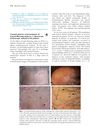
June 2017 in “Journal of The American Academy of Dermatology” In this study, trichoscopy consistently identified typical findings of frontal fibrosing alopecia, revealing three unusual clinical patterns in 18.4% of patients, which may aid in the differential diagnosis when clinical presentations are atypical.
August 2003 in “Oncology Times” This article discusses the considerations and challenges surrounding a proposed large-scale trial on testosterone-replacement therapy in older men and reports no new results.
 47 citations
,
December 2019 in “Frontiers in immunology”
47 citations
,
December 2019 in “Frontiers in immunology” This study identified a novel G207E STING mutation associated with severe inflammatory symptoms and suggested that common polymorphisms in TMEM173 and IFIH1 may modify the phenotype in affected individuals.
2 citations
,
April 2018 in “Current Pharmaceutical Analysis” This study developed a new, simple, and economical RP-TLC method with densitometry that is suitable for routine analysis of finasteride in tablet dosage form, meeting analytical validation criteria.
 8 citations
,
October 2019 in “International Journal of Dermatology”
8 citations
,
October 2019 in “International Journal of Dermatology” This study examined 56 Thai patients with frontal fibrosing alopecia, finding frontotemporal hairline recession and eyebrow loss were common, and reported better disease stabilization with combination treatments of topical corticosteroids with hydroxychloroquine or finasteride.
 2 citations
,
October 2018 in “Archives of Dermatological Research”
2 citations
,
October 2018 in “Archives of Dermatological Research” The researchers reported that topical tofacitinib in mice increased hair follicles in the growth phase and boosted noggin and BMP4 mRNA expressions, compared to a vehicle and minoxidil.
36 citations
,
January 2000 in “British journal of dermatology/British journal of dermatology, Supplement” This case study reports on a mother and daughter with ichthyosis follicularis, alopecia, and photophobia, noting consistent keratotic eruptions during the mother's pregnancies that improved postpartum.
 September 2022 in “The American journal of dermatopathology/American journal of dermatopathology”
 In this pilot study, researchers found no sunscreen particles in the hair follicle units of patients with frontal fibrosing alopecia, suggesting no direct link between sunscreen use and the condition.
 11 citations
,
February 2021 in “Journal of Cosmetic Dermatology”
11 citations
,
February 2021 in “Journal of Cosmetic Dermatology” This retrospective pilot study found that oral tofacitinib was more effective in treating alopecia areata than alopecia universalis, but relapses were common after treatment cessation.
 1 citations
,
January 2002 in “Journal of Clinical Dermatology”
1 citations
,
January 2002 in “Journal of Clinical Dermatology” This study found that women with chronic telogen effluvium had significantly lower serum ferritin levels and higher TIBC levels compared to normal females, suggesting a potential role for iron stores in the condition's pathogenesis.
July 2024 in “Journal of Controlled Release” In this study, researchers developed topical tofacitinib-loaded cationic lipid nanoparticles, which improved absorption and targeted hair follicles in an ex vivo pig ear model, showing promise in treating alopecia areata by reducing symptoms through the JAK/STAT pathway.