 3 citations
,
August 2021 in “Uro”
3 citations
,
August 2021 in “Uro” This review concludes that global literature supports the lipidosterolic extract of Serenoa repens as efficacious and safe for treating lower urinary tract symptoms, with some studies showing equivalence to common pharmacologic agents.
 3 citations
,
February 2018 in “InTech eBooks”
3 citations
,
February 2018 in “InTech eBooks” This chapter discusses the current developments in Traditional Chinese Medicine for treating PCOS but reports no new clinical results, emphasizing the need for further research in this area.
 3 citations
,
May 2016 in “International Journal of Research in Ayurveda and Pharmacy”
3 citations
,
May 2016 in “International Journal of Research in Ayurveda and Pharmacy” This paper reviews the potential of Ayurvedic herbs like ginger, garlic, and turmeric to reduce the side effects of cancer therapies and enhance patient wellbeing but reports no new experimental findings.
 2 citations
,
July 2019 in “Journal of psychology & clinical psychiatry”
2 citations
,
July 2019 in “Journal of psychology & clinical psychiatry” This article discusses the role of zinc in reducing depression severity and reports no new research findings, emphasizing the need for further investigation into its therapeutic potential.
 2 citations
,
March 2019 in “European Journal of Dermatology”
2 citations
,
March 2019 in “European Journal of Dermatology” This study concluded that shampoos sold in pharmacies generally contain fewer regulated allergens under EU law compared to those sold in mass-market stores or by mail order, and pharmacy-sold baby shampoos were allergen-free.
 2 citations
,
February 2018 in “InTech eBooks”
2 citations
,
February 2018 in “InTech eBooks” This book discusses current research on polycystic ovary syndrome, including diagnosis, management, and the impact of lifestyle changes, without reporting new clinical results.
 1 citations
,
May 2025 in “The Journal of Phytopharmacology”
1 citations
,
May 2025 in “The Journal of Phytopharmacology” This review identifies natural plants that possess androgen-related compounds, highlighting the potential of phytoandrogens as alternatives to allopathic treatments for conditions like hypogonadism, impotence, infertility, and erectile dysfunction.
 1 citations
,
August 2023 in “Frontiers in immunology”
1 citations
,
August 2023 in “Frontiers in immunology” This review highlights the potential of TCM medicinal foods for managing post-COVID disorders and suggests they could provide a safe and efficient long-term therapy due to their milder nature.
 1 citations
,
June 2023 in “Ethnobotany research and applications”
1 citations
,
June 2023 in “Ethnobotany research and applications” This review examined the medicinal properties of the Ziziphus plant species, highlighting their traditional use in treating various conditions and their bioactive compounds with potential anticancer, antimicrobial, and anti-diabetic effects. The authors concluded that Ziziphus species, particularly jujube, have promising pharmacological activities warranting further investigation.
 1 citations
,
November 2015 in “Indian Journal of Clinical Biochemistry”
1 citations
,
November 2015 in “Indian Journal of Clinical Biochemistry” The conference presented findings on how vitamin D levels, genetic factors, and lifestyle choices like smoking and yoga affect various health conditions and diseases.
 1 citations
,
January 2013 in “Springer eBooks”
1 citations
,
January 2013 in “Springer eBooks” Cosmeceuticals may benefit skin health but need more research for efficacy and safety confirmation.
 June 2026 in “GSC Advanced Research and Reviews”
 This abstract highlights that jojoba is a versatile plant recognized for its drought resistance and utility in desert regions, with its oil offering various pharmacological benefits like antioxidant and anti-inflammatory effects, though commercial cultivation challenges exist due to seedling variability.
 April 2026 in “AMEI's Current Trends in Diagnosis & Treatment”
 This review discusses the symptoms, causes, and treatment options for polycystic ovary syndrome and reports no new results; the authors highlight the role of lifestyle changes, medications, and fertility treatments.
 October 2025 in “International Journal of Innovative Research in Technology”
 This review examines the evidence on nutritional and herbal supplements for women's health, emphasizing the need for more long-term studies to develop evidence-based guidelines for personalized supplementation.
 September 2025 in “Journal of Phytonanotechnology and Pharmaceutical Sciences”
 This comprehensive review reports on the therapeutic potential and bioactive components of licorice (Glycyrrhiza glabra Linn), highlighting its diverse pharmacological properties and health benefits but also noting associated toxicity and adverse effects in medicinal and food applications.
 June 2025 in “Basrah Researches Sciences”
 This article discusses how medicinal plants, known for their antiviral, immunomodulatory, antioxidant, and anti-inflammatory properties, may help alleviate long-term COVID-19 effects, but emphasizes the need for further clinical trials to confirm safety and efficacy.
 June 2025 in “World Journal of Medical Oncology”
 In this study, researchers explored the use of new biobased compounds and gels as potential treatments for skin cancer, finding that these biological materials may be significant in limiting and eliminating skin tumors alone or when combined with other methods.
 May 2025 in “REVISTA DA ASSOCIAÇÂO DE FARMÁCIAS VIVAS”
 This study introduced an innovative antioxidant serum for skin care, using a lipid active from Rana catesbeiana Shaw, and validated its rejuvenating potential through physical-chemical and microbiological tests that ensured its antioxidant effectiveness, microbiological safety, and formulation stability.
 May 2025 in “Journal of Experimental Pharmacology”
 This study found that Allium ascalonicum L. extract may improve insulin resistance by increasing insulin tolerance test values and lowering blood glucose levels, though more research is needed to understand its effects on metabolic disorders.
 April 2025 in “International Journal of Ayurvedic Medicine”
 This review reports the potential therapeutic effects of Semecarpus anacardium Linn. (Bhallataka), noting its compounds like anacardic acid may have anti-inflammatory, antioxidant, and anticancer properties, but emphasizes that further research is necessary to confirm these effects and determine safety due to inconsistent study methods.
 January 2025 in “Directory of Open access Books (OAPEN Foundation)”
 This book reviews the symptoms, diagnosis, and treatments for Polycystic Ovary Syndrome, providing a comprehensive exploration but reports no new clinical results.

This study utilized polarized light microscopy to examine hair shafts in ten children with rare genetic disorders, such as Netherton syndrome and ectodermal dysplasia, providing valuable diagnostic insights into hair thickness, composition, and structural irregularities associated with these conditions.
 January 2025 in “International journal of Indian medicine”
 This review discusses nine Ayurvedic medicinal herbs listed in the Dhanvantari Nighantu as beneficial for hair, detailing their properties like promoting hair growth, enhancing hair thickness, and maintaining dark hair color, alongside supporting research on these effects.
 December 2024 in “Asian Journal of Pharmaceutical and Clinical Research”
 This study reviews the performance and safety of synthetic medications like minoxidil and finasteride compared to herbal remedies such as saw palmetto for treating alopecia, highlighting the need for more research to better understand their therapeutic roles and optimize patient care.
 September 2024 in “Oncology Advances”
 This review discusses the potential anticancer effects of medicinal plants, highlighting their diverse phytoconstituents and mechanisms, and considers both their future prospects and limitations in cancer treatment.
 June 2024 in “Journal of medical pharmaceutical and allied sciences”
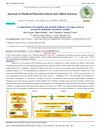
 In this study, researchers observed that Pectin from Nagpuri oranges significantly increased colony counts of probiotic bacteria like L. acidophilus and L. plantarum both in vitro and in vivo, suggesting potential use as a prebiotic or synbiotic in nutraceutical formulations.
 August 2023 in “International journal of research in Ayurveda and pharmacy”
 This review discusses the potential role of Garudan kizhangu ennai, a polyherbal Siddha formulation, in managing alopecia areata and highlights its various pharmacological properties, although further clinical studies are needed to confirm its efficacy.

Custom skincare can be made based on genes, fewer cats in Lublin have FeLV/FIV than national average, and studies also looked at small water bodies, river pollution, guppy growth, toxins in biochars, palm oil issues, and pumpkin seed oil for hair strength.
 January 2023 in “International journal of advances in scientific research and engineering”
 This review explores the potential of anthocyanins, a type of flavonoid with antioxidant and anticancer properties, to reduce colorectal cancer risk without side effects, focusing on their impact on molecular mechanisms, cancer cell proliferation, and apoptosis.
 March 2022 in “Marmara University Open Access System”
 This article critically examines the relationship between new media and digital games, emphasizing their cultural and historical contexts, but provides no new empirical findings.