9 citations
,
February 2002 in “International Journal of Dermatology” This case study reports that a combination of PUVA therapy and oral methyl prednisolone initially improved symptoms of a woman's cutaneous T-cell lymphoma but required ongoing treatment due to recurrence.
21 citations
,
August 1991 in “Journal of the American Academy of Dermatology” This case report presents the first known instance of unilateral erythromelanosis follicularis faciei et colli in a white girl, contributing to the limited documented cases of this rare condition.
6 citations
,
July 2021 in “Frontiers in Genetics” This study identified a new heterozygous missense variant in CST6 associated with autosomal dominant keratosis follicularis spinulosa decalvans in an Austrian family, affecting epidermal differentiation and hair formation.
8 citations
,
July 2015 in “Molecular cytogenetics” This case study describes a patient with Turner syndrome who, despite lacking many classic features, presented with multiple autoimmune diseases, suggesting a link between complex X chromosome rearrangements and increased autoimmune risk.
45 citations
,
May 2002 in “International Journal of Dermatology” This case report describes a patient with systemic lupus erythematosus who developed multiple dermatofibromas while on long-term prednisone therapy.
6 citations
,
January 2015 in “Indian Dermatology Online Journal” This case report describes a unique presentation of porokeratotic eccrine ostial and dermal duct nevus with lesions on the dorsum of the hand and a focal lichenoid infiltrate, differing from typical palm and sole involvement.
June 2025 in “British Journal of Dermatology” This report describes two unusual cases of frontal fibrosing alopecia in men, highlighting potential vaccine-related immune triggers and genetic factors, especially regarding the pronounced facial papular phenotype observed.
June 2026 in “British Journal of Dermatology” This study found that individuals with frontal fibrosing alopecia have increased odds of thyroid disease, lupus erythematous, vitiligo, and heart disease, supporting the consideration of FFA as a systemic disorder.
 9 citations
,
March 2015 in “International reviews of immunology”
9 citations
,
March 2015 in “International reviews of immunology” This review discusses the relationship between ectodermal alterations and immunodeficiencies, particularly the roles of hyper-IgE syndrome, ectodermal dysplasia, and FOXN1 gene mutations, but it presents no new research findings.

In this case study, a 36-year-old male with symptoms of keratosis pilaris atrophicans faciei and frontal fibrosing alopecia tested negative for a specific mutation, highlighting genetic testing's potential to improve diagnosis and treatment outcomes in these similar conditions.
26 citations
,
May 2007 in “Differentiation” This study suggests that Foxn1 acts as a brake on PKC signaling in keratinocytes, thereby modulating the stages of differentiation by controlling PKC activity.
 June 2023 in “Dermatology online journal”
 In this case report, localized myxedema of the scalp was identified in a patient with Graves disease and Hashimoto thyroiditis, emphasizing the varied skin manifestations in autoimmune thyroid conditions.
 12 citations
,
January 2017 in “Skin appendage disorders”
12 citations
,
January 2017 in “Skin appendage disorders” This study reports cases of histopathologically proven cutaneous lupus erythematosus manifesting as frontal fibrosing alopecia, with improvement following treatment with oral hydroxychloroquine and/or intralesional triamcinolone acetonide.
5 citations
,
January 2016 in “Skin appendage disorders” This case report describes frontal fibrosing alopecia in a woman with primary biliary cirrhosis and polymyalgia rheumatica, suggesting a possible autoimmune link to this form of hair loss.
21 citations
,
July 2018 in “International Journal of Molecular Sciences” This review focuses on the role of the transcription factor Foxn1 in skin biology and discusses its potential implications for regenerative medicine, but reports no new clinical results.
 January 2007 in “Revista del Centro Dermatológico Pascua”
 This case report describes a 2-year-old boy diagnosed with trichothiodystrophy, characterized by fragile hair, intellectual damage, diminished fertility, and short stature.
September 2011 in “Chinese Journal of Dermatology” This case report describes a 69-year-old man diagnosed with folliculotropic mycosis fungoides after initially being treated for folliculitis, highlighting emerging skin lesions despite subsequent photochemotherapy and acitretin treatment.
13 citations
,
June 2011 in “PubMed” This case report describes a man with Touraine-Solente-Golé syndrome who achieved substantial improvement of tufted hair folliculitis after treatment with amoxicillin, clavulanic acid, and topical nadifloxacin.
 August 2020 in “International Journal of Research in Dermatology”
 This report describes a 23-year-old male with Clouston’s syndrome, characterized by nail abnormalities, palmoplantar skin thickening, anodontia, and androgenic alopecia, highlighting the need for supportive management due to the lack of a definitive treatment.
 February 2023 in “JAAD case reports”
 This case report describes a patient who developed Trichodysplasia spinulosa, a folliculocentric viral infection, after heart transplantation, and experienced improvement in her skin condition following modulation of immunosuppressive therapy and application of topical cidofovir.
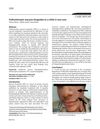 1 citations
,
October 2023 in “Journal of the Pakistan Medical Association”
1 citations
,
October 2023 in “Journal of the Pakistan Medical Association” This source describes a case of a 12-year-old male diagnosed with folliculotropic mycosis fungoides, presenting with an asymptomatic, erythematous plaque. Histology and immunohistochemistry confirmed FMF, which is typically rare in children and marked by follicular infiltration by CD4+ lymphocytes.
 12 citations
,
March 2018 in “Anais brasileiros de dermatologia/Anais Brasileiros de Dermatologia”
12 citations
,
March 2018 in “Anais brasileiros de dermatologia/Anais Brasileiros de Dermatologia” This article describes a case of frontal fibrosing alopecia in a patient with chronic lichenoid lupus erythematosus and notes the lack of similar documented cases in existing literature.
 March 2019 in “Nasza Dermatologia Online”
 This case report describes a 52-year-old woman with a rare combination of pemphigus vulgaris and pemphigus foliaceus on the scalp, initially misdiagnosed as psoriasis, who achieved clinical remission and hair regrowth with corticosteroid treatment.
 July 2018 in “Nasza Dermatologia Online”
 The authors report two clinical cases of scarring alopecia in a mother and daughter, suggesting a potential link between frontal fibrosing alopecia and ulerythema ophryogenes.
 March 2024 in “Poster presentations”
 This case report describes a 43-year-old woman diagnosed with both Kikuchi-Fujimoto disease and systemic lupus erythematosus, who showed clinical improvement after treatment with glucocorticoids and hydroxychloroquine, highlighting the rare coexistence of these conditions and the ongoing uncertainty about the precise cause of Kikuchi-Fujimoto disease.
 2 citations
,
July 2022 in “Frontiers in Medicine”
2 citations
,
July 2022 in “Frontiers in Medicine” This review discusses the current understanding of frontal fibrosing alopecia's pathogenesis, highlighting genetic susceptibility, immune response involvement, and possible links to steroid hormones, but reports no new clinical results.
2 citations
,
January 2022 in “JAAD Case Reports” This case report describes a 69-year-old woman who developed drug-induced acquired ichthyosis related to ponatinib therapy, which improved upon stopping the medication.
12 citations
,
June 2016 in “Clinical and experimental dermatology” This study reported a previously undescribed G573V point mutation in the TRPV3 gene as a cause of familial Olmsted syndrome in a Mongolian family.
 2 citations
,
July 2020 in “Giornale italiano di dermatologia e venereologia”
2 citations
,
July 2020 in “Giornale italiano di dermatologia e venereologia” A woman with frontal fibrosing alopecia experienced unusual hair growth after using a specific topical lotion.