1 citations
,
January 2016 in “Journal of Advanced Plastic Surgery Research” This study found that the LightSheer Diode EP Laser System significantly reduced hair growth among women with hirsutism, with side effects disappearing within three days and no long-term skin pigmentation issues observed.
 49 citations
,
January 1994 in “The Journal of Steroid Biochemistry and Molecular Biology”
49 citations
,
January 1994 in “The Journal of Steroid Biochemistry and Molecular Biology” This study found that the topically applied non-steroidal antiandrogen RU 58841 may reduce androgen-dependent skin conditions in a hamster model with minimal systemic effects.
 January 2025 in “International Journal of Dermatology Research”
 In this study, a herbal preparation inhibited the conversion of testosterone to DHT and its binding on hair roots in vitro, suggesting potential as an alternative treatment for androgenic alopecia without the safety concerns associated with finasteride.
January 2021 in “Social Science Research Network” In this study, researchers developed and optimized ethanol-free microemulsion systems for transdermal finasteride delivery, finding that the predicted formulations closely matched their physical and chemical characteristics, potentially reducing adverse effects compared to oral administration.
 January 2007 in “Inpharma Weekly”
 Dutasteride is more effective for male pattern baldness than finasteride, and black cohosh extract BNO 1055 is as effective as conjugated estrogens in treating postmenopausal symptoms, with added benefits in reducing sweating and mental symptoms.
January 2016 in “Hair transplant forum international” This document contains no research findings; it provides information regarding the use of PROPECIA® for men and notes it should not be used by women.
 49 citations
,
September 2012 in “The Journal of clinical endocrinology and metabolism/Journal of clinical endocrinology & metabolism”
49 citations
,
September 2012 in “The Journal of clinical endocrinology and metabolism/Journal of clinical endocrinology & metabolism” This review discusses the physiology of hair growth, common abnormal patterns of hirsutism, and examines differential diagnoses and treatment options, but provides no new clinical findings.
September 2020 in “International journal of current pharmaceutical research” This study found that herbal creams containing tea tree oil significantly reduced hair growth in mice with hirsutism, while those containing reishi extract or both were less effective.
 5 citations
,
March 2019 in “Facial Plastic Surgery Clinics of North America”
5 citations
,
March 2019 in “Facial Plastic Surgery Clinics of North America” In this article, the authors reviewed essential terminology and recommendations for creating a welcoming healthcare environment for transgender patients and providing gender-affirming therapy, emphasizing the unique health needs and disparities faced by this population.
 5 citations
,
January 2014 in “Postepy Dermatologii I Alergologii”
5 citations
,
January 2014 in “Postepy Dermatologii I Alergologii” Among women with hirsutism studied, this research found a high prevalence of acne, particularly associated with polycystic ovarian syndrome and endocrine changes.
 2 citations
,
January 2012 in “Journal für Kardiologie (Krause & Pachernegg GmbH)”
2 citations
,
January 2012 in “Journal für Kardiologie (Krause & Pachernegg GmbH)” This review discusses therapeutic principles for managing hirsutism and androgenetic alopecia during the menopausal transition and peri-/postmenopause but reports no new clinical results.
 15 citations
,
March 1997 in “International Journal of Dermatology”
15 citations
,
March 1997 in “International Journal of Dermatology” This article discusses the potential use of 5α-reductase inhibitors in dermatology and reports no new clinical results; the authors suggest further exploration of their dermatological applications.
 2 citations
,
July 2020 in “Trends in Urology and Men's Health”
2 citations
,
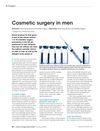
July 2020 in “Trends in Urology and Men's Health” This article discusses cosmetic surgeries offered to men in the UK and highlights potential risks but reports no new findings.
 May 2024 in “Journal of cosmetic dermatology”
 This study found that topical finasteride mixed with minoxidil improved hair appearance and self-esteem in men with androgenetic alopecia, but it was not superior to oral finasteride and had lower treatment adherence.
1 citations
,
January 2016 in “Hair transplant forum international” This article compiles internet forum posts discussing differences between brand-name and generic finasteride pills, but it presents no new clinical findings.

This review analyzed clinical trials and guidelines on 5-α-reductase inhibitors (5-ARIs) and found these drugs significantly improve urinary symptoms in BPH and stabilize hair loss in androgenic alopecia, but may cause sexual dysfunction and gynecomastia.
April 2025 in “The Journal of Clinical Endocrinology & Metabolism” This study highlights the global prevalence of hirsutism in women and reviews its diagnostic criteria, potential underlying causes like polycystic ovary syndrome, and treatment options, emphasizing the need for tailored, multifaceted management and acknowledging the distress it causes patients.
May 2026 in “Reactions Weekly”  April 2024 in “Journal of endocrinological investigation”
 This study found that topical minoxidil significantly enhanced facial hair growth in transgender individuals assigned female at birth undergoing gender affirming hormone therapy, with improvements most notable after six months of use.
April 2022 in “Reactions Weekly” December 2024 in “Chinese Chemical Letters” This study found that using hollow mesoporous silica nanoparticles as carriers in a topical finasteride formulation significantly enhanced drug retention and hair regrowth in an AGA mouse model, suggesting a promising approach for treating androgenetic alopecia with reduced side effects.
 October 2023 in “Bangladesh journal of urology”
 This study in Bangladesh reports that 81% of patients with refractory idiopathic hematospermia showed remission after three months of finasteride treatment, significantly higher than the 27% remission rate in the placebo group, with results sustained for some time after stopping the medication.
 October 2010 in “Journal of Men's Health”
 This study found that adolescent men in Ireland are more likely to prefer keeping a baby over abortion in a hypothetical unplanned pregnancy, influenced by their anticipated regret and perceived familial attitudes.
 21 citations
,
August 1994 in “Clinical endocrinology”
21 citations
,
August 1994 in “Clinical endocrinology” This article reviews the effects of 5 alpha-reductase inhibitors for treating conditions like male pattern baldness and benign prostatic hyperplasia, noting significant DHT reduction but reports no new clinical results.
This pilot study found that a novel regimen including NuH Hair led to significant hair growth in male patients with androgenic alopecia, regardless of atopy status, with quicker results when additional treatment components were used.
67 citations
,
January 1997 in “Lancet” This article discusses the causes of hirsutism, identifying increased androgen production and heightened skin sensitivity, and provides no new clinical results.
Topical finasteride may better target hair follicles without significant benefits over oral form.
July 2010 in “PharmacoEconomics & Outcomes News”  October 2007 in “Humana Press eBooks”
 This study reports that saw palmetto may effectively treat benign prostatic hyperplasia symptoms and potentially stimulate hair growth with generally mild side effects.