2 citations
,
May 2021 in “Neuropathology & applied neurobiology/Neuropathology and applied neurobiology” This correspondence reports the case of a young woman with severe lipid storage myopathy due to a rare mutation, who showed significant temporary improvement with plasmapheresis and immunoglobulin treatment before stabilizing with riboflavin and coenzyme Q10 supplementation, challenging the initial assumption of an immune-mediated condition.
This study found that fibroblast growth factor 20 (Fgf20) orchestrates the movement and behavior of dermal fibroblasts, directing their formation into dermal condensates during hair follicle development in mice.
4 citations
,
November 2020 in “Case reports in dermatology” This report summarizes recent cases of the rare condition erythromelanosis follicularis faciei et colli to illustrate its varied clinical presentations.
 February 2011 in “Journal of the American Academy of Dermatology”
 This study found that polycystic ovary syndrome was the most common cause of hirsutism among premenopausal women in Algeria.
This study highlights the successful design of recombinant fortilin constructs for potential drug development targeting atherosclerotic plaque formation in cardiovascular disease.
 67 citations
,
August 2007 in “American Journal of Pathology”
67 citations
,
August 2007 in “American Journal of Pathology” This study found that overexpression of the mineralocorticoid receptor in a mouse model led to premature epidermal barrier development, keratinocyte apoptosis, and postnatal alopecia, indicating new roles for MR signaling in skin physiology.
This study found that mycophenolate mofetil was well tolerated and effective as a second-line treatment for autoimmune hepatitis in patients who were intolerant to azathioprine.
 April 2016 in “Journal of Investigative Dermatology”
 This study found that a newly developed peptide, FOL-005, significantly inhibited hair growth and counteracted minoxidil's effects in organ-cultured human male scalp skin and mouse models, without apparent toxicity.
3 citations
,
June 2018 in “Internal Medicine” In this study, a patient with Cronkhite-Canada syndrome complicated by severe sepsis and disseminated intravascular coagulation was successfully treated using combined therapies, including recombinant human soluble thrombomodulin, despite the absence of a standard treatment regimen for CCS.
7 citations
,
March 2022 in “International Journal of Molecular Sciences” This study found that FGF21 suppresses inflammation induced by C. acnes in both human skin cells and mouse models, suggesting potential use in acne treatment.
 9 citations
,
January 2018 in “International Journal of Trichology”
9 citations
,
January 2018 in “International Journal of Trichology” This case report discusses cutaneous graft versus host disease presenting as fibrosing alopecia, suggesting a mechanistic model for understanding cicatricial pattern hair loss.
 September 2023 in “Clinical, cosmetic and investigational dermatology”
 This case series reports successful treatment of refractory folliculitis decalvans using surgical excision with second-intention healing and guarded high-tension suturing, resulting in long-term remission without recurrence over a 10–24 month follow-up period.
 16 citations
,
January 2005 in “Pediatric Dermatology”
16 citations
,
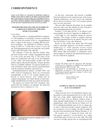
January 2005 in “Pediatric Dermatology” This brief report describes a case of Fox-Fordyce disease in a prepubertal girl but reports no new clinical findings.
7 citations
,
August 2017 in “Genetic testing and molecular biomarkers” This report suggests that patients with primary spontaneous pneumothorax should be evaluated for FLCN mutations, as they may indicate Birt-Hogg-Dube syndrome and associated cancer risks.
 May 2022 in “International journal of infectious diseases”
 In this case study, a 70-year-old woman with generalized favus caused by Trichophyton schoenleinii achieved a clinical and mycological cure after a one-month terbinafine treatment.
This study suggests that finasteride might reduce SARS-COV-2 infectivity by inducing epigenetic changes in the TMPRss2 protein, which is crucial for viral activation and multiplication.
 32 citations
,
September 2017 in “Journal of the American Academy of Dermatology”
32 citations
,
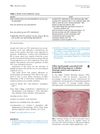
September 2017 in “Journal of the American Academy of Dermatology” In this study, researchers reported that oral isotretinoin effectively treated facial papules in frontal fibrosing alopecia, with histopathologic findings suggesting the involvement of elastic fibers and sebaceous glands in papule formation beyond perifollicular inflammation.
 April 2017 in “The journal of investigative dermatology/Journal of investigative dermatology”
 This study reports that 71% of patients treated with the gamma-secretase inhibitor PF-03084014 for desmoid tumors experienced dermatologic side effects, such as follicular lesions and pruritic eruptions, which were managed with topical or systemic treatments.

This review discusses the potential link between contact allergy and frontal fibrosing alopecia, noting the presence of implicated allergens in current literature, but reports no new clinical findings.
 April 2016 in “Expert opinion on orphan drugs”
 This review explores current therapeutic options for frontal fibrosing alopecia, noting the use of finasteride, topical tacrolimus, hydroxychloroquine, and excimer laser in managing the condition, but reports no new clinical results.
 May 2025 in “Medical Journal of Dr D Y Patil Vidyapeeth”
 This report presents a unique case of folliculitis decalvans in two young sisters managed with low-dose isotretinoin and erythromycin, without specifying the treatment's success.
July 2024 in “Journal of Investigative Dermatology” The Fas/FasL pathway may play a role in alopecia areata.
 October 2023 in “Dermatology practical & conceptual”
 In this case report, folliculitis decalvans with frontal fibrosing alopecia was observed in a patient with a dark phototype, highlighting the phenotypic spectrum of folliculitis decalvans and lichen planopilaris.
 April 2023 in “Journal of Investigative Dermatology”
 In this study, researchers discovered that fat grafting helps reduce dermal fibrosis in radiation-injured mouse skin by decreasing specific fibroblast subpopulations associated with Fra/c-Jun signaling.
 9 citations
,
July 2002 in “Journal of the European Academy of Dermatology and Venereology”
9 citations
,
July 2002 in “Journal of the European Academy of Dermatology and Venereology” This article discusses multiple minute digitate hyperkeratosis in a dermatological context and reports no new clinical findings; the authors focus on a descriptive review.
 May 2019 in “Australasian Journal of Dermatology”
 The conclusion is that managing hair loss conditions like FFA and melanoma requires individualized approaches, considering new findings and balancing treatment benefits with potential risks.
 January 2021 in “Türkiye klinikleri dermatoloji dergisi”
 This study found that eyebrow involvement in frontal fibrosing alopecia was more common among postmenopausal females with comorbidities, without a significant link to age or disease duration.
15 citations
,
January 2006 in “British Journal of Dermatology” This case study reports that the topical application of mometasone furoate ointment successfully reduced eruptions and promoted hair regrowth in a patient with amicrobial pustulosis.
 1 citations
,
January 2018 in “Indian journal of otolaryngology and head and neck surgery”
1 citations
,
January 2018 in “Indian journal of otolaryngology and head and neck surgery” This case study details an elderly patient with multiple nasal vestibular furunculosis leading to severe tissue damage and a nasolabial fistula, which was addressed using an alar advancement flap after allowing for tissue healing.
 9 citations
,
November 2000 in “Journal of the American Academy of Dermatology”
9 citations
,
November 2000 in “Journal of the American Academy of Dermatology” This report presents a rare case of a patient with type Wong dermatomyositis who also exhibits clinical and histologic features of porokeratosis, potentially signaling associated malignancies in dermatomyositis patients.