 36 citations
,
June 2021 in “Experimental & Molecular Medicine”
36 citations
,
June 2021 in “Experimental & Molecular Medicine” This study found that mechanical stress activates a WISP-1/Hedgehog signaling axis that contributes to ligamentum flavum hypertrophy and fibrosis, identifying Hedgehog signaling as a potential therapeutic target.
7 citations
,
January 2011 in “Biochemistry Research International” This study confirms that the proposed universal model for hard α-keratin structure applies to all known forms across various mammalian species.
 May 2024 in “Journal of Cosmetic and Laser Therapy”
 This study found that three sessions of injectable platelet-rich fibrin (i-PRF+) significantly improved hair follicle density, hair volume, and thickness, as well as patient satisfaction in women with female pattern hair loss, with only minor self-limited adverse effects reported.
 December 2021 in “Research Square (Research Square)”
 This study found that repeatedly collecting hair follicles from individuals with fragile X syndrome is feasible for measuring FMR1 and FMRP levels in both home and office settings.
 August 2014 in “Springer eBooks”
 This article proposes that the combined genetic factor of filaggrin deficiency and environmental factor of staphylococcal biofilms contribute to the development of eczema and ichthyosis vulgaris, but reports no new clinical findings.
 March 2026 in “SKIN The Journal of Cutaneous Medicine”
 This study demonstrated that litifilimab significantly reduced disease activity in cutaneous lupus erythematosus by Week 16, with improvements most notable in sunlight-exposed skin areas.
 November 2022 in “The journal of investigative dermatology/Journal of investigative dermatology”
 This study found that STRIP1 and the STRIPAK complex play a key role in regulating F-actin and cell-cell junctions, which are essential for maintaining the epidermal barrier in mouse skin.
 March 2012 in “Journal of The American Academy of Dermatology”
 This study observed that white females with Ludwig I female pattern hair loss had higher hair density on the occipital scalp, whereas Asian females had thicker hair diameters in both frontal and occipital areas.
56 citations
,
November 2022 in “Biomolecules” This review explores the role of macrophage subsets in adult cutaneous wound healing and emphasizes their potential for therapeutic targeting, but reports no new experimental results.
 July 2026 in “bioRxiv (Cold Spring Harbor Laboratory)”
 This study identified a new FAK isoform, FAKΔe4, which is regulated by ECM stiffness and affects cell migration, invasion, and mechanosensing in human-derived data and engineered models.
66 citations
,
June 2004 in “Biophysical Journal” Hard α-keratin in hair has a unique, nonordered structure, different from other fibers.
22 citations
,
October 1996 in “Dermatologic clinics” This review summarizes recent advances in understanding intermediate filament structure and their implications for pathological mutations and human diseases, but it reports no new experimental results.
March 2017 in “International Society of Hair Restoration Surgery” Female hair loss may be linked to heart health and aging.
114 citations
,
January 2016 in “Current topics in developmental biology/Current Topics in Developmental Biology” This review discusses the diverse roles of Frizzled proteins in developmental and homeostatic processes and reports no new experimental findings.
 81 citations
,
January 2003 in “The FASEB Journal”
81 citations
,
January 2003 in “The FASEB Journal” This study found that follistatin and activin interactions are important for hair follicle development and cycling in mice, suggesting that they may regulate processes involving BMP-2 and its antagonist.
 6 citations
,
June 2019 in “Journal of dermatology”
6 citations
,
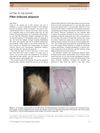
June 2019 in “Journal of dermatology” Dermal fillers can cause hair loss, so dermatologists should be aware.
82 citations
,
January 2011 in “New Phytologist” This study demonstrated that AtVLN4 plays a role in root hair growth by regulating actin organization in a calcium-dependent manner.
 December 2022 in “Journal of neurodevelopmental disorders”
 This study observed that repeated hair follicle sampling is feasible and reliable for measuring FMR1 mRNA and FMRP in individuals with Fragile X syndrome, supporting its use in longitudinal studies.
1 citations
,
March 2010 in “International Journal of Cosmetic Science” This study introduces a new device for measuring changes in hair stiffness and lubricity, which can help predict the effects of various hair treatments.
180 citations
,
April 2002 in “Cell Death and Differentiation” 28 citations
,
January 2015 in “Journal of Cell Science” In this study, PINCH-1 gene loss in mouse epidermis led to detachment from the basement membrane, thickened skin, and hair loss, with findings suggesting PINCH-1 plays a role in keratinocyte adhesion through both ILK and EPLIN pathways.
32 citations
,
July 2017 in “Oncotarget” This study found that intermittent treatment with FTI lonafarnib and sulforaphane may be a promising therapeutic approach for children with Hutchinson-Gilford progeria syndrome, as it improved the cellular phenotype.
 22 citations
,
October 2020 in “Frontiers in Cell and Developmental Biology”
22 citations
,
October 2020 in “Frontiers in Cell and Developmental Biology” This study found that resveratrol and fisetin promoted hair growth in mice by inducing telomerase reverse transcriptase expression, which activates hair follicle stem cells and transitions follicles from a resting to a growth phase.
 September 1997 in “BioMed Research International”
 This review discusses the current understanding of the epidemiology, pathogenesis, clinical manifestations, and diagnosis of female pattern hair loss and reports no new research results.
 May 2024 in “International Seven Journal of Multidisciplinary”
 This review discusses fibrosing frontal alopecia, including its causes, mechanisms, and treatments, and emphasizes the need for further research to improve understanding and treatments; it reports no new clinical results.
 April 2026 in “Biosensors”
 In this study, red-light irradiation significantly increased hair follicle numbers and ATP levels in a mouse model, highlighting low-level laser therapy's potential to enhance hair regeneration and alter the skin metabolic microenvironment.
53 citations
,
July 2002 in “Journal of Investigative Dermatology” The Dfl mutation in mice causes poor sebaceous gland function and complete hair loss.
March 2017 in “Jurnal materi dan pembelajaran fisika” This review discusses applications of light diffraction in healthcare, highlighting its use in LASIK procedures, optogenetics, and measuring hair diameter, but reports no new results.
 22 citations
,
December 2013 in “Molecular biology of the cell”
22 citations
,
December 2013 in “Molecular biology of the cell” This study found that ILK deficiency disrupts hair follicle development by impairing cell polarity and laminin-511 assembly, but these defects can be partially reversed with exogenous laminin-511.