1 citations
,
July 2024 in “Journal of lasers in medical sciences” This case study reports that treating a female patient with facial partial unilateral lentiginosis using a 532-nm Nd:YAG fractional picosecond laser resulted in significant improvement in pigmentation without notable side effects, indicating it may be an effective and well-tolerated treatment option.
 1057 citations
,
November 2011 in “Annals of Biomedical Engineering”
1057 citations
,
November 2011 in “Annals of Biomedical Engineering” This review discusses the applications of low level laser therapy (LLLT) in wound healing, pain reduction, and treating various conditions, but reports no new clinical results; the authors highlight the need for randomized controlled trials for serious diseases.
Among participants in a 26-week trial, this study by REVIAN Inc. reported that their REVIAN RED dual wavelength LED light treatment for androgenetic alopecia was both safe and effective at the 16-week mark.
54 citations
,
November 2014 in “JEADV. Journal of the European Academy of Dermatology and Venereology/Journal of the European Academy of Dermatology and Venereology” This study found that combining low-fluence Q-switched Nd: YAG laser and intense pulsed light led to faster and more effective melasma treatment compared to using the laser alone, though recurrence still occurred.
5 citations
,
August 2014 in “Dermatologic surgery” Advanced fluorescence technology effectively treats skin discoloration from certain creams.
1 citations
,
April 2018 in “Dermatologic Surgery” This source outlines the scope and content of the Dermatologic Surgery journal, highlighting its focus on comprehensive peer-reviewed information related to various dermatologic surgeries, including cosmetic and reconstructive procedures and skin cancer treatment, as an essential resource for professionals in the field.
This article reviews low-level light therapy for various types of hair loss and reports no new clinical results; the authors note its safety and advantages but lack data on individual treatment response.
 April 2018 in “Journal of Investigative Dermatology”
 In this first-in-human study, BLZ-100, an intraoperative fluorescent imaging agent, was administered to 21 patients before skin cancer surgery and was found to be well tolerated without serious adverse effects, suggesting its potential to help distinguish cancerous from non-cancerous tissue based on fluorescence.
26 citations
,
November 2019 in “Medical Science Monitor” This study found that photobiomodulation via LED light at 630 nm and 810 nm increased proliferation and mineralization in osteoblast-like cells, with comparable effects between the two wavelengths.
 January 2026 in “Dermatology and Therapy”
 This study suggests that using UVFD to examine non-pigmented facial lesions can potentially enhance diagnostic accuracy and reduce unnecessary biopsies.
January 2024 in “SSRN Electronic Journal”  6 citations
,
November 2018 in “Photodiagnosis and Photodynamic Therapy”
6 citations
,
November 2018 in “Photodiagnosis and Photodynamic Therapy” This study found that using a wearable low-level light therapy device for photodynamic therapy significantly reduced actinic keratosis lesions and improved quality of life in patients with AK of the scalp.
5 citations
,
April 2020 in “Journal of Mind and Medical Sciences” This paper presents a new device for navigational surgery utilizing the fluorescent properties of Indocyanine Green, offering enhanced intra-operative imaging capabilities by identifying tissues with an infrared CMOS camera.
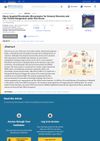 November 2023 in “ACS Nano”
 In a mouse model of deep skin burns, this study found that a neuro-inspired biomimetic microreactor, when delivered through a hydrogel and activated by near-infrared light, significantly promoted functional skin regeneration, sensory recovery, and hair follicle formation.
 January 2009 in “Elsevier eBooks”
 Low level laser therapy may help with hair loss.

This study observed that, after 90 hours of light exposure, Finasteride retained 57% of its concentration, whereas Diclofenac and Naproxen retained only 12% and 9%, respectively.
 February 2025 in “Cosmetics”
 This narrative review explored how blue light therapy may offer therapeutic benefits for various skin disorders by affecting microbial activity and immune responses, promoting hair growth, and aiding skin rejuvenation and healing.
 16 citations
,
September 2018 in “Journal of Molecular Liquids”
16 citations
,
September 2018 in “Journal of Molecular Liquids” This study investigated a nanostructured system using PS-b-PAA diblock copolymer for incorporating the hydrophobic photosensitizer ClAlPc, finding it effective in causing cellular damage in Caco-2 cells under light while demonstrating no cytotoxicity without light, suggesting its potential use in photodynamic therapy.
This study found that home use of low-level light therapy reduced inflammation and symptoms like itching and burning in women with frontal fibrosing alopecia over six months.
 November 2022 in “Journal of Investigative Dermatology”
 This study found that using a home-use LED mask with specific wavelengths improved signs of skin aging in both ex-vivo and clinical settings.

Low level laser or LED therapy combined with infiltrations may help hair growth.
 December 2020 in “Nippon Laser Igakkaishi”
 This review covers the mechanisms and reported clinical effects of Photobiomodulation therapy, particularly in the fields of plastic surgery and dermatology, without presenting new clinical results.
17 citations
,
October 2009 in “Dermatology” This study reported that ultraviolet light treatment from a Kromayer lamp stimulated hair growth in four out of six patients with alopecia, whereas intralesional triamcinolone acetonide had a mixed effect.
 November 2020 in “Journal of The American Academy of Dermatology”
 This paper discusses photobiomodulation therapy for androgenetic alopecia, focusing on the potential differences in efficacy between laser diodes and LEDs, and reports no new clinical results.
4 citations
,
September 2023 in “Journal of Dermatological Treatment” In this study, the use of wellness apparel emitting red and NIR light was associated with improved disease severity in patients with mild elbow psoriasis, PMLE, and limited AA, though the small sample size and continued use of other treatments were noted as limitations.
January 2024 in “International Journal of Physics and Applications” This review discusses the therapeutic effects of soft laser therapy on humans and animals, highlighting increased ATP and reactive oxygen species production in cells with high mitochondrial activity.
 43 citations
,
September 2017 in “Lasers in Surgery and Medicine”
43 citations
,
September 2017 in “Lasers in Surgery and Medicine” This study found that LED light irradiation induced proliferation and migration of human outer root sheath cells, potentially through the stimulation of the Wnt/β-catenin and ERK signaling pathways.
3 citations
,
August 2024 in “Clinical Cosmetic and Investigational Dermatology” In this study, researchers found that specific treatment parameters disrupted follicles and sebaceous glands, damaging the bacteria Cutibacterium acnes and promoting follicular remodeling, which may improve both inflammatory and noninflammatory acne lesions.
 40 citations
,
October 2009 in “Journal of Biomedical Nanotechnology”
40 citations
,
October 2009 in “Journal of Biomedical Nanotechnology” This review discusses pyrene excimer nucleic acid probes for detecting biomolecules and protein-DNA interactions and reports no new experimental findings.
January 2011 in “Xibei nongye xuebao” This study found that the K14 promoter exhibited higher activity in skin cell lines compared to other cell lines, while both K14 and K5 promoters were active in all tested cell lines.