8 citations
,
January 2025 in “JADA Foundational Science” This review discusses the state-of-the-art in photobiomodulation therapy for oral and dental applications and emphasizes the need for education, training, and addressing logistical issues for its routine use.
 November 2023 in “Journal of cosmetic dermatology”
 This report describes three cases of erythromelanosis follicularis faciei et colli showing significant improvement in facial telangiectasia following treatment with a 595-nm pulsed dye laser, with minimal recurrence observed during follow-up.
 16 citations
,
August 2015 in “Journal of Experimental & Clinical Cancer Research”
16 citations
,
August 2015 in “Journal of Experimental & Clinical Cancer Research” This study found that active telethermography could help identify cancerization fields in individuals with actinic keratosis by detecting hyperthermic halos around tumors, which showed significant changes after treatment with a photolyase device.
January 2024 in “Defence life science journal” This review explores the potential of non-invasive photobiomodulation therapy for managing combat and traumatic soft tissue injuries, emphasizing its benefits, efficacy, and underlying mechanisms, but reports no new clinical results.
15 citations
,
January 2019 in “Lasers in surgery and medicine” This review reported that home-use laser and intense pulsed light devices effectively reduce hair with significant efficacy and safety, showing 80% hair reduction one year post-treatment, although results can vary for darker skin types and compared to professional devices.
6 citations
,
May 2022 in “Pharmaceutics” This study demonstrates that MPM-FLIM multimodal imaging can effectively assess the delivery and dissolution of zinc pyrithione particles in human skin follicles using different application techniques.
 39 citations
,
June 2017 in “Scientific Reports”
39 citations
,
June 2017 in “Scientific Reports” Different lab conditions and light treatment methods change how human skin cells respond to light therapy.

In this study, researchers developed a versatile sprayable hydrogel that promotes wound healing in mice by facilitating rapid gelation, reducing inflammation, and accelerating tissue regeneration, with potential applications in chronic wound treatment and beyond.
11 citations
,
April 2021 in “Journal of Clinical Medicine” This study found that long-term use of a home-use LED device for neck skin rejuvenation significantly improved wrinkle appearance and skin biophysical parameters without affecting thyroid function or morphology after 16 weeks of daily use.
27 citations
,
February 2003 in “Cell and Tissue Research” This study found that FM dyes are effective markers for tracing live Merkel cells in in vitro experiments, as they remain visible for at least seven days and highlight cell shape better than quinacrine.
July 2026 in “Materials Today Bio” This study demonstrated that in a mouse melanoma wound model, the MQ Microneedles effectively managed ROS levels to inhibit tumor growth and promote wound healing through light-controlled release.
 6 citations
,
June 2024 in “Scientific Reports”
6 citations
,
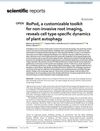
June 2024 in “Scientific Reports” This study introduced RoPod, a customizable tool for low-stress live imaging of Arabidopsis roots, which improves data reproducibility and provides new insights into plant autophagy by revealing detailed, cell type-specific responses to chemical modulators.
 June 2026 in “Annals of Medicine and Surgery”
 This study highlights the approval of orforglipron under the FDA's National Priority Voucher program, emphasizing its significance as a convenient oral treatment option with beneficial effects on glycemic and lipid profiles for diabetes and obesity management.
 January 2026 in “Journal of Hard Tissue Biology”
 This study found that red LED photobiomodulation significantly enhanced both the metabolic activity and proliferation of human placenta-derived pericytes, alongside increased expression of angiogenic markers, suggesting a potential non-invasive approach to aid tissue repair and vascular regeneration.
 January 2026 in “RSC Advances”
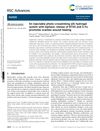
 The hydrogel helps heal wounds without scars by releasing two drugs gradually.
February 2025 in “Journal of the European Academy of Dermatology and Venereology” This study found that ultraviolet-induced fluorescence dermoscopy enhanced the identification of follicular openings in alopecia areata, potentially aiding in the assessment of disease severity and treatment strategies.
This study observed increased proliferation and certain gene expressions in dermal papilla cells exposed to an 808 nm laser diode array at doses above 0.5 J/cm².
 9 citations
,
January 2020
9 citations
,
January 2020 This case series observed that macular changes from popper use can resolve completely after cessation, even in individuals with chronic use.
1 citations
,
April 2024 in “PubMed” This article reviews the mechanisms and applications of photobiomodulation in trauma repair and medical aesthetics, but reports no new clinical results while highlighting its growing clinical significance.
 February 2023 in “Frontiers in Bioengineering and Biotechnology”
 This review discusses the potential of optical techniques for diagnosing and treating oxidative stress-related hepatic ischemia-reperfusion injury, highlighting the need for non-invasive diagnostic methods and the anti-oxidative potential of optical therapies; it reports no new clinical results.
October 2022 in “Zenodo (CERN European Organization for Nuclear Research)” This advertisement for Ignite Amazonian Sunrise Drops presents a supplement with natural ingredients claimed to boost metabolism and aid weight loss, but reports no clinical trial results.
 1 citations
,
February 2025 in “Notulae Scientia Biologicae”
1 citations
,
February 2025 in “Notulae Scientia Biologicae” In this study, researchers developed an in-situ gel formulation of antibacterial Levofloxacin for the eye, which showed prolonged drug release, increased residence time, and effective antibacterial action, suggesting it may be a safe and effective ocular delivery system for antibiotics.
March 2026 in “Dyes and Pigments” This study found that genipin-based pigments, accelerated by riboflavin and blue-light photocatalysis, achieved commercial-level hair dye results with enhanced gloss and excellent color retention while reducing cuticle disruption, offering a potentially safer and faster alternative to traditional hair coloration methods.
25 citations
,
February 2023 in “Aesthetic Surgery Journal” This review concludes that current clinical and preclinical evidence does not indicate oncologic safety concerns linked to photobiomodulation therapy for skin rejuvenation, including no clear evidence of increased cancer risk.
This study found that in-person photobiomodulation treatments improved hair growth in men and some women with androgenetic alopecia, except for the laser band and combination laser/LED helmet in women.
 December 2024 in “Dermatologic Surgery”
 This study observed that pooled analysis of LED caps increased hair density in patients with androgenetic alopecia compared to sham, achieving 28.5 more hairs per cm².
November 2025 in “JEADV Clinical Practice” In this case report, a 28-year-old woman's tinea capitis, diagnosed using a Wood's lamp, was successfully treated with oral itraconazole and ketoconazole shampoo over eight weeks.
January 2014 in “프로그램북(구 초록집)” This review discusses various light and laser treatments for hair loss, highlighting potential benefits but emphasizes the need for more scientific evidence before recommendations can be made.
 108 citations
,
December 2003 in “Lasers in surgery and medicine”
108 citations
,
December 2003 in “Lasers in surgery and medicine” This study found that combining near-infrared laser phototherapy with indocyanine green application may improve acne vulgaris by reducing active lesions and inflammation without side effects.
 February 2009 in “Journal of The American Academy of Dermatology”
 Fractional infrared technology is effective and safe for treating cervical laxity.