 January 2019 in “Springer Reference Medizin”
 This article reviews the role of factor Xa inhibitors like Rivaroxaban and suggests they may eventually replace vitamin K antagonists, but their side effects require further clarification.
28 citations
,
July 1993 in “The journal of investigative dermatology/Journal of investigative dermatology”  13 citations
,
January 2019 in “Skin appendage disorders”
13 citations
,
January 2019 in “Skin appendage disorders” This study reported that fibrosing alopecia in a pattern distribution can occur in patients of color, with clinical and histopathological features allowing for an accurate differential diagnosis.
 70 citations
,
October 2020 in “The journal of allergy and clinical immunology/Journal of allergy and clinical immunology/The journal of allergy and clinical immunology”
70 citations
,
October 2020 in “The journal of allergy and clinical immunology/Journal of allergy and clinical immunology/The journal of allergy and clinical immunology” This review discusses the JAK-STAT pathway and the use of FDA-approved JAK inhibitors for autoimmune and inflammatory diseases but reports no new research findings.
 19 citations
,
January 2021 in “Experimental dermatology”
19 citations
,
January 2021 in “Experimental dermatology” This study found that acne inversa is primarily an epithelial-driven disease, with cyst-forming tendrils causing inflammation due to rupture and the release of debris, highlighting limitations of punch biopsies for analysis.
 January 2024 in “Journal of Crohn's and colitis”
 This study reports that JAK inhibitors were effective in inducing remission in ulcerative colitis patients and presented an acceptable safety profile with a range of manageable side effects.
 32 citations
,
January 2012 in “Clinical & Developmental Immunology”
32 citations
,
January 2012 in “Clinical & Developmental Immunology” In this study, rheumatoid arthritis patients showed no changes in the number of circulating follicular helper T cells, but these cells had increased CD200 expression, implicating them in disease pathogenesis and suggesting CD200/CD200R as a potential therapeutic target.
12 citations
,
March 2022 in “Dermatologic Therapy” This report presents a case of a patient developing new multiple sclerosis while using tofacitinib for alopecia areata, noting no new comprehensive research findings.
 2 citations
,
April 2017 in “Actas Dermo-Sifiliográficas”
2 citations
,
April 2017 in “Actas Dermo-Sifiliográficas” This review discusses the etiology, pathogenesis, clinical presentation, and treatment of frontal fibrosing alopecia, noting the lack of clinical trial data and limited observational treatment results.
325 citations
,
June 1994 in “Archives of Dermatology” This study observed that progressive frontal recession in postmenopausal women may exhibit features of fibrosing alopecia, suggesting a distinct reaction pattern from typical lichen planopilaris.
45 citations
,
May 2002 in “International Journal of Dermatology” This case report describes a patient with systemic lupus erythematosus who developed multiple dermatofibromas while on long-term prednisone therapy.
 3 citations
,
May 2023 in “Frontiers in immunology”
3 citations
,
May 2023 in “Frontiers in immunology” This study reviewed the role of inflammasomes in autoimmune skin diseases, highlighting their contribution to the pathogenesis of conditions such as vitiligo, alopecia areata, and psoriasis, and suggesting that targeting inflammasome dysregulation may offer new therapeutic options.
 3 citations
,
September 2023 in “Frontiers in immunology”
3 citations
,
September 2023 in “Frontiers in immunology” This study discusses the epithelial-immune microenvironment in chronic skin diseases, such as psoriasis and atopic dermatitis, and highlights current and future treatment strategies targeting inflammatory loops within these diseases.
July 2024 in “Journal of Investigative Dermatology” Brepocitinib reduces interferon signaling in hidradenitis suppurativa patients.
 9 citations
,
June 2013 in “Australasian Journal of Dermatology”
9 citations
,
June 2013 in “Australasian Journal of Dermatology” This case study reports on an adult with metastatic Crohn's disease treated with infliximab over 4.5 years, providing valuable follow-up data in this context.
 November 2022 in “PubMed”
 This study found that inadequate thickness of deep dermal tissue in pigs is a key factor leading to fibrosis, with fibrosis likely serving a compensatory function for skin thickness.
 1 citations
,
January 2019 in “Acta dermato-venereologica”
1 citations
,
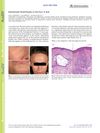
January 2019 in “Acta dermato-venereologica” The woman's skin and hair symptoms were confirmed as frontal fibrosing alopecia, and while facial papules are common in such cases, there's no effective local treatment, but systemic treatments can help.
May 2026 in “Journal of Human Immunity” In this study, researchers found that the JAK1/2 inhibitor ruxolitinib helped normalize tissue-specific autoimmunity in APECED patients by reducing inflammation and immune cell accumulation, but it was also linked to subclinical side effects like anemia and weight gain.
 January 2018 in “Springer eBooks”
 Hidradenitis Suppurativa is likely an autoinflammatory disease, and better understanding its causes could improve treatments.
 March 2024 in “Advanced science”
 This study observed that a novel extracellular matrix hydrogel made from human fibroblast-derived matrix improved wound healing in animal models, showing significant effects such as hair follicle formation, reduced inflammation, enhanced pro-healing growth factor levels, and interaction with macrophages, compared to traditional collagen hydrogels.
 6 citations
,
January 2017 in “British Journal of Dermatology”
6 citations
,
January 2017 in “British Journal of Dermatology” This article reviews frontal fibrosing alopecia, exploring its characteristics, demographics, and associated conditions, and calls for controlled trials due to an increase in worldwide cases; it reports no new findings.
38 citations
,
April 2018 in “Diseases” This study observed that fibrin rich in leukocytes and platelets (L-PRF) might effectively heal diabetic foot ulcers with osteomyelitis, showing positive preliminary results in all three patients treated.
April 2025 in “International Journal of Dermatology” This article proposes renaming frontal fibrosing alopecia to frontal fibrosing alopecia syndrome to better reflect its varied presentations and enhance understanding and treatment approaches.
 154 citations
,
November 2017 in “Development”
154 citations
,
November 2017 in “Development” This review discusses the roles of fibroblast growth factors in tissue regeneration and repair across various organisms and tissues, but reports no new experimental findings, underscoring the need for further research.

Lichen planopilaris and frontal fibrosing alopecia are likely the same disease with different clinical appearances.
 9 citations
,
July 2002 in “Journal of the European Academy of Dermatology and Venereology”
9 citations
,
July 2002 in “Journal of the European Academy of Dermatology and Venereology” This article discusses multiple minute digitate hyperkeratosis in a dermatological context and reports no new clinical findings; the authors focus on a descriptive review.
2 citations
,
December 2024 in “eLife” This study observed that individuals with Down syndrome exhibit early immune dysregulation, including multi-organ autoimmunity and hypercytokinemia, and found that the JAK inhibitor tofacitinib showed a good safety profile and reduced skin pathology in a Phase II trial.
 May 2026 in “Journal of Neurosciences in Rural Practice”
 This case report describes a 23-year-old woman with alopecia areata who developed new central nervous system demyelination after starting tofacitinib therapy; while the drug was associated with this neurological event, causality is not confirmed. The demyelination was reversible upon stopping the medication and administering corticosteroids.
 28 citations
,
February 2020 in “Clinical Ophthalmology”
28 citations
,
February 2020 in “Clinical Ophthalmology” This article discusses intraoperative floppy iris syndrome during cataract surgery and highlights the importance of awareness and preoperative documentation of its risk factors, emphasizing a multidisciplinary approach to management.
18 citations
,
August 2024 in “eLife” This study investigated immune dysregulation in individuals with Down syndrome and found that treatment with the JAK inhibitor tofacitinib improved skin conditions like alopecia areata and reduced autoimmune markers without severe side effects. Additional research is necessary to understand its broader impacts.