 September 2013 in “Hair transplant forum international”
 This abstract describes frontal fibrosing alopecia, a type of cicatricial alopecia identified in post-menopausal women, and reports no new clinical findings.
 55 citations
,
June 2007 in “Journal of Statistical Planning and Inference”
55 citations
,
June 2007 in “Journal of Statistical Planning and Inference” This study introduces an extended approach to the Bonferroni procedure that accounts for correlations among endpoints, aiming to improve test power while maintaining strong control of the family-wise type I error rate in clinical trials.
 12 citations
,
July 2017 in “Journal of cosmetic dermatology”
12 citations
,
July 2017 in “Journal of cosmetic dermatology” This study suggests that infrared thermography may be a useful noninvasive tool for diagnosing active phases of frontal fibrosing alopecia when combined with dermoscopy.
 1 citations
,
January 2023 in “Journal of Clinical Medicine”
1 citations
,
January 2023 in “Journal of Clinical Medicine” This study reported that Tomorrowlabs HIF strengthening factor [HSF] hair restoration technology significantly improved hair thickness, density, shine, and elasticity, while reducing hair loss by an average of 66.8% and enhancing hair growth by up to 32.5% in subjects with androgenic alopecia over nine months.
 3 citations
,
February 2000 in “Dermatologic Surgery”
3 citations
,
February 2000 in “Dermatologic Surgery” The document concludes that hair restoration has improved with follicular unit transplantation, making it more scientific and precise.
 May 2024 in “International Seven Journal of Multidisciplinary”
 This review discusses fibrosing frontal alopecia, including its causes, mechanisms, and treatments, and emphasizes the need for further research to improve understanding and treatments; it reports no new clinical results.
November 2022 in “Journal of Investigative Dermatology” This study generated a transcriptomic map of human hair follicle compartments, providing a database for identifying compartment-specific gene expression which may aid in developing targeted treatments for hair follicle disorders.
June 2026 in “British Journal of Dermatology” This study found that individuals with frontal fibrosing alopecia have increased odds of thyroid disease, lupus erythematous, vitiligo, and heart disease, supporting the consideration of FFA as a systemic disorder.
 16 citations
,
February 2020 in “The Laryngoscope”
16 citations
,
February 2020 in “The Laryngoscope” This study found that hair transplantation is feasible in patients with lichen planopilaris and frontal fibrosing alopecia, but outcomes are generally less favorable compared to other causes and these diseases may also develop after the procedure.
4 citations
,
May 2023 in “Cells” In this study, baricitinib treatment improved the differentiation of skin-derived precursors into adipocytes for diseases like Hutchinson-Gilford progeria syndrome, suggesting potential benefits when combined with lonafarnib.
1 citations
,
March 2012 in “Actas dermo-sifiliográficas/Actas dermo-sifiliográficas” Dermoscopy helps diagnose frontal fibrosing alopecia by identifying specific scalp features.
 8 citations
,
November 2018 in “Australasian Journal of Dermatology”
8 citations
,
November 2018 in “Australasian Journal of Dermatology” This study adds evidence suggesting a genetic component to frontal fibrosing alopecia, with daughters experiencing an earlier onset than their mothers, although the clinical pattern remains similar to non-familial cases.
2 citations
,
June 2024 in “Skin Appendage Disorders” This study identifies specific trichoscopic features such as empty follicles and perifollicular erythema in Caucasians with frontal fibrosing alopecia, which may assist in diagnosis and monitoring, but stresses the need for further research due to limited demographic data.
January 2007 in “Linchuang pifuke zazhi” In this study, transient transfection of the HIF-1α gene into fibroblasts led to increased VEGF expression, which may enhance the growth and anagen phase of human hair follicles in vitro.
 January 2025 in “Indian Journal of Dermatology”
 This review discusses the various factors implicated in the etiology of frontal fibrosing alopecia and notes the need for effective treatments, reporting no new clinical findings.
This study found that the protein Formin 2 helps regulate cell-to-cell transport in thale cress by stabilizing actin filaments at plasmodesmata, with its absence leading to increased permeability and vulnerability to viral infections.
 August 2023 in “Journal of analytical & pharmaceutical research”
 In this study, microneedle-assisted human basic fibroblast growth factor therapy was reported to significantly improve hair regeneration in both male and female patients with androgenetic alopecia, alopecia areata, and telogen effluvium, showing greater effectiveness in males.
1 citations
,
October 2022 in “Hair Transplantation” This review discusses body hair transplants as a supplement to scalp donor hair in hair restoration, but reports no clinical results; the authors note variability in outcomes and suggest it helps patients with limited scalp donor resources.
75 citations
,
September 2007 in “Journal of Heredity” This study found that mutations in the FGF5 gene are the primary genetic factor causing long hair in domestic cats through an autosomal recessive mechanism.
May 2008 in “10th European Congress of Endocrinology” Flutamide alone is as effective as the combination with finasteride for treating hirsutism.
 46 citations
,
January 2015 in “Journal of The American Academy of Dermatology”
46 citations
,
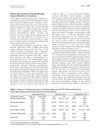
January 2015 in “Journal of The American Academy of Dermatology” This study suggests that trichoscopic features, such as perifollicular erythema and cicatricial white patches, are independently associated with pruritus and the severity of frontal fibrosing alopecia.
 November 2025 in “Indian Journal of Plastic Surgery”
 In this study, researchers found that using the FUE method, performed by surgeons instead of technicians, allows for more precise follicular unit extraction than the traditional FUT method, potentially improving outcomes and donor area utilization in hair transplantation.
January 2012 in “RWTH Publications (RWTH Aachen)” This study found that patient-derived HGF significantly accelerates wound healing in diabetic mice, particularly improving skin structure and flexibility, and rHGF plays a key role in boosting hair growth.
14 citations
,
January 2014 in “Indian Journal of Dermatology Venereology and Leprology” Frontal fibrosing alopecia can affect men's beards and leads to permanent hair loss.
This study found that the Arabidopsis thaliana protein Formin 2 localizes to plasmodesmata and is crucial for regulating their permeability by anchoring actin filaments, which affects virus susceptibility.
 January 2021 in “Hair transplant forum international”
 This article describes a new T-Fast multi-implanter that potentially reduces operating costs and surgical time by implanting two follicular unit excision grafts simultaneously, which may encourage clinics to adopt this technique.
 103 citations
,
June 2018 in “International Journal of Molecular Sciences”
103 citations
,
June 2018 in “International Journal of Molecular Sciences” This review discusses the applications and research on fibroblast growth factors, including their use in wound healing, diabetes, and cancer, but it reports no new clinical results.
 July 2022 in “The journal of investigative dermatology/Journal of investigative dermatology”
 In this study, researchers created a comprehensive transcriptome map of human hair follicle compartments, identifying compartment-specific genes and providing a resource for potential therapeutic interventions.
1 citations
,
December 2012 in “Journal of dermatological science” This study introduces ficlatuzumab, an anti-HGF monoclonal antibody, in combination with gefitinib in a phase 2 trial to address EGFR TKI resistance in Asian NSCLC patients.
 40 citations
,
January 2013 in “International journal of trichology”
40 citations
,
January 2013 in “International journal of trichology” This study found that among women with frontal fibrosing alopecia, 100% showed dermoscopic elements suggestive of the condition, with perifollicular erythema often indicating disease activity.