2 citations
,
January 2019 in “Skin appendage disorders” This article reports a case of frontal fibrosing alopecia in its early inflammatory stage that responded positively to intralesional steroid treatment.
 8 citations
,
October 2016 in “Actas Dermo-Sifiliográficas”
8 citations
,
October 2016 in “Actas Dermo-Sifiliográficas” This study found that men with frontal fibrosing alopecia exhibited more frequent facial papules, androgenetic alopecia, and body hair loss compared to women with the condition, and were generally older.
 61 citations
,
January 2019 in “American Journal of Clinical Dermatology”
61 citations
,
January 2019 in “American Journal of Clinical Dermatology” This review discusses the potential causes and treatments for frontal fibrosing alopecia but reports no new clinical findings, highlighting the need for further research to understand its pathogenesis and develop validated treatments.
May 2026 in “International Journal of Dermatology” This study investigated a unique frontal fibrosing alopecia-like presentation of alopecia areata, finding that patients experienced an insidious, chronic course with limited scalp hair regrowth, and showed a lower response to systemic corticosteroids compared to patchy alopecia areata.
 3 citations
,
February 2022 in “Cureus”
3 citations
,
February 2022 in “Cureus” This study observed an alopecia syphilitica-like pattern of hair loss in a woman with frontal fibrosing alopecia, suggesting it may be another atypical presentation of the condition.
 33 citations
,
August 2013 in “British Journal of Dermatology”
33 citations
,
August 2013 in “British Journal of Dermatology” Lack of small, fine hair on the front hairline is a key sign of frontal fibrosing alopecia.
 9 citations
,
January 2020 in “Postepy Dermatologii I Alergologii”
9 citations
,
January 2020 in “Postepy Dermatologii I Alergologii” This review discusses the enigmatic nature of frontal fibrosing alopecia and reports no clinical results; the authors stress the need for further research.
 5 citations
,
April 2019 in “Journal of The American Academy of Dermatology”
5 citations
,
April 2019 in “Journal of The American Academy of Dermatology” This review discusses the complex nature of frontal fibrosing alopecia, suggesting it is a misnomer and possibly a subset of lichen planopilaris, but reports no new clinical results.
 3 citations
,
November 2020 in “Clinical, Cosmetic and Investigational Dermatology”
3 citations
,
November 2020 in “Clinical, Cosmetic and Investigational Dermatology” This review summarizes the current treatment modalities for frontal fibrosing alopecia and provides a practical guide for clinicians, but reports no new clinical results.
 7 citations
,
October 2015 in “Actas Dermo-Sifiliográficas”
7 citations
,
October 2015 in “Actas Dermo-Sifiliográficas” This article reviews the increasing incidence of frontal fibrosing alopecia since its first description in 1994 and reports no new results.
 13 citations
,
August 2002 in “Dermatologic Surgery”
13 citations
,
August 2002 in “Dermatologic Surgery” This paper introduces Follicular Unit Extraction and reports the FOX Test can identify suitable candidates, with about 25% of patients being ideal and 35% being good candidates for the procedure.
45 citations
,
May 2022 in “Biomedicines” This review discusses using human follicular fluid in metabolomic analysis as a diagnostic tool and predictor of success in assisted reproductive technology for PCOS patients, reporting no new results.
 1 citations
,
March 2016 in “Journal of The American Academy of Dermatology”
1 citations
,
March 2016 in “Journal of The American Academy of Dermatology” This editorial response discusses the evidence for using 5-alpha reductase inhibitors in treating frontal fibrosing alopecia, acknowledging its potential benefits while emphasizing the need for further studies to establish it as a standard treatment.
 29 citations
,
July 2010 in “Journal of Cutaneous Medicine and Surgery”
29 citations
,
July 2010 in “Journal of Cutaneous Medicine and Surgery” This study reported no significant improvement in patients with frontal fibrosing alopecia treated with various therapeutic agents, highlighting the need for more evidence-based treatments, especially in those with active disease.
September 2023 in “Journal of the American Academy of Dermatology” This meta-analysis found a significant positive association between frontal fibrosing alopecia and both sunscreen and moisturizer use, with the moisturizer association significant only in males.
 February 2024 in “Skin research and technology”
 The researchers in this study identified molecular mechanisms involved in frontal fibrosis alopecia, highlighting immune response and fatty acid metabolism, and developed a four-gene diagnostic model showing high accuracy in distinguishing affected individuals from controls.
January 2012 in “Chinese Clinical Oncology” This study found that for metastatic colorectal cancer patients, substituting calcium folinate with disodium folinate in combination with fluorouracil and oxaliplatin showed similar effectiveness and safety as the mFOLFOX6 regimen.
7 citations
,
July 2021 in “The Journal of Dermatology” This study in Asian females found that higher use of moisturizers and sunscreen among FFA patients may reflect appearance concerns rather than indicating a direct link to the disease mechanism.
 53 citations
,
May 2010 in “Dermatologic Surgery”
53 citations
,
May 2010 in “Dermatologic Surgery” This article appears to be a table of contents or navigation page for a journal, not presenting any new findings or research results.
 2 citations
,
July 2020 in “Giornale italiano di dermatologia e venereologia”
2 citations
,
July 2020 in “Giornale italiano di dermatologia e venereologia” A woman with frontal fibrosing alopecia experienced unusual hair growth after using a specific topical lotion.
54 citations
,
November 2007 in “Actas Dermo-Sifiliográficas” Early diagnosis of frontal fibrosing alopecia is crucial to prevent permanent hair loss.
 May 2019 in “Anais brasileiros de dermatologia/Anais Brasileiros de Dermatologia”
 This study reviewed 38 cases of frontal fibrosing alopecia, observing that diagnosis often occurs years after onset and is more prevalent in postmenopausal women.
 1 citations
,
January 2020 in “Skin appendage disorders”
1 citations
,
January 2020 in “Skin appendage disorders” Finasteride may help treat frontal fibrosing alopecia, but more research is needed.
 September 2019 in “Actas dermo-sifiliográficas/Actas dermo-sifiliográficas”
 Isotretinoin at low doses effectively treats facial papules in frontal fibrosing alopecia.
 1 citations
,
May 2014 in “European Journal of Inflammation”
1 citations
,
May 2014 in “European Journal of Inflammation” This study found that a topical lotion containing minoxidil, hydrocortisone butyrate, and 17α-estradiol improved or stabilized frontal fibrosing alopecia in 35 out of 40 women over 36 months.
74 citations
,
April 2017 in “JEADV. Journal of the European Academy of Dermatology and Venereology/Journal of the European Academy of Dermatology and Venereology” This study classified frontal fibrosing alopecia patients into three clinical patterns, finding that pattern III had the best prognosis and pattern II the worst after treatment with dutasteride and corticosteroids.
 18 citations
,
June 2017 in “Journal of The American Academy of Dermatology”
18 citations
,
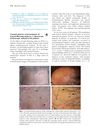
June 2017 in “Journal of The American Academy of Dermatology” In this study, trichoscopy consistently identified typical findings of frontal fibrosing alopecia, revealing three unusual clinical patterns in 18.4% of patients, which may aid in the differential diagnosis when clinical presentations are atypical.
16 citations
,
April 2020 in “JAMA dermatology” More inflammation leads to faster and worse hair loss in women with frontal fibrosing alopecia.
April 2025 in “International Journal of Dermatology” This article proposes renaming frontal fibrosing alopecia to frontal fibrosing alopecia syndrome to better reflect its varied presentations and enhance understanding and treatment approaches.
12 citations
,
July 2020 in “Actas Dermo-Sifiliográficas” This study found that facial papules and rosacea in patients with frontal fibrosing alopecia were linked to a greater need for oral treatment, with most cases involving postmenopausal women.