
This study found that wavy sinus hairs in cats were significantly associated with feline leukemia virus infection, suggesting this physical trait might be useful for identifying infected cats.

Custom skincare can be made based on genes, fewer cats in Lublin have FeLV/FIV than national average, and studies also looked at small water bodies, river pollution, guppy growth, toxins in biochars, palm oil issues, and pumpkin seed oil for hair strength.
 57 citations
,
August 1998 in “The journal of small animal practice/Journal of small animal practice”
57 citations
,
August 1998 in “The journal of small animal practice/Journal of small animal practice” This study reported that Malassezia-associated dermatitis can cause pruritus in cats with feline paraneoplastic alopecia.
 36 citations
,
January 2006 in “Veterinary Dermatology”
36 citations
,
January 2006 in “Veterinary Dermatology” In this study, cyclosporin effectively controlled cases of granulomatous folliculitis, furunculosis, sebaceous adenitis in cats, and alopecia areata in a dog, positioning it as a promising alternative to glucocorticoids in veterinary dermatology.
 15 citations
,
September 1984 in “Veterinary Clinics of North America: Small Animal Practice”
15 citations
,
September 1984 in “Veterinary Clinics of North America: Small Animal Practice” The document explains various skin conditions in cats and how to diagnose and treat them.
 4 citations
,
December 2013 in “Veterinární medicína”
4 citations
,
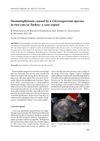
December 2013 in “Veterinární medicína” In this report, two Persian cats and their owner with low immunity due to chemotherapy were identified with a rare dermatophytic infection caused by Chrysosporium spp., and the infection improved following fluconazole treatment.
 4 citations
,
October 1998 in “In Practice”
4 citations
,
October 1998 in “In Practice” This article outlines a practical method for diagnosing and managing feline symmetrical alopecia but presents no new empirical findings.
 November 2018 in “DergiPark (Istanbul University)”
 This case report describes successful treatment of Malassezia overgrowth and resulting dermatitis in a Chinchilla cat using Terbinafine HCL and Omega fatty acid supplements, emphasizing Malassezia's potential as a marker for underlying diseases.
 January 2006 in “Elsevier eBooks”
 Cats with Feline Symmetrical Alopecia can regrow hair with proper treatment based on the specific cause, including diet, medication, or stress management.
 July 2022 in “Bőrgyógyászati és Venerológiai Szemle”
 This review discusses recent advancements in mobile technology and artificial intelligence for dermatology, offering an overview of their current applications but reports no new clinical findings.
 112 citations
,
November 2023 in “Nano-Micro Letters”
112 citations
,
November 2023 in “Nano-Micro Letters” This review discusses the developments over the past five years in nanozyme-based theranostics for tumor therapy, including their classification, design, and synergistic strategies. It also outlines the challenges and prospects of using nanozymes to enhance selectivity, biosafety, repeatability, and stability in therapeutic applications.
 72 citations
,
June 2013 in “Journal of feline medicine and surgery”
72 citations
,
June 2013 in “Journal of feline medicine and surgery” This review discusses the infection dermatophytosis in cats and reports no new results; it emphasizes the difficulty of eradicating the disease in shelters and catteries.
 53 citations
,
September 2007 in “Veterinary dermatology”
53 citations
,
September 2007 in “Veterinary dermatology” This study suggests that Malassezia spp. overgrowth may contribute to pruritus and skin lesions in allergic cats, with antifungal treatments alone providing substantial improvements.
 48 citations
,
March 1997 in “Veterinary Dermatology”
48 citations
,
March 1997 in “Veterinary Dermatology” This report describes a paraneoplastic alopecia in four cats associated with internal malignancy, confirming previous findings of a syndrome linking ventral alopecia and metastatic carcinomas.
 33 citations
,
September 2007 in “Veterinary dermatology”
33 citations
,
September 2007 in “Veterinary dermatology” In this study, proliferative and necrotizing feline otitis externa in four domestic shorthair cats improved with topical 0.1% tacrolimus treatment, despite previous ineffective therapies.
 12 citations
,
January 2024 in “Editora In Vivo eBooks”
12 citations
,
January 2024 in “Editora In Vivo eBooks” This case report from the study describes a dog suffering from dermatophytosis caused by Microsporum canis, presenting with alopecia on the neck and ear, illustrating the zoonotic risk of these fungal infections in both animals and humans, particularly in hot and humid climates.
 3 citations
,
January 2019 in “Bulgarian Journal of Veterinary Medicine”
3 citations
,
January 2019 in “Bulgarian Journal of Veterinary Medicine” This case study describes a cat co-infected with Demodex cati and feline immunodeficiency virus, showing initial treatment improvement followed by disease recurrence and eventual euthanasia.
 2 citations
,
April 2022 in “PubVet”
2 citations
,
April 2022 in “PubVet” This case report discusses a 5-year-old Persian cat with feline eosinophilic granuloma complex, which responded positively to prednisone and topical corticosteroids, eliminating itching and promoting fur regrowth without relapse.
 2 citations
,
September 2016 in “Symbiosis online journal of veterinary sciences”
2 citations
,
September 2016 in “Symbiosis online journal of veterinary sciences” This report details a case of feline degenerative mucinotic mural folliculitis associated with feline immunodeficiency virus, identified using immunohistochemistry and immunoassay techniques.
 2 citations
,
September 2022 in “Jelenkori Társadalmi és Gazdasági Folyamatok”
2 citations
,
September 2022 in “Jelenkori Társadalmi és Gazdasági Folyamatok” This study examines the use and forms of collaborative robot arms in industry, assesses safety and regulatory standards based on ISO/TS 15066, and explores future directions for human-robot collaboration in light of evolving EU Machinery Directive 2006/42/EC regulations.
 1 citations
,
March 2025 in “Acta fytotechnica et zootechnica/Acta fytotechnica et zootechnica”
1 citations
,
March 2025 in “Acta fytotechnica et zootechnica/Acta fytotechnica et zootechnica” This study evaluated quercetin's potential as a treatment for cats with Feline Atopic Skin Syndrome, finding it significantly reduced clinical scores in certain symptom groups like Head-and-Neck Pruritus and Miliary Dermatitis, although improvements in oxidative stress markers were not clearly significant.
 1 citations
,
January 2020 in “Revista Brasileira de Ciência Veterinária”
1 citations
,
January 2020 in “Revista Brasileira de Ciência Veterinária” This case report describes a male cat with demodicosis primarily attributed to Demodex cati, suggesting the generalized disease may have been exacerbated by pruritus related to flea infestation.
 1 citations
,
August 2012
1 citations
,
August 2012 The document discusses various diseases of the outer ear, categorized by symptoms like redness, crusts, bumps, pus-filled lesions, lumps, ulcers, and hair loss.
 1 citations
,
January 2006 in “Elsevier eBooks”
1 citations
,
January 2006 in “Elsevier eBooks” Cats lose fur due to various reasons, including allergies, infections, genetics, hormones, diet, cancer, stress, and some conditions are treatable while others are not.
 April 2026 in “Frontiers in Veterinary Science”
 This study observed that in privately owned, intact cats, male cats exhibited significantly higher long-term hair cortisol concentrations compared to females, while environmental and behavioral factors did not significantly impact cortisol levels, suggesting individual traits may influence stress markers more than external factors.
 January 2024 in “Editora In Vivo eBooks”
 In this case report, a female mixed-breed dog was observed with dermatophytosis, presenting with alopecia in the neck and ear, highlighting the zoonotic nature of the infection caused by fungi that can affect both animals and humans.
 January 2024 in “Editora In Vivo eBooks”
 In this case report, the authors describe a female dog with alopecia in the neck and ear region, affected by dermatophytosis caused by the zoophilic fungus Microsporum canis, highlighting its zoonotic potential and prevalence in certain climates.
 January 2024 in “Editora In Vivo eBooks”
 This case report documents a dog with dermatophytosis, caused by the fungus Microsporum canis, presenting symptoms like alopecia in the neck and ear, highlighting the condition's prevalence in tropical and temperate climates and its zoonotic nature.
 January 2024 in “Editora In Vivo eBooks”
 This study reports a case of dermatophytosis in an 11-month-old spayed female dog, which exhibited alopecia in the neck and ear tip regions, a condition common in tropical and temperate climates and caused by fungi affecting both animals and humans.
 January 2024 in “Editora In Vivo eBooks”
 In this case report, a dog was diagnosed with dermatophytosis, a zoonotic fungal infection common in humid climates, presenting with alopecia in the neck and ear regions.