 January 2016 in “Hair transplant forum international”
 This article reports a notification from Dr. Greg Williams to the FUE Research Committee, but it provides no new research findings.
4 citations
,
October 2024 in “Heliyon” This study characterized the CYP154C7 enzyme from *Streptomyces* sp. PAMC26508, highlighting its ability to hydroxylate steroids efficiently, particularly androstenedione, and identified key amino acids important for substrate selectivity and catalytic efficiency.
May 2023 in “Reactions Weekly” January 2013 in “Reactions Weekly” 1 citations
,
December 2012 in “Journal of dermatological science” This study introduces ficlatuzumab, an anti-HGF monoclonal antibody, in combination with gefitinib in a phase 2 trial to address EGFR TKI resistance in Asian NSCLC patients.
 March 2011 in “Focus on surfactants”
 Several companies launched new hair care ingredients in 2011 to improve conditioning, color retention, combability, and heat protection.
July 2005 in “Hair transplant forum international” This abstract announces a 2005 event for hair restoration surgeons at a luxury hotel but reports no new research findings.
December 2019 in “Reproduction Fertility and Development” This study found that mouse embryonic fibroblasts better supported the growth and maintenance of LGR5+ epidermal stem cells compared to porcine fetal fibroblasts, under various culture conditions.
September 2017 in “The journal of investigative dermatology/Journal of investigative dermatology” This study found that while 450nm blue light can inhibit collagen and induce oxidative stress in dermal fibroblasts, 850nm near-infrared light may enhance metabolic activity without causing oxidative damage, suggesting potential for tailored light therapies in skin treatments.
2 citations
,
January 1999 in “Dermatology” 9 citations
,
July 2021 in “Journal of Medicinal Food” This study found that consuming Lactobacillus paracasei HY7015 promoted hair growth and follicle maturation in mice, likely through stimulating dermal papilla cell proliferation and growth factor secretion.
35 citations
,
August 2016 in “Experimental Dermatology” This viewpoint essay discusses the potential of fullerene C60 derivatives as novel treatment agents in dermatology, highlighting their ability to act as both radical scavengers and oxygen radical generators.
2 citations
,
December 2004 in “PubMed”  January 2015 in “Dermatology”
 The document covers various dermatological treatments and conditions.
 October 2023 in “Spectrochimica acta. Part A, Molecular and biomolecular spectroscopy”
 This study introduces three spectrophotometric techniques for accurately determining finasteride and tadalafil in their combined pharmaceutical form, demonstrating their sustainability, sensitivity, and suitability for quality assurance, alongside a dissolution study following FDA guidelines.
This study found that FGF5 alternative spliceosomes inhibit dermal papilla cell proliferation and regulate hair follicle growth-related gene expression, impacting hair follicle development in rabbits.
 November 2025 in “Clinical Cosmetic and Investigational Dermatology”
 This study evaluated the efficacy and safety of tofacitinib for treating severe alopecia areata in five patients, finding that three responded favorably with mild side effects, supporting its potential use based on existing research.
8 citations
,
June 2021 in “Frontiers in Medicine” This study reported that the combination of a 308-nm excimer lamp and 10% liquor carbonis detergens significantly improved scalp psoriasis symptoms compared to the excimer lamp alone, with more patients achieving 75% reduction in their Psoriasis Scalp Severity Index.
 4 citations
,
November 2019 in “Biomedical Journal of Scientific and Technical Research”
4 citations
,
November 2019 in “Biomedical Journal of Scientific and Technical Research” This paper does not provide study results; it shares author affiliations and publication details without reporting any findings.
 November 2022 in “CARDIOMETRY”
 This article discusses the potential benefits of GcMAF and oral MAF, developed by "Saisei Mirai", for cancer and other conditions, but reports no new clinical results.
 December 2023 in “Clinical, cosmetic and investigational dermatology”
 This study found that combining dermoscopy with reflectance confocal microscopy is more sensitive and specific than using either method alone for assessing vitiligo disease activity and treatment response. Additionally, specific characteristics observed via these techniques correlated with either good or poor treatment outcomes.
5 citations
,
April 2020 in “Journal of Mind and Medical Sciences” This paper presents a new device for navigational surgery utilizing the fluorescent properties of Indocyanine Green, offering enhanced intra-operative imaging capabilities by identifying tissues with an infrared CMOS camera.
19 citations
,
November 1979 in “Archives of dermatology” This case report discusses the potential use of topical tretinoin for treating Fox-Fordyce disease, but provides no new clinical results.
 14 citations
,
July 2012 in “Journal of the American Academy of Dermatology”
14 citations
,
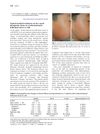
July 2012 in “Journal of the American Academy of Dermatology” This study found that topical tacalcitol improved roughness and scaling in erythromelanosis follicularis faciei et colli, although it was less effective for facial erythema.
95 citations
,
September 2019 in “Brain” In this study, two patients with refractory juvenile dermatomyositis improved clinically and in disease activity after receiving the JAK inhibitor tofacitinib, showing potential effects in managing the condition.
 April 2017 in “The journal of investigative dermatology/Journal of investigative dermatology”
 In a guinea pig model of dermatophytosis, this study found that subcutaneous CD101, dosed once weekly, demonstrated significant clinical and mycological efficacy compared to the vehicle control and the oral antifungal terbinafine, suggesting potential for CD101 in treating fungal skin infections.
 20 citations
,
January 2016 in “Intractable & Rare Diseases Research”
20 citations
,
January 2016 in “Intractable & Rare Diseases Research” In this clinical experience, treating frontal fibrosing alopecia with oral finasteride, hydroxychloroquine, tacrolimus, and excimer laser was associated with optimal results in patients with active inflammation.
November 2025 in “Journal of Investigative Dermatology” PCFCL may have unrecognized subtypes and needs more research.