 March 2026 in “Egyptian Journal of Forensic Sciences”
 This review critically examines Forensic DNA Phenotyping, highlighting high accuracy in predicting certain traits but also legal and ethical challenges, particularly around regulatory fragmentation and issues of genetic privacy.
January 2022 in “Revista Saúde em Foco” This review suggests that combining microneedling with growth factors may significantly stimulate eyebrow growth by promoting new hair follicle formation and improving cellular processes.
 August 2023 in “International Ayurvedic medical journal”
 This case study describes the successful treatment of a 7-year-old girl with alopecia areata using Ayurvedic approaches targeting skin and autoimmune issues, suggesting a potential alternative to long-term oral corticosteroids, which can cause undesirable side effects.
 December 2024 in “Australian Journal of General Practice”
 In this case report, a 20-year-old woman exhibited progressive asymptomatic hair loss with a pattern inconsistent with alopecia areata or female pattern hair loss, showing areas of both extending and improving hair loss.
 9 citations
,
April 1987 in “International Journal of Dermatology”
9 citations
,
April 1987 in “International Journal of Dermatology” This article reviews rosacea and rosacea-like demodicidosis, discussing historical findings, but provides no new clinical results; the authors highlight the role of Demodex in related skin conditions.
 58 citations
,
April 2009 in “Dermatologic Surgery”
58 citations
,
April 2009 in “Dermatologic Surgery” This study presents guidelines for designing female hairlines, noting that most women in the sample had a widow's peak and specific average measurements for hairline features.
 49 citations
,
January 2003 in “Clinical and Experimental Dermatology”
49 citations
,
January 2003 in “Clinical and Experimental Dermatology” This report from the UK reviews the literature on post-menopausal frontal fibrosing alopecia and highlights its under-recognition and distinctive characteristics compared to lichen planopilaris, but does not provide new results.
 29 citations
,
August 1985 in “Contact Dermatitis”
29 citations
,
August 1985 in “Contact Dermatitis” Minoxidil can cause allergic reactions like burning, itching, and red bumps.
 January 2009 in “Journal of the American Academy of Dermatology”
 This study reports on a patient whose symptoms, including trichoepitheliomas and clinical alopecia, may suggest a new syndrome possibly linked to myasthenia gravis.
 44 citations
,
February 2015 in “Journal of the American Academy of Dermatology”
44 citations
,
February 2015 in “Journal of the American Academy of Dermatology” This study found that combination therapy with diphenylcyclopropenone and anthralin was more effective for complete hair regrowth in chronic extensive alopecia areata than diphenylcyclopropenone alone, despite more common side effects.
 2 citations
,
July 2018 in “Elsevier eBooks”
2 citations
,
July 2018 in “Elsevier eBooks” This article discusses the uses and techniques of trichoscopy for hair and scalp disorders and reports no new clinical results.
 72 citations
,
July 2014 in “American journal of clinical dermatology”
72 citations
,
July 2014 in “American journal of clinical dermatology” This review analyzed randomized controlled trials on alopecia areata treatment and found that while several treatments showed effectiveness, most studies had limitations affecting their interpretability.
 58 citations
,
June 2018 in “Scientific reports”
58 citations
,
June 2018 in “Scientific reports” This study identified novel genetic associations with skin phenotypes such as age-spots, freckles, and hair characteristics in Japanese women, providing insights into the genetic basis of these traits.
 14 citations
,
July 1987 in “Contact Dermatitis”
14 citations
,
July 1987 in “Contact Dermatitis” This article describes cases of allergic contact dermatitis triggered by minoxidil but provides no new clinical findings.
 7 citations
,
April 1987 in “International Journal of Dermatology”
7 citations
,
April 1987 in “International Journal of Dermatology” This article reports no new clinical findings and provides no abstract, focusing on imipramine-induced lesions resembling alopecia areata.
 1 citations
,
April 2017 in “Journal of Investigative Dermatology”
1 citations
,
April 2017 in “Journal of Investigative Dermatology” In this study, D-OCT imaging revealed distinct structural and vascular changes in patients with frontal fibrosing alopecia, highlighting the technique's potential for diagnosing and monitoring the condition's activity.
 January 2016 in “Springer eBooks”
 The document concludes that there are various causes and treatments for hair loss, with hair transplantation being a notable option.
 April 1955 in “Archives of pediatrics & adolescent medicine”
 This article discusses prevalent skin diseases in children, including alopecia areata, and reports no new clinical results; it outlines conditions and treatment options without presenting original data.

Lichen planopilaris and frontal fibrosing alopecia are likely the same disease with different clinical appearances.
 1 citations
,
July 2018 in “Elsevier eBooks”
1 citations
,
July 2018 in “Elsevier eBooks” This research focuses on alopecia areata, highlighting the psychological impact, especially of its variant alopecia areata incognita, and provides diagnostic and treatment tips, but does not report specific results.
 17 citations
,
April 2006 in “Dermatologic Clinics”
17 citations
,
April 2006 in “Dermatologic Clinics” This review discusses common skin disorders in older women and their treatments, but it reports no new clinical results.
9 citations
,
June 2013 in “Journal of Cosmetic Dermatology” The study suggests that lateral oblique forehead lines result from muscle contractions and can be effectively treated with onabotulinum toxin A, rather than being caused by sleeping position.
3 citations
,
February 2017 in “The American journal of dermatopathology/American journal of dermatopathology” This case report details a 73-year-old woman with systemic sarcoidosis, whose scalp biopsy revealed features consistent with both sarcoidosis and frontal fibrosing alopecia, emphasizing the necessity of biopsy in complex alopecia diagnoses.
1 citations
,
June 2025 in “Pharmacia” This study highlights the growing use of botulinum toxin in both medical and cosmetic fields, showing its benefits and risks. Proper administration is crucial to avoid severe side effects like muscle weakness and respiratory issues, emphasizing the need for enhanced safety measures and regulations.
January 2020 in “JAAD case reports” Systemic mastocytosis may cause a type of hair loss called cicatricial alopecia.
88 citations
,
June 2000 in “Journal of Investigative Dermatology” Keratin 17 is important for hair and nail structure and affects pachyonychia congenita symptoms.
 January 2025 in “Indian Journal of Dermatology”
 This review discusses the various factors implicated in the etiology of frontal fibrosing alopecia and notes the need for effective treatments, reporting no new clinical findings.
July 2025 in “Journal of Ayurveda Case Reports” This case report describes a five-year-old boy with Alopecia Universalis who did not respond to allopathic treatments but showed significant hair regrowth after two months of Ayurveda therapies, suggesting their potential effectiveness for this condition.
 August 2023 in “Dermatology and Therapy”
 This consensus statement from Saudi Arabia outlines evidence- and experience-based recommendations for diagnosing and managing alopecia areata, focusing on severity assessment, prognostic indicators, and therapeutic options, with special attention to pediatric patients and uncommon cases.
 September 2024 in “Cosmoderma”
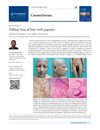
 This case study reports a 20-year-old male with lifelong hair loss and unresponsive skin-colored papules, without other systemic abnormalities or similar family medical history.