 April 2016 in “Journal of The American Academy of Dermatology”
 A child on life support experienced rapid hair loss due to severe illness affecting hair growth.
 4 citations
,
January 2012 in “Chemical Immunology”
4 citations
,
January 2012 in “Chemical Immunology” This paper discusses the challenges of diagnosing drug eruptions, emphasizing the nonspecific patterns and unclear pathomechanisms, and calls for further research using new biologic drugs to understand these reactions better.
 January 2018 in “The Kaohsiung journal of medical sciences”
 This case report describes an atypical presentation of eruptive vellus hair cysts on the elbows, where standard diagnostic techniques were unreliable due to the loss of cystic structural integrity.
January 2019 in “Dermatologic Surgery” This overview of the Dermatologic Surgery journal describes its extensive coverage of peer-reviewed content across various skin surgery techniques but presents no new research findings.
August 2022 in “Tissue Engineering Part A” This study observed that using ex vivo gene therapy to modify skin cells in a pre-graft model improved dermal-epidermal junction adhesion strength and maintained collagen production over time, suggesting a potential treatment approach for recessive dystrophic epidermolysis bullosa skin wounds.
June 2026 in “Precision medicine and engineering.” In this study, researchers created a hydrogel that reduces oxidative stress and releases a pro-angiogenic drug in response to enzyme activity, which accelerated healing and improved tissue regeneration in chronic diabetic wounds during in vivo experiments.
28 citations
,
December 1999 in “British Journal of Plastic Surgery”  13 citations
,
March 2019 in “Pharmacology Research & Perspectives”
13 citations
,
March 2019 in “Pharmacology Research & Perspectives” This study analyzed CADR reports in Singapore, finding nonsteroidal anti-inflammatory drugs, antibiotics, and iohexol frequently associated with serious skin reactions like rash and angioedema, with trends varying by demographics.
 41 citations
,
August 1988 in “Journal of The American Academy of Dermatology”
41 citations
,
August 1988 in “Journal of The American Academy of Dermatology” In this case report, a patient with subacute cutaneous lupus erythematosus and exfoliative erythroderma achieved complete remission with systemic corticosteroids and long-term hydroxychloroquine.
106 citations
,
June 1990 in “Journal of Investigative Dermatology” 1 citations
,
December 2023 in “PubMed” This study on rats found that combining platelet-rich plasma with stromal vascular fraction cells helped accelerate burn wound healing by affecting inflammatory cell counts and COX-2 expression, with differing impacts observed between acute and sub-acute phases of healing.
 June 2024 in “Georgetown Scientific Research Journal”
 This study found that intradermal bleomycin injections induced dermal fibrosis in C57BL/6 mice, evidenced by hair follicle obliteration and dermal thickening, though no significant trends in gene expression were observed, indicating the need for further research to understand the link between fibrosis and dyschromia.
 8 citations
,
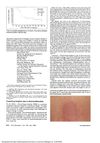
July 1990 in “Archives of Dermatology”
8 citations
,
July 1990 in “Archives of Dermatology” This case report details a fixed-drug eruption in a woman linked to the use of dextromethorphan, marking it as a previously unreported skin reaction to this medication.
12 citations
,
May 2024 in “International Journal of Nanomedicine” This review discusses the potential of stem cell-derived extracellular vesicles for improving diabetic wound healing and highlights their mechanisms, limitations, and challenges, but provides no new clinical findings.
 12 citations
,
June 2022 in “FARMACIA”
12 citations
,
June 2022 in “FARMACIA” This study found that a topical transethosomal system may enhance the skin penetration and deposition of naftifine compared to a marketed cream, potentially overcoming the stratum corneum barrier.
14 citations
,
October 2001 in “British Journal of Ophthalmology” This case report suggests a successful outcome with intralesional cidofovir for SCC, although surgical excision remains the preferred treatment.
 6 citations
,
January 2019 in “Dermatology Research and Practice”
6 citations
,
January 2019 in “Dermatology Research and Practice” This study found that ocular and mucocutaneous sequelae are common in SJS/TEN survivors, with exposure to sulfadoxine and severe acute ocular involvement identified as significant risk factors for ocular sequelae.
1 citations
,
February 2024 in “Journal of Microscopy and Ultrastructure” In this study, intravenous injection of exosomes derived from mesenchymal stromal cells accelerated wound healing and improved skin tissue regeneration in adult male rats.
 September 2024 in “Journal of Clinical Medicine”
 Permanent makeup can cause delayed allergic reactions, but they can be managed with proper treatment.
 December 2024 in “Cell Communication and Signaling”
 This study found that subcutaneous adipose tissue-derived extracellular vesicles (AT-EVs) protect skin from photodamage by enhancing fibroblast proliferation and reducing oxidative stress compared to those from adipose-derived stem cells.
26 citations
,
February 2015 in “Pediatric blood & cancer” This study analyzed 19 clinical trials and found that dermatologic adverse events, such as rash, xerosis, and mucositis, frequently occur in pediatric patients receiving targeted anticancer therapies.
 January 1997 in “Medical Journal Armed Forces India”
 This study found that RADA-PRG hydrogels enhanced skin-derived precursor cell proliferation and improved hair follicle neogenesis in mice, suggesting potential use as a scaffold material in tissue engineering.
 39 citations
,
January 2015 in “Annals of dermatology/Annals of Dermatology”
39 citations
,
January 2015 in “Annals of dermatology/Annals of Dermatology” This review discusses three newly identified forms of epidermolysis bullosa related to mutations in DST-e, EXPH5, and ITGA3, offering insights into their genetic and clinical characteristics but reports no new clinical results.
 25 citations
,
March 2008 in “Surgical Neurology”
25 citations
,
March 2008 in “Surgical Neurology” This case study describes successful treatment of a left temporal scalp arteriovenous malformation through a multidisciplinary approach combining endovascular embolization and surgical excision, resulting in high patient satisfaction.
 10 citations
,
July 2002 in “Australasian Journal of Dermatology”
10 citations
,
July 2002 in “Australasian Journal of Dermatology” This letter to the editor provides no new results or studies on dermatological topics; it may address previous articles or observations.
 55 citations
,
June 2013 in “Dermatologic Surgery”
55 citations
,
June 2013 in “Dermatologic Surgery” This review discusses the use of ablative and nonablative fractional resurfacing for enhanced topical drug delivery in dermatology and reports no new clinical results; further studies are needed to explore these methods.
September 2025 in “Frontiers in Pharmacology” This study found that the meropenem-loaded spanlastic formulation showed strong potential as an effective topical therapy for bacterial skin infections in non-diabetic mice, demonstrating superior therapeutic activity and wound healing compared to free meropenem.
1 citations
,
January 2014 This review discusses various methods to assess bioequivalence between dermatologic drugs and highlights the potential of visual inspection and percutaneous penetration research.
21 citations
,
September 2013 in “Current medicinal chemistry” This study found that co-drugs synthesized from hydroquinone and tranexamic acid improved skin targeting and deposition, with reduced irritation and enhanced efficacy for treating hyperpigmentation.
 21 citations
,
January 2023 in “Biomaterials Science”
21 citations
,
January 2023 in “Biomaterials Science” This study investigated the use of dissolving microneedle patches to improve the skin-lightening effects of alpha-arbutin and resveratrol, finding that the patches enhanced intradermal delivery and slightly decreased the melanin index without affecting skin hydration or causing irritation over 24 hours.