January 2026 in “Journal of Investigative Dermatology” This study found that human γδTregs promoted hair regrowth and restored hair follicle immune privilege in a model of alopecia areata, suggesting potential for cell-based therapy in autoimmune diseases.
January 2026 in “Journal of Pharmacy & Bioresources” This study found that 44.3% of patients with benign prostatic hyperplasia experienced high anxiety levels, which were significantly associated with residual symptoms and demographic factors.
November 2025 in “Advanced Therapeutics” This review examines platelet-rich plasma therapy's multidisciplinary applications in regenerative medicine and discusses preparation challenges but presents no new clinical results.
 July 2025 in “Cosmoderma”
 This review discusses the various applications of platelet-rich plasma in dermatology, particularly its potential in esthetic dermatology and hair and scalp conditions, but reports no new clinical findings.
July 2024 in “Journal of Investigative Dermatology” CRISPR/Cas9 and prime editing can potentially fix skin disorder genes safely and effectively.
 February 2023 in “World journal of plastic surgery”
 This review highlights the current uses of platelet-rich plasma in plastic surgery and reports no new research findings.
March 2021 in “Cell stem cell” This study found that actomyosin contractility in suprabasal keratinocytes influences the proliferation and differentiation of epidermal stem/progenitor cells by acting as a niche element in the skin.
 August 2020 in “Revista de chimie”
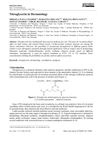
 This article discusses the potential therapeutic applications of topical nitroglycerin formulations in various medical conditions, but it reports no new clinical results.
April 2018 in “The journal of investigative dermatology/Journal of investigative dermatology” In this study, IL-1α and IL-7 were found to work together to activate epidermal γδ T-cells, which in turn promote hair follicle stem cell proliferation during mouse wound healing.
April 2012 in “Dermatology Times E-News” Finasteride must now warn about lasting sexual side effects.
April 2010 in “The journal of immunology/The Journal of immunology” This study found that deleting the FoxN1 gene in mice disrupted the 3D thymic epithelial structure and led to 2D epithelial cysts, revealing its crucial role in thymus organization but not causing athymia.
1235 citations
,
December 2013 in “Nature” This study found that skin fibroblasts in mice arise from two distinct lineages which contribute differently to dermal structure and repair, impacting hair follicle formation during wound healing.
 336 citations
,
August 2015 in “European Journal of Epidemiology”
336 citations
,
August 2015 in “European Journal of Epidemiology” This article reviews the design and objectives of the Rotterdam Study, as well as summarizes major findings, without reporting new results.
 266 citations
,
November 2013 in “European Journal of Epidemiology”
266 citations
,
November 2013 in “European Journal of Epidemiology” This article outlines the rationale and design of the Rotterdam Study, summarizes its major findings, and updates its objectives and methods; it reports no new research results.
 207 citations
,
January 2011 in “Dermatologic Therapy”
207 citations
,
January 2011 in “Dermatologic Therapy” This article discusses the factors involved in optimizing laser hair removal, emphasizing patient selection, laser safety, and understanding laser–tissue interactions, but presents no new clinical findings.
190 citations
,
July 2006 in “Experimental Dermatology” This review discusses the role of the sonic hedgehog pathway in skin development and cancer, highlighting its potential as a target for chemoprevention and treatment; it reports no new findings.
 150 citations
,
January 2018 in “Burns & Trauma”
150 citations
,
January 2018 in “Burns & Trauma” This review discusses strategies and advances in bioprinting for skin wound healing, concluding that bioprinting could offer promising solutions for skin regeneration despite existing challenges.
143 citations
,
May 2022 in “Pharmaceuticals” This review discusses alginate-based delivery systems for probiotics, highlighting recent advances, challenges, and future directions, but reports no new clinical findings.
129 citations
,
October 2017 in “BMC Genomics” This study identified potential ceRNA regulatory networks in cashmere goat hair follicle cycling, expanding understanding of lncRNA and miRNA biology and annotation of the goat genome.
 91 citations
,
March 2011 in “Stem Cell Reviews and Reports”
91 citations
,
March 2011 in “Stem Cell Reviews and Reports” This article describes protocols for isolating and expanding human epidermal neural crest stem cells and discusses their potential for cell-based therapies in regenerative medicine, but reports no new clinical results.
78 citations
,
May 2012 in “Journal of Investigative Dermatology” A specific gene mutation causes woolly hair and hair loss.
 78 citations
,
August 2002 in “Experimental Dermatology”
78 citations
,
August 2002 in “Experimental Dermatology” This study describes a simplified method for isolating and cultivating human hair follicle papillae that can be easily executed by new lab personnel.
 68 citations
,
July 2011 in “Journal of Biochemistry/The journal of biochemistry”
68 citations
,
July 2011 in “Journal of Biochemistry/The journal of biochemistry” This review discusses newly identified non-Edg family lysophosphatidic acid receptors, detailing their roles in vascular development, platelet activation, and hair growth, and reports no clinical results.
 56 citations
,
July 2005 in “Experimental Dermatology”
56 citations
,
July 2005 in “Experimental Dermatology” This study demonstrated that hair follicle-derived cells can induce hair follicle formation in an in vitro skin organ culture system using human retroauricular skin specimens.
50 citations
,
February 2016 in “Journal of Investigative Dermatology” A mutation in the KRT25 gene causes a rare hair disorder with thin, woolly hair.
50 citations
,
September 2012 in “Developmental Biology” This study found that over-expressing Spry4 and Fgf10 modulates feather stem cells to alter feather morphologies in distinct ways, affecting barb branch formation and tissue structure.
 45 citations
,
October 2008 in “Cytokine & Growth Factor Reviews”
45 citations
,
October 2008 in “Cytokine & Growth Factor Reviews” This review discusses the role of activin signaling in hair follicle formation, hair growth cycling, and skin healing, but presents no new clinical findings.
 44 citations
,
January 2019 in “Journal of Translational Medicine”
44 citations
,
January 2019 in “Journal of Translational Medicine” This study found that macrophages are crucial for skin regeneration during tissue expansion, as their depletion in rats led to inhibited skin growth and reduced secretion of key growth factors.
44 citations
,
May 2008 in “Plant journal” This study found that D'orenone blocks root hair growth by increasing PIN2 protein abundance, leading to reduced auxin concentration, but external auxin can reverse these effects.
 42 citations
,
October 2009 in “The journal of investigative dermatology/Journal of investigative dermatology”
42 citations
,
October 2009 in “The journal of investigative dermatology/Journal of investigative dermatology” In this study, researchers identified two distinct homozygous mutations in the KRT85 gene among consanguineous Pakistani families with pure hair and nail ectodermal dysplasia, highlighting variations in severity and potential impacts on the K85 protein function.