14 citations
,
January 1998 in “Dermatology” This study found evidence that polythelia pilosa, previously excluded from classification, should be reintroduced as it marks true aberrant mammary structures in men and hirsute women.
2 citations
,
September 2010 in “Acta Ophthalmologica” The study concluded that all parts of the normal human Meibomian gland ductal system show signs of early keratinisation, supporting the idea that these glands are akin to "hair follicles without a hair shaft.
 18 citations
,
April 2014 in “Stem cells”
18 citations
,
April 2014 in “Stem cells” The researchers reported that minor salivary gland stem cells exhibit stem cell characteristics and respond to tobacco-derived carcinogens, implicating the transforming growth factor beta pathway in their maintenance.
 3 citations
,
December 2020
3 citations
,
December 2020 This study investigated the interdigital glands in sheep, highlighting their apocrine sweat glands' ultrastructural characteristics and positive lectin reaction, but reported no new clinical results.
7 citations
,
January 2020 in “Dermatology online journal” In this case report, adult-onset porokeratotic eccrine ostial and dermal duct nevus improved with topical tazarotene treatment, as evidenced by dermatoscopic images.
3 citations
,
July 2017 in “Journal of Investigative Dermatology” This study found that SSEA-4 is a marker that distinguishes eccrine from apocrine ductal cells in human sweat glands, suggesting its potential use in diagnostic applications.
5 citations
,
September 2009 in “Acta Ophthalmologica” This study found that the Meibomian gland shares structural and cytokeratin composition similarities with hair follicles, and plays a role in hyper-keratinisation observed in obstructive Meibomian gland dysfunction.
 22 citations
,
January 1968 in “THE JOURNAL OF VITAMINOLOGY”
22 citations
,
January 1968 in “THE JOURNAL OF VITAMINOLOGY” This study found that α-tocopheryl acetate is well absorbed through healthy skin, with absorption occurring through specific pathways and showing high affinity for small blood vessels.
 14 citations
,
April 2014 in “International Journal of Cosmetic Science”
14 citations
,
April 2014 in “International Journal of Cosmetic Science” This article discusses the multifactorial etiopathogenesis of acne vulgaris, highlighting the roles of sebum production, keratosis, bacterial development, and inflammatory mediators, but reports no new clinical results.
 97 citations
,
September 2016 in “Reviews in Endocrine and Metabolic Disorders”
97 citations
,
September 2016 in “Reviews in Endocrine and Metabolic Disorders” This review summarizes recent multidisciplinary advances in sebaceous gland research and highlights potential novel therapeutic strategies for skin diseases, but it reports no new clinical results.
 158 citations
,
May 1968 in “The journal of nutrition/The Journal of nutrition”
158 citations
,
May 1968 in “The journal of nutrition/The Journal of nutrition” This study found that severe zinc deficiency induced in weanling rats led to growth retardation, hair issues, and dermal lesions, all of which were completely reversed by zinc supplementation.
 256 citations
,
October 2013 in “Nature Communications”
256 citations
,
October 2013 in “Nature Communications” This study demonstrates that bioengineered lacrimal gland germs can successfully develop and restore tear production and ocular surface protection in a mouse model with lacrimal gland dysfunction.
 160 citations
,
April 2012 in “Journal of Cellular and Molecular Medicine”
160 citations
,
April 2012 in “Journal of Cellular and Molecular Medicine” This study found that telocytes are present in the human dermis, suggesting a potential role in skin homeostasis, remodeling, regeneration, and repair.
 165 citations
,
October 2013 in “Nature Communications”
165 citations
,
October 2013 in “Nature Communications” This study demonstrates that bioengineered salivary gland transplants can fully regenerate gland function, producing saliva and restoring normal swallowing in salivary gland-defective mice, offering potential for xerostomia treatment.
 66 citations
,
March 2009 in “British journal of surgery”
66 citations
,
March 2009 in “British journal of surgery” This review discusses hidradenitis suppurativa's pathogenesis, including its inflammatory nature and the role of smoking as a triggering factor, but reports no new clinical results.
 10 citations
,
January 2014 in “Journal of prosthodontic research”
10 citations
,
January 2014 in “Journal of prosthodontic research” This study found that while both natural and bioengineered salivary glands showed similar protein concentrations in response to taste stimulation, their protein compositions and amylase concentrations differed, which may affect nerve signal balance.
 8 citations
,
January 1996 in “Springer eBooks”
8 citations
,
January 1996 in “Springer eBooks” This article discusses the minimal research on hair growth physiology and highlights Dr. Masumi Inaba's contributions to understanding androgenetic alopecia, but reports no new experimental results.
 1 citations
,
November 2017
1 citations
,
November 2017 This chapter reviews classic regeneration models in planarian worms and amphibian limbs, focusing on the role of stem cells, and reports no new experimental results.
 August 2024 in “Biomedical Journal of Scientific & Technical Research”
 This review discusses the role of steroid 5 alpha reductase 2 in converting testosterone to DHT and its association with conditions like benign prostatic hyperplasia and prostate cancer; it reports no new results.
 82 citations
,
January 2000 in “Hormone Research in Paediatrics”
82 citations
,
January 2000 in “Hormone Research in Paediatrics” This study describes the enzymatic processes through which DHEA is converted to active sex steroids in human skin, highlighting an androgenic effect on sebaceous glands and estrogenic effects in the vagina.
 67 citations
,
August 2007 in “American Journal of Pathology”
67 citations
,
August 2007 in “American Journal of Pathology” This study found that overexpression of the mineralocorticoid receptor in a mouse model led to premature epidermal barrier development, keratinocyte apoptosis, and postnatal alopecia, indicating new roles for MR signaling in skin physiology.
 40 citations
,
January 2016 in “Elsevier eBooks”
40 citations
,
January 2016 in “Elsevier eBooks” This article explains the structure and multifunctional roles of the human skin, including its protective, regulatory, and sensory functions, but does not report new research findings.
 18 citations
,
January 2013 in “Postepy Dermatologii I Alergologii”
18 citations
,
January 2013 in “Postepy Dermatologii I Alergologii” This article discusses the common dermatological issues in adolescence linked to hormone fluctuations, such as acne and excessive sweating, and reports no new clinical results.
 17 citations
,
January 1997 in “Cell and Tissue Research”
17 citations
,
January 1997 in “Cell and Tissue Research” This study found that a serum-free DMEM-F12 medium with 45% oxygen best supports in vitro development and differentiation of human fetal skin, closely mimicking the in vivo state.
 14 citations
,
February 2020 in “Scientific reports”
14 citations
,
February 2020 in “Scientific reports” This study found that telocytes in human scalp tissue were located around hair follicles and glands and may be involved in skin regeneration and homeostasis.
 14 citations
,
October 2006 in “Journal of The American Academy of Dermatology”
14 citations
,
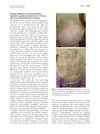
October 2006 in “Journal of The American Academy of Dermatology” This report highlights a case where a woman's use of the dopamine agonist pramipexole for Parkinson's disease was associated with hair loss, which improved after discontinuing the drug.
 9 citations
,
July 2019 in “Folia Morphologica”
9 citations
,
July 2019 in “Folia Morphologica” This study found that Brandt's hedgehog has the thickest skin on its back and the thinnest on the cloacal region, with sebaceous and sweat glands primarily located in the nostril area.
 9 citations
,
September 1947 in “Archives of dermatology and syphilology”
9 citations
,
September 1947 in “Archives of dermatology and syphilology” This article reviews historical approaches to electrolysis for permanent hair removal and suggests improvements in equipment, but reports no new clinical results.
 8 citations
,
August 2016 in “Journal of pathology and translational medicine”
8 citations
,
August 2016 in “Journal of pathology and translational medicine” This study found that CD99 is strongly expressed in the basal cells and hair follicles of normal adult and developing fetal skin, with expression patterns becoming similar after 20 weeks of gestation.
 2 citations
,
January 2011 in “Elsevier eBooks”
2 citations
,
January 2011 in “Elsevier eBooks” This book reviews the various types of acne and acneiform conditions, as well as their treatment options, with expert insights from multiple fields.