 48 citations
,
November 1992 in “International Journal of Dermatology”
48 citations
,
November 1992 in “International Journal of Dermatology” This article discusses the history and terminology of toxic epidermal necrolysis but reports no new clinical results.
 1 citations
,
August 2024 in “Polymers”
1 citations
,
August 2024 in “Polymers” This review discusses recent advances in protein immobilization on bacterial cellulose for various biomedical uses and reports no new clinical results.
15 citations
,
November 2009 in “Journal of Comparative Pathology” Epidermolysis bullosa in calves was not caused by mutations in the keratin genes bKRT5 and bKRT14.
2 citations
,
April 2022 in “Medicine” This case study reports the first documented instance of kerion Celsi in a child caused by Microsporum gypseum, likely transmitted from a guinea pig, with remission observed following combination therapy.
December 2024 in “Journal of Pediatric Surgery Case Reports” This report describes a case of pilonidal omphalitis in a 15-year-old boy, highlighting the importance of considering this condition when young adolescents with significant hair growth present with umbilical discharge, and concludes that a thorough treatment is necessary to prevent extended disease progression.
3 citations
,
July 2024 in “Animals” This study reported that tail tip lesions in dairy cows include granulation tissue, purulent-necrotizing inflammation, and hyperkeratosis, potentially caused by ischemia.
 2 citations
,
April 2022 in “Cureus”
2 citations
,
April 2022 in “Cureus” This case study reports a rare instance of a subcutaneous abscess caused by Candida albicans infection in a 42-year-old Japanese woman following laparoscopic cholecystectomy.
 68 citations
,
September 2003 in “British Journal of Dermatology”
68 citations
,
September 2003 in “British Journal of Dermatology” This study found that in thin cutaneous melanomas, tumor regression is associated with a higher risk of sentinel lymph node involvement.
October 2010 in “EUR Research Repository (Erasmus University Rotterdam)” This case report describes the successful treatment of scedosporiosis-induced cellulitis with voriconazole and intermittent pneumatic compression in a 72-year-old Portuguese woman.
 August 2025 in “Frontiers in Pharmacology”
 This study identified three Ayurvedic compounds that may serve as potential treatments against the macrolide-resistant enzyme murE of *Tropheryma whipplei*, addressing challenges in treating Whipple disease.
 January 2025 in “Dermatology Reports”
 This case report describes a 61-year-old Italian man with a rare, localized variant of junctional epidermolysis bullosa linked to the R795X mutation in the COL17A1 gene, highlighting the importance of precise diagnosis for effective management of rare genetic disorders.
July 2023 in “Media Dermato Venereologica Indonesiana” This case study highlights that RDEB-mitis can be misdiagnosed in older adults, emphasizing the importance of accurate diagnosis as it does not require immunosuppressive treatment.
 April 2024 in “DAHUDER Medical journal”
 This case report presents an instance of acute pancreatitis following the use of ocrelizumab and suggests that its B lymphocyte suppression may contribute to pancreatitis by affecting cytokine release and T lymphocyte regulation.
4 citations
,
July 2019 in “Clinical and experimental dermatology” This abstract does not provide specific study results or findings, but it notes that the publisher is not responsible for the supplemental content's accuracy and functionality, directing any queries to the article's corresponding author.
In this case report, an 11-year-old girl with dissecting cellulitis of the scalp showed an excellent response to oral isotretinoin after other treatments failed, highlighting the treatment challenges and need for awareness in managing this rare condition.
 1 citations
,
February 2009 in “Journal of The American Academy of Dermatology”
1 citations
,
February 2009 in “Journal of The American Academy of Dermatology” Children's Serum Sickness-Like Reaction is often linked to antibiotics, especially amoxicillin, and involves symptoms like rash, fever, and joint issues.
 January 2024 in “Deleted Journal”
 This study reported that patients with radiation cystitis had significantly higher readmission rates compared to those with non-radiation cystitis, although their management and hospital stay durations were similar.
 1 citations
,
September 2023 in “Applied sciences (Basel)”
1 citations
,
September 2023 in “Applied sciences (Basel)” This study found that Ishige sinicola ethanol extract and its butanol fraction can protect against lipopolysaccharide-induced muscle atrophy in C2C12 myotubes through antioxidant and anti-inflammatory activities.
 February 2023 in “Research Square (Research Square)”
 This case report describes a 16-month-old girl with atypical acrodermatitis enteropathica who showed marked improvement after zinc supplementation despite normal serum zinc levels.
October 2022 in “The Laryngoscope” The InCISE score is a promising tool for assessing wound healing in head and neck surgery but needs more research for broader use.
1 citations
,
June 2022 in “International Journal of Infectious Diseases” This case report identifies a 13-year-old boy with disseminated tinea incognito, emphasizing the importance of considering fungal infections when red and scaly lesions persist despite corticosteroid treatment.
 35 citations
,
January 1996 in “Dermatologic clinics”
35 citations
,
January 1996 in “Dermatologic clinics” This article reviews tinea capitis as a common infectious scalp condition in children, reporting no new findings.
14 citations
,
January 2024 in “Burns & Trauma” In this study on diabetic wound healing in mice, Calvatia gigantea extract accelerated wound recovery, reduced inflammation, and improved the microbiome's diversity, particularly enhancing Escherichia–Shigella bacteria presence.
 4 citations
,
July 1994 in “Clinics in Dermatology”
4 citations
,
July 1994 in “Clinics in Dermatology” This review discusses the emergence and impact of eosinophilia-myalgia syndrome related to L-tryptophan and offers insights into environmental factors affecting sclerodermatous conditions, with no new research findings presented.
10 citations
,
January 2019 in “International Immunology” This review discusses the interactions between immune cells and the skin epithelium and their impact on maintaining barrier function, emphasizing the potential to enhance epithelial barrier function in inflammatory diseases.
 23 citations
,
December 2021 in “Frontiers in Immunology”
23 citations
,
December 2021 in “Frontiers in Immunology” This review discusses the significance of IL-1 family cytokines in skin inflammation and pathology, emphasizing their interactions with microbes and potential therapeutic applications, but reports no new clinical results.
 8 citations
,
November 1990 in “Archives of Dermatology”
8 citations
,
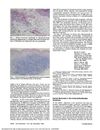
November 1990 in “Archives of Dermatology” This case report details a woman with eosinophilia-myalgia syndrome associated with L-tryptophan ingestion, highlighting skin lesions with abundant dermal mucin.
 1 citations
,
February 2024 in “Medicine”
1 citations
,
February 2024 in “Medicine” In this case report, a 72-year-old man was initially misdiagnosed with a bladder tumor but was later accurately diagnosed with eosinophilic cystitis through pathological examination; transurethral resection and combined drug treatment improved his condition with no recurrence over six months.
November 2007 in “Pediatrics in review” This piece discusses the conditions of three children with disparate symptoms—suggesting silent aspiration, exogenous androgen exposure, and long QT syndrome—and emphasizes comprehensive assessment and history for correct diagnosis and management.