5 citations
,
February 2025 in “Scientia Horticulturae” This study found that tomato plants inoculated with Enterobacter sp. SA187 grew better under salinity and heat stress, showing improved biomass, ion balance, chlorophyll content, and antioxidant enzyme activity, potentially enhancing crop tolerance to environmental stress.
2 citations
,
October 2025 in “Antimicrobial Agents and Chemotherapy” This study found that cepharanthine may be a promising treatment for enterovirus infections, as it offered full protection to mice against lethal EV71 challenges and reduced viral titers and pathology.
 1 citations
,
June 2019 in “Current developments in nutrition”
1 citations
,
June 2019 in “Current developments in nutrition” This case study reports that pancreatic enzyme replacement and fatty acid supplementation improved symptoms of fat malabsorption and essential fatty acid deficiency in a patient with EDS-4.
September 2015 in “Photodiagnosis and Photodynamic Therapy” 2 citations
,
April 2022 in “Nusantara Bioscience” This study proposes a quick and sensitive method for detecting vancomycin using modified silver nanoparticles and shows promising results against Gram-positive and Gram-negative bacteria.
November 2025 in “International Journal of Bio-resource and Stress Management” This review discusses MRSA in dogs and its public health impact, highlighting interspecies transmission and the need for improved infection control and biosecurity measures, but reports no new experimental results.
This study found that the novel bacteriophage Halo KS-7 shows strong antibacterial activity against carbapenem-resistant Klebsiella pneumoniae and significantly promotes wound healing in mice, making it a promising biocontrol agent for managing multidrug-resistant infections.
 119 citations
,
October 2011 in “Journal of Veterinary Internal Medicine”
119 citations
,
October 2011 in “Journal of Veterinary Internal Medicine” This review discusses the clinical manifestations and immune response to Rhodococcus equi infection in foals but reports no new clinical results.
1 citations
,
January 2013 in “INTAS POLIVET” In this study, dogs with bacterial dermatitis showed significant improvement in symptoms within 72 hours when treated with Cephalexin, Ciprofloxacin, or Erythromycin, with Cephalexin showing the highest effectiveness.
 14 citations
,
November 1987 in “Journal of The American Academy of Dermatology”
14 citations
,
November 1987 in “Journal of The American Academy of Dermatology” A woman developed a severe skin reaction called toxic epidermal necrolysis after taking the antibiotic cephalexin.
January 2017 in “Murdoch Research Repository (Murdoch University)” This study identified the novel genetic variant rs143321413 within the EEF2K gene, which may play a role in the development of polycystic ovary syndrome.
11 citations
,
June 2010 in “Dermatologic surgery” This article contains information about journal subscriptions and does not report any research findings.
 17 citations
,
January 2024 in “Journal of Materials Chemistry B”
17 citations
,
January 2024 in “Journal of Materials Chemistry B” In this study, researchers developed a hyaluronic acid-coated copper peroxide nano-antimicrobial system that demonstrated precise antimicrobial activity and accelerated wound healing by releasing reactive oxygen species in response to bacterial enzymes, in both laboratory and animal tests.
 1 citations
,
September 2025 in “Scientific Reports”
1 citations
,
September 2025 in “Scientific Reports” This study reported that a colistin sulfate-loaded nanoemulgel showed improved antimicrobial activity and skin permeability compared to a CS solution, suggesting a potential new approach for treating severe infections caused by multidrug-resistant bacteria.
August 2026 in “Journal of Functional Biomaterials” In this study, researchers developed a collagen and bacterial cellulose-based dressing loaded with bacitracin, which exhibited enhanced antibacterial activity, improved wound healing, and reduced inflammation in a murine infected-wound model, suggesting its potential for clinical use in treating infected wounds.
September 2026 in “Angewandte Chemie International Edition” In this study, SEU-302, a newly synthesized covalent organic framework, demonstrated potent photodynamic antibacterial effects, showing effective elimination of Staphylococcus aureus, wound healing promotion, and inflammation reduction both in vitro and in vivo, highlighting its therapeutic promise against bacterial infections.
This study found that four bacterial isolates from a microbiology laboratory collection demonstrated resistance to selenate, with molecular analysis showing they closely resemble different strains of Bacillus megaterium.
 13 citations
,
June 2024 in “Asian Pacific Journal of Cancer Prevention”
13 citations
,
June 2024 in “Asian Pacific Journal of Cancer Prevention” The researchers reported that the ethyl ester group in YH239-EE may enhance its ability to induce cell death, making the (+) enantiomer a potentially promising therapy for breast cancer reflected in MCF7 cell studies.
September 2017 in “The journal of investigative dermatology/Journal of investigative dermatology” This study using a genetic mouse model found that S. aureus-driven dysbiosis sustains inflammatory skin side effects from EGFR inhibitors, suggesting prophylactic antibiotic treatment may reduce rash severity without fixing barrier defects.
July 2025 in “Journal of Investigative Dermatology” DACC-based dressings are more effective than silver-based ones for treating chronic wounds with antimicrobial resistance.
5 citations
,
May 2023 in “Microbial Cell Factories” This study found that a newly produced version of KGF-1 with 135 residues maintained biological activity and could serve as an alternative to the standard 140-residue KGF-1.
January 2024 in “Frontiers research topics” This research abstract outlines the innovative approach of the Frontiers journal series, which aims to transform academic publishing by providing open access, interdisciplinary journals that employ a rigorous peer-review process to serve both scholarly communities and the public.
1 citations
,
February 2023 in “Pharmaceutics” This study suggests that UVA-responsive nanocapsules may provide an effective method for skin antisepsis by releasing ethanol and reducing microorganisms within hair follicles on ex vivo porcine ear skin.
 108 citations
,
October 2009 in “Javma-journal of The American Veterinary Medical Association”
108 citations
,
October 2009 in “Javma-journal of The American Veterinary Medical Association” Foals with Rhodococcus equi infection often have other health problems that lower their chances of survival.
8 citations
,
February 2025 in “Cell Systems” This study developed a genetic toolbox to engineer Cutibacterium acnes for dermal applications, successfully creating a strain that secretes antioxidants to reduce oxidative stress in a UV stress model.
 20 citations
,
May 2000 in “Journal of The American Academy of Dermatology”
20 citations
,
May 2000 in “Journal of The American Academy of Dermatology” This report suggests that orf infections in Brussels often occur after the Islamic Feast of Sacrifice due to the ritual sheep sacrifice, affecting both men and women handling the animals.
5 citations
,
October 2022 in “Materials Research Express” This study found that zinc oxide and fucoidan-loaded chitosan nanofiber scaffolds may enhance wound healing and provide antibacterial protection against common surgical pathogens in vitro.
 May 2026 in “Nature Communications”
 In this study, a self-adaptive nanozyme embedded in a madecassoside-enriched hydrogel demonstrated strong antibacterial efficacy and accelerated healing in wounds infected with drug-resistant bacteria, as evidenced by improved repair and regeneration in MRSA-infected mice and preclinical pig models.
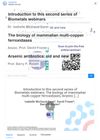
This research presentation explored the roles of mammalian multi-copper ferroxidases in iron homeostasis and highlighted new insights into their functions, including non-iron-related ones, while discussing arsenic's role in microbial warfare as a potential antibiotic.
15 citations
,
August 1991 in “Histochemistry and Cell Biology” Enhancing Factor is found in growing tissues like young mouse intestines and skin but not in adults.