21 citations
,
November 2018 in “Journal of the European Academy of Dermatology and Venereology” In this study, encorafenib combined with binimetinib was well tolerated in melanoma patients, resulting in relatively few cutaneous adverse events compared to other BRAF and MEK inhibitors.
 June 2024 in “ESMO Gastrointestinal Oncology”
 The BAYONET trial is a phase II study designed to assess the efficacy and safety of combining encorafenib, binimetinib, and cetuximab for patients with BRAF V600E-mutant metastatic colorectal cancer that is resistant to encorafenib plus cetuximab; results are not yet reported.
11 citations
,
June 2023 in “Journal of Cellular Biochemistry” This study suggests that BRAF inhibitors, particularly Encorafenib and Dabrafenib, may have potential applications in wound healing by targeting specific proteins involved in the healing process in murine models.
 46 citations
,
February 2012 in “Oncology Reports”
46 citations
,
February 2012 in “Oncology Reports” This review summarizes existing studies on sorafenib, noting its promising effects in some cancers, but also highlights its limitations and potential synergy when combined with other anticancer treatments.
 16 citations
,
January 2017 in “Archives of Medical Science”
16 citations
,
January 2017 in “Archives of Medical Science” This study found that adjuvant sorafenib after hepatic resection improved overall survival in patients with intermediate and advanced hepatocellular carcinoma, compared to surgery only.
11 citations
,
December 2013 in “Clinical and Experimental Dermatology” This article reviews the use of sorafenib, a multikinase inhibitor, for treating certain carcinomas, noting that cutaneous toxicity during treatment may indicate successful antitumor activity; however, it reports no new clinical results.
 15 citations
,
December 2014 in “Dermatology and therapy”
15 citations
,
December 2014 in “Dermatology and therapy” This study reports that sorafenib-associated facial acneiform eruption, mimicking chloracne, is a rare cutaneous adverse event which improved upon reducing or discontinuing the drug.
 234 citations
,
September 2004 in “Clinical cancer research”
234 citations
,
September 2004 in “Clinical cancer research” In this Phase II study, BAY 43–9006, taken orally for renal cell carcinoma, stabilized disease in 30% of patients, with 40% responding positively, although the targets remain unclear.
13 citations
,
June 2008 in “International Journal of Dermatology” This case study reports a unique and severe papulopustular eruption, likely induced by sorafenib treatment in a patient with metastatic renal cancer, which manifested as hyperkeratotic spicules and improved with cessation of the drug.

In this case report, a patient on low-dose sorafenib for hepatocellular carcinoma developed a rare and severe facial acneiform eruption without other skin side effects, which improved only minimally with topical treatment.
21 citations
,
July 2011 in “Journal of the American Academy of Dermatology” This study reported a drug-induced pityriasis rubra pilaris-like eruption in a patient treated with sorafenib, suggesting a possible effect of sorafenib on keratinocyte biology.
10 citations
,
July 2016 in “Clinical and translational science” In this study, sorafenib's common adverse events, like a hand-foot syndrome and diarrhea, were observed in distinct temporal and tissue distribution patterns, revealing new relationships among effects.
 June 2024 in “Journal of Clinical Oncology”
 In this retrospective study, combining TACE with Donafenib showed promising results as a first-line treatment for Chinese patients with unresectable hepatocellular carcinoma, yielding a median progression-free survival of 12.8 months and a one-year overall survival rate of 87.5%, along with a favorable safety profile.
188 citations
,
October 2014 in “Thyroid” This study found that dabrafenib was well tolerated and led to durable responses in patients with BRAF-mutant differentiated thyroid carcinoma, with a median progression-free survival of 11.3 months.
14 citations
,
August 2017 in “International Journal of Immunopathology and Pharmacology” This case report describes a patient with painful skin lesions during sorafenib treatment whose symptoms improved after receiving photodynamic therapy, suggesting it might help manage similar refractory skin toxicity cases.
31 citations
,
March 2014 in “Journal of the European Academy of Dermatology and Venereology” In this study, multiple cutaneous adverse effects were observed in patients with metastatic malignant melanoma receiving BRAF inhibitors, but most were well managed with appropriate treatment.
 215 citations
,
March 2011 in “Clinical Cancer Research”
215 citations
,
March 2011 in “Clinical Cancer Research” This study found that sorafenib was active against desmoid tumors, with 25% of patients achieving a partial response and 70% maintaining stable disease.
7 citations
,
August 2017 in “Journal of dermatological science” This study found that sorafenib increased mast cell number and degranulation in skin, suggesting PI3K signaling and SCF production may underlie its adverse cutaneous reactions.
39 citations
,
June 2019 in “Frontiers in Endocrinology” This study reported that while both sorafenib and lenvatinib may require dose modifications due to adverse events in treating advanced or metastatic thyroid cancers, key differences in side effect profiles were observed.
82 citations
,
March 2013 in “PLoS ONE” In this study, vemurafenib was associated with a wide range of cutaneous side effects in patients with advanced melanoma, including photosensitivity and various skin and hair changes, necessitating regular dermatological management.
173 citations
,
July 2012 in “British Journal of Dermatology” This study found that the administration of the mutant BRAF inhibitor dabrafenib in patients with metastatic melanoma was associated with various skin lesions, including keratinocytic proliferation that sometimes showed low-grade malignancy features.
January 1975 in “NJEA Review” This Phase II study found that BAY 43-9006, given at 400 mg orally twice daily, led to stable disease in 30% and tumor reduction in 40% of renal cell carcinoma patients.
 6 citations
,
April 2013 in “Current Dermatology Reports”
6 citations
,
April 2013 in “Current Dermatology Reports” This review discusses the cutaneous side effects associated with vemurafenib and ipilimumab in metastatic melanoma treatment and emphasizes the importance of dermatologists in managing these skin eruptions; it reports no new clinical results.
12 citations
,
January 2016 in “Journal of clinical biochemistry and nutrition” In this study, combining deferasirox with sorafenib significantly reduced liver fibrosis and preneoplastic lesions in rats while also lessening adverse effects compared to sorafenib alone.
45 citations
,
January 2007 in “Journal of Clinical Oncology” This case report identifies hand-foot and stump syndrome as a potential side effect of sorafenib therapy in a 47-year-old man with a leg amputation.
 5 citations
,
August 2014 in “Australasian journal of dermatology”
5 citations
,
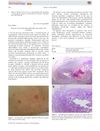
August 2014 in “Australasian journal of dermatology” This article discusses a case of delayed onset perforating folliculitis linked to the use of sorafenib, but it reports no new clinical results.
 3 citations
,
June 2021 in “PLOS ONE”
3 citations
,
June 2021 in “PLOS ONE” This study found that topical application of the BRAF inhibitor vemurafenib improved wound healing and promoted hair follicle regeneration in a diabetic murine model.
4 citations
,
October 2013 in “PLoS ONE” This study found that Vemurafenib led to a broad range of cutaneous side effects in nearly all patients with advanced melanoma, highlighting the need for regular dermatologic management and UV protection.
1 citations
,
May 2025 in “Indian Dermatology Online Journal” This case report links sorafenib treatment in a 22-year-old man with relapsed acute myeloid leukemia to a rare instance of drug-induced pityriasis rubra pilaris-like eruption.
 21 citations
,
February 2013 in “Clinics in Dermatology”
21 citations
,
February 2013 in “Clinics in Dermatology” This review discusses recent developments in targeted melanoma therapies, including BRAF/MEK/ERK pathway inhibitors and challenges like resistance and skin toxicities, but reports no new clinical results.