January 2015 in “Journal of cosmetics, dermatological sciences and applications” This study observed that a low energy pulsed-light device combined with galvanic energy was effective and safe for reducing unwanted hair in individuals with dark skin types V and VI.
July 2022 in “British Journal of Dermatology” This study found that epidermal growth factor receptor inhibitors used in cancer treatment induce a distinct inflammatory response in hair follicles, marked by immune privilege collapse and upregulation of inflammatory pathways.
 31 citations
,
January 2011 in “Dermato-endocrinology”
31 citations
,
January 2011 in “Dermato-endocrinology” This review updates the protective effects and molecular mechanisms of melatonin against ultraviolet-induced damage in human skin, reporting no new clinical findings.
July 2022 in “Journal of Investigative Dermatology” April 2021 in “Institutional Repositories DataBase (IRDB)” This study reported that high-intensity red LED irradiation increased osteogenic differentiation and mineralization of human bone marrow mesenchymal stem cells, potentially through Wnt/β-catenin pathway activation.
 February 2009 in “Journal of The American Academy of Dermatology”
 This study found that fractional infrared technology may improve skin laxity and thickness in the cervical area without side effects in a small group of patients.
29 citations
,
July 2013 in “Journal of Investigative Dermatology” This review explores the mechanisms by which UV radiation causes skin cancer, highlighting UV-induced DNA damage and its implications for cancer prevention strategies, but reports no new findings.
 May 2017 in “Journal of The American Academy of Dermatology”
 LED light helps human hair root cells grow and move by activating certain cell pathways.
 April 2017 in “Journal of Investigative Dermatology”
 This study found that anagen hair follicles can quickly regenerate after radiation damage by forming new progenitor cells outside the bulge, bypassing the need for telogen entry.
28 citations
,
January 2005 in “Photochemistry and Photobiology” This study found that overexpression of PKCepsilon in mouse epidermis was associated with increased susceptibility to metastatic squamous cell carcinoma, potentially through a mechanism involving tumor necrosis factor-alpha.

This study introduced a new laser-only method called EKA for acne treatment, which is reported to be safe, painless, and heat-free, showing promising results for both acne and scar repair in initial sessions without combining with LED light.
 1 citations
,
July 2020 in “Dermatology”
1 citations
,
July 2020 in “Dermatology” This review discusses the mechanisms, applications, and research evidence of photobiomodulation, highlighting its efficacy, safety, and potential for standardized evaluation methods, but reports no new clinical results.
12 citations
,
July 2011 in “Experimental Dermatology” This study found that mEGF ethosomal delivery systems mainly penetrated mice skin through the pilosebaceous unit and successfully induced hair follicles to transition from the telogen to anagen phase.
 1 citations
,
October 2023 in “Journal of the Pakistan Medical Association”
1 citations
,
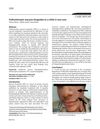
October 2023 in “Journal of the Pakistan Medical Association” This source describes a case of a 12-year-old male diagnosed with folliculotropic mycosis fungoides, presenting with an asymptomatic, erythematous plaque. Histology and immunohistochemistry confirmed FMF, which is typically rare in children and marked by follicular infiltration by CD4+ lymphocytes.
 42 citations
,
December 2014 in “Clinical, cosmetic and investigational dermatology”
42 citations
,
December 2014 in “Clinical, cosmetic and investigational dermatology” This review indicates that microneedle bipolar RF and fractional bipolar RF treatments offer significant improvement in acne scarring, with optimal results observed about three months after treatment.
 June 2001 in “Proceedings of SPIE”
 The authors concluded that low energy laser therapy may serve as a useful complementary treatment for skin diseases such as lichen planus, infectious finger pulpits, scalp alopecia, and crural ulcers.
 April 2023 in “Journal of Investigative Dermatology”
 This study found that dimethyl fumarate improved delayed wound healing in Il36rn-/- mice by reducing neutrophil extracellular trap formation and oxidative stress.
1 citations
,
November 2004 in “International Journal of Cosmetic Science” In this study, synchrotron-powered infrared microscopy revealed that hair follicles are a favored penetration pathway for cyanophenol and ethylhexyl methoxycinnamate in human skin, without altering protein secondary structure.
January 2024 in “Defence life science journal” This review explores the potential of non-invasive photobiomodulation therapy for managing combat and traumatic soft tissue injuries, emphasizing its benefits, efficacy, and underlying mechanisms, but reports no new clinical results.
 6 citations
,
July 2019 in “Experimental Dermatology”
6 citations
,
July 2019 in “Experimental Dermatology” This review discusses cutaneous extramedullary haematopoiesis and its potential mechanisms but reports no new clinical findings.
June 2026 in “Frontiers in Medicine” This study evaluated the 308-nm excimer laser as an adjuvant treatment for frontal fibrosing alopecia and found it may stabilize hairline recession and improve erythema and perifollicular hyperkeratosis, with transient erythema as the only reported adverse effect.
2 citations
,
March 2025 in “Nanoenergy Advances” This review examines recent advances in bioelectronic nanogenerators for anti-cancer therapy, highlighting various transducing strategies such as photodynamic therapy and electrical stimulation, while also discussing the potential mechanisms for tissue repair and the challenges that lie ahead.
January 2015 in “Pathology” A 64-year-old man had a rare skin cancer near his ear, unresponsive to antibiotics, with specific skin and hair follicle changes.
 October 2024 in “Skin Research and Technology”
 In this study, extracorporeal shock wave treatment for female pattern hair loss resulted in significant increases in hair count and thickness in 20 women, with 85% of participants perceiving improvements in hair volume.
November 2022 in “Journal of Investigative Dermatology” This study implicates EGFR as a critical regulator of immune privilege and stem cell quiescence in hair follicles, suggesting a link between EGFR inhibition and inflammation-driven hair loss during cancer therapy.
27 citations
,
January 1995 This study found that higher melanin concentration in black hair offers photoprotection against sunlight-induced protein damage in the cortex, whereas the cuticle experiences similar photodamage regardless of hair pigmentation.
 November 2021 in “International journal of research - granthaalayah”
 This study presents additional data suggesting that the absence of nerve endings in certain segments of human hair follicles influences the asymmetrical distribution of electrical charges, as indicated by no precipitation of Potassium Ferricyanide crystals.
 3 citations
,
July 2024 in “Annals of Biomedical Engineering”
3 citations
,
July 2024 in “Annals of Biomedical Engineering” This study found that multiphoton microscopy imaging allows for detailed observation and quantitative analysis of collagen alterations in the progression of endometrial cancer, potentially offering a faster, more accurate method for early diagnosis compared to current protocols.

This study found that radiofrequency microneedling significantly enhanced the absorption of topical triamcinolone acetonide, with insertion depth being more influential than RF energy levels.
 2 citations
,
March 2017 in “Asian Journal of Beauty and Cosmetology”
2 citations
,
March 2017 in “Asian Journal of Beauty and Cosmetology” This study found that caffeic acid reduced UVB-induced damage and oxidative stress in human dermal papilla cells, suggesting its protective efficacy against such cellular damage.