7 citations
,
March 2018 in “Psychiatry and Clinical Psychopharmacology” This article presents five cases of valproate-induced hyperammonemic encephalopathy in psychiatric patients treated at the authors' clinic and discusses existing literature on this side effect.
January 2017 in “Elsevier eBooks” This article reviews skin toxicities caused by radiation in metastatic cancer patients and discusses preventive measures, highlighting that current interventions lack robust supporting data.
1 citations
,
January 2014 in “Assiut Veterinary Medical Journal/Maǧallaẗ Asyūṭ al-ṭibiyyaẗ al-baytariyyaẗ” This study in Aswan governorate reported that emaciated cattle showed decreased blood cell counts and serum minerals, as well as elevated liver enzymes, possibly associated with parasitic infections.
1 citations
,
October 2023 in “Journal of Mind and Medical Sciences” This review discusses Barrett's esophagus, its risk factors, diagnostic methods, and treatment options, emphasizing its potential for malignant degeneration and the importance of personalized treatment based on patient factors.
 January 2024 in “Wiadomości Lekarskie”
 This source provides an overview of diagnostic and treatment innovations for gastrointestinal disorders, such as wireless capsule technology for motility assessment and new methods for treating constipation and nausea, highlighting both current and emerging techniques.
22 citations
,
February 2023 in “European Journal of Neurology” This study found that fremanezumab was effective in reducing migraine headache days by at least 50% for the majority of patients with high-frequency episodic or chronic migraine who had failed previous treatments.
 April 2026 in “International Journal of Advanced Biochemistry Research”
 This study assessed mice's hematology and serum enzymes under sodium arsenite toxicity and observed that Aegle marmelos fruit extract reduced liver and kidney damage, mitigating the toxin's effects by maintaining normal enzyme levels when both were administered together.
June 2008 in “Alcoholism Clinical and Experimental Research” This study discusses how chronic ethanol exposure and withdrawal affect GABAA receptor subunit expression and function, finding that some changes can be selectively blocked by certain drugs like diazepam and finasteride.
 4 citations
,
August 2017 in “The Nurse Practitioner”
4 citations
,
August 2017 in “The Nurse Practitioner” This article discusses the systematic diagnostic evaluation of secondary amenorrhea and provides guidance for referral considerations; it reports no new research findings.
This ongoing study is evaluating whether Ayurvedic treatments, specifically Panchagavya Ghrita combined with Amalakyadi Kashaya, can improve the quality of life for cancer patients experiencing side effects from chemotherapy and radiotherapy, compared to standard care, using a variety of quality-of-life and symptom severity scales.
March 2026 in “Buletin Veteriner Udayana” This case report describes a 4-month-old domestic dog suffering from emaciation alongside Malasseziosis and Ehrlichiosis, showing significant clinical improvement after treatment, including dietary changes, medicated bathing, antiparasitic, antibiotic therapy, and supportive care.
 1 citations
,
December 2019 in “American journal of ophthalmology. Case reports”
1 citations
,
December 2019 in “American journal of ophthalmology. Case reports” This case report describes an unusual occurrence of late-onset nevus comedonicus affecting both eyelids, with complications including bilateral ptosis and ectropion.
 May 2025 in “Journal of Diverse Medical Research Medicosphere”
 This article reports a rare case of angioedema in a pregnant woman with systemic lupus erythematosus, highlighting a need for further research in this area.
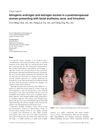 August 2009 in “International Journal of Dermatology”
 This case report describes a postmenopausal woman who experienced facial erythema, acne, and hirsutism due to excess androgen and estrogen levels.
May 2025 in “The Journal of Rheumatology” In this case report, researchers describe a rare instance of bullous lupus presenting with severe esophageal involvement in a 42-year-old woman, highlighting the significant diagnostic and therapeutic challenges encountered in such cases despite successful treatment with immunosuppressive therapy.
May 2026 in “Genetics and Molecular Research” This study reported significant differences in adverse drug reactions among five chemotherapeutic regimens for oropharyngeal cancer, highlighting nausea/vomiting, alopecia, mucositis, myelosuppression, constitutional symptoms, and dermatological toxicities across different treatments.
1 citations
,
December 2022 in “Jurnal Riset Kesehatan” This study found that family actions such as preparing preferred foods and managing routines helped cancer patients manage chemotherapy side effects at home.
 5 citations
,
July 2017 in “Skin appendage disorders”
5 citations
,
July 2017 in “Skin appendage disorders” This case report describes a 35-year-old man who developed an atypical DRESS syndrome after taking topiramate for migraine prevention, which resolved with drug withdrawal and symptomatic treatment.
1 citations
,
January 2026 in “International Journal of Dermatology” In this case series, three patients with advanced non-small cell lung cancer experienced severe skin eruptions and scarring alopecia after treatment with amivantamab, highlighting the critical need for prompt recognition and management of these adverse effects to minimize treatment interruptions.
6 citations
,
June 1986 in “The Journal of Dermatology” This report discusses a case of reticular erythematous mucinosis syndrome, highlighting minimal mucin deposition and significant lymphocytic infiltration around the hair follicle, contributing to the ongoing debate about its nature as a mucinosis.
 1 citations
,
June 2014 in “International Journal of Dermatology”
1 citations
,
June 2014 in “International Journal of Dermatology” This correspondence discusses follicular mucinosis in association with pregnancy but does not report new clinical results, instead calling attention to the observed connection.
May 2023 in “Advanced medical journal” In this study, researchers found that hair changes, particularly anagen effluvium, were the most common mucocutaneous side effects in cancer patients undergoing chemotherapy, occurring in 31.71% of cases, followed by skin, nail, and mucosal changes, highlighting the morbidity associated with antineoplastic drug side effects.
64 citations
,
January 2001 in “Pharmacotherapy The Journal of Human Pharmacology and Drug Therapy” This review discusses the diverse pharmacological activities of misoprostol across multiple health conditions but reports no new clinical data, highlighting potential applications beyond its traditional uses.
233 citations
,
March 2009 in “Journal of Clinical Oncology” In this study, among patients undergoing chemotherapy for breast or gynecologic cancers, smell and taste functions significantly decreased but largely recovered three months post-treatment, with taxane-based regimens causing more severe taste disturbances.
1 citations
,
May 2024 in “Dermatology Online Journal” In this case study, two middle-aged patients with pruritic scalp erosions were diagnosed with localized pemphigus vulgaris, which resolved without relapse after treatment with low-dose oral prednisone and intralesional triamcinolone acetonide.
 April 2016 in “Journal of Investigative Dermatology”
 This study identified mefloquine as a potent inducer of lethal ER stress that effectively eliminated vemurafenib-resistant and sensitive melanoma cells, suggesting its potential for repurposing as a melanoma treatment.
 5 citations
,
November 2007 in “British journal of nursing”
5 citations
,
November 2007 in “British journal of nursing” This article discusses the importance of nurses' understanding of topical emollient therapy for patients with eczema, but it does not provide new clinical results.
 24 citations
,
March 2015 in “Best Practice & Research in Clinical Obstetrics & Gynaecology”
24 citations
,
March 2015 in “Best Practice & Research in Clinical Obstetrics & Gynaecology” This review discusses physiological skin changes and specific dermatoses in pregnancy but reports no new clinical results, emphasizing careful diagnosis and management due to potential fetal risks in rare cases.
9 citations
,
October 2015 in “Cutaneous and ocular toxicology” This case report observed vemurafenib-induced pityriasis amiantacea, a scalp scaling reaction, in a patient with metastatic melanoma, which was managed symptomatically without altering vemurafenib treatment.
 April 2026 in “Frontiers in Medicine”
 This study analyzed data from the FDA Adverse Event Reporting System and found that enfortumab vedotin, used for urothelial carcinoma, is linked to various cutaneous adverse events, including severe reactions like Stevens–Johnson syndrome, typically occurring early in treatment and predominantly affecting elderly male patients.