 1 citations
,
October 2012 in “The Journal of Dermatology”
1 citations
,
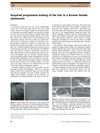
October 2012 in “The Journal of Dermatology” This letter to the editor describes a case of acquired progressive kinking of the hair in a Korean female adolescent, but no new research findings are reported.
1 citations
,
January 2010 in “Han-guk hyeonmigyeong hakoeji/Applied microscopy” This study found that straight permed hair retains more weight than virgin hair during burning at higher temperatures, with distinct differences in morphological changes observed through thermal analysis and microscopy.
1 citations
,
September 2008 in “International Journal of Cosmetic Science” This study found that high-charge-density cassia HPTC improves deposition efficiency and conditioning benefits in shampoos compared to quaternized guar, suggesting its potential as an alternative or adjunct conditioning agent.
1 citations
,
February 2003 This study found that UVB radiation primarily causes hair protein loss, while UVA radiation mainly contributes to hair color changes, with no significant differences in mechanical properties observed between photooxidized and non-irradiated hair.

In this 24-week study, oral supplementation with hydrolyzed low-molecular-weight porcine placental peptides significantly improved scalp elasticity, hair diameter, tensile strength, surface roughness, and luster compared to placebo, suggesting its potential as a nutritional intervention for age-related scalp and hair changes.
January 2026 in “Journal of Cosmetic Dermatology” This study observed that repeated low-depth microneedling in patients with androgenetic alopecia led to initial hair improvement but subsequently caused hair-shaft fragility and breakage, suggesting iatrogenic damage.
In this study, hair composted with various organic materials, and inoculated with Bacillus subtilis, showed improved degradation and nutrient release, but temperatures below 33℃ limited composting efficiency, suggesting bacterial augmentation could aid sustainable management of keratin-rich waste.
 April 2023 in “The journal of investigative dermatology/Journal of investigative dermatology”
 This study suggests that structural changes in the TRPV3 channel are linked to severe skin conditions like Olmsted syndrome, with differences observed between heat-activated and resting states.
April 2022 in “International journal of green and herbal chemistry” This article discusses the green synthesis of silver nanomaterials using Tridax procumbens and reports no new clinical findings.
 January 2021 in “American journal of dermatological research and reviews”
 This study concluded that myositis in the reported case was caused by T-cell large granular lymphocytic leukemia, not dermatomyositis.
January 2018 in “프로그램북(구 초록집)” This study found that ceramide-based essence cream, particularly those with stearyl and stearyl-cholesterol, improved the ultrastructure of damaged hair cuticles.
 February 2017 in “International Journal on Advanced Science, Engineering and Information Technology”
 This study found that hair follicle stem cells can proliferate and differentiate into keratinocytes on chitosan skin-engineered templates, suggesting potential applications in regenerative medicine.
 July 2016 in “Indian journal of science and technology”
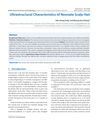
 In this study, researchers found that neonate hairs have a distinct microstructure with no medulla and smaller hair follicles compared to adult hairs.
February 2013 in “Journal of the American Academy of Dermatology” Uncombable hair syndrome causes dry, frizzy hair that can't be combed flat, seen in a young child.
 September 2011 in “Clinical Biochemistry”
 The demineralized bone matrix scaffold is better for cell attachment than the mineralized bone allograft.
June 2010 in “Chinese Journal of Dermatology” This study found a novel R430Q gene mutation in hHb6, which may be linked to the hereditary hair disorder monilethrix in the examined family.
July 2009 in “International Journal of Cosmetic Science” This study found that 53% of Japanese women have straight hair while 47% have varying degrees of curved hair, with distinct structural differences observed in the internal makeup of curved hair fibers.
March 2007 in “International Journal of Cosmetic Science” This study found that Indian and Chinese black hair, with higher melanin content, resist photochemical degradation better than European hair, which has lower melanin levels, when exposed to dry, hot climates.
In this study, three cases of young men using finasteride for five years showed altered sperm morphology and motility issues, with partial improvement observed after discontinuation.
 August 2005 in “Microscopy and Microanalysis”
 Polymethylene wax in hair relaxers makes hair smooth and shiny with less damage.
 January 2005 in “Seibutsu Butsuri/Seibutsu butsuri”
 Chemical treatments damage hair more than UV exposure, making it thinner and less flexible.
January 2005 in “Journal of Zhejiang University(Sciences Edition)” This study observed that Yuyi hairless mice develop alopecia shortly after birth, with the skin eventually thickening and forming folds, and hair failing to regrow as they age.
January 2000 in “Zhongguo yixue wulixue zazhi” This study observed that human hair keratin showed distinct morphological features depending on the dissolution speed, which could have potential applications in clinical settings for developing self-tendons.
February 1999 in “The anatomical record” This study observed defects in hair cuticle cross-linking in some, but not all, mouse mutants with sparse or structurally unsound hair.
January 1996 in “대한피부과학회지” This study found that permanent dye application causes initial swelling and subsequent degradation of the hair cuticle, with recovery taking more than 8 weeks to approach pre-treatment conditions.
January 2021 in “Social Science Research Network” In this study, researchers developed and optimized ethanol-free microemulsion systems for transdermal finasteride delivery, finding that the predicted formulations closely matched their physical and chemical characteristics, potentially reducing adverse effects compared to oral administration.
 February 2016 in “DOAJ (DOAJ: Directory of Open Access Journals)”
 This study found that freeze-dried finasteride nanoparticles significantly improved the dissolution rate and pharmacokinetic parameters compared to pure drug formulations, suggesting enhanced stability and solubility for poorly water-soluble drugs.
 15 citations
,
January 1992 in “Sen'i Gakkaishi”
15 citations
,
January 1992 in “Sen'i Gakkaishi” This study suggests that the cell membrane complex in hair cuticles contains hydrophilic regions with disulfide bonds allowing polymer uptake and hydrophobic lamella-like lipid layers.
 12 citations
,
January 2014 in “Cell structure and function”
12 citations
,
January 2014 in “Cell structure and function” This study suggests that specific combinations of human type I and II hair keratins, particularly K35-K85 and K36-K81, have distinct in vitro assembly properties that are significant for macrofibril formation.
 3 citations
,
June 2019 in “Journal of cosmetic dermatology”
3 citations
,
June 2019 in “Journal of cosmetic dermatology” In this study, tresses treated with pH 1.0 acid straightener showed better straightening but more damage to hair properties compared to those treated with pH 2.0.