10 citations
,
February 2013 in “PLoS ONE” This study found that neprilysin (NEP) activity and expression play a significant role in regulating the hair cycle in rats, with a specific inhibitor suppressing hair growth in mice.
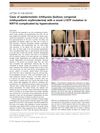 October 2011 in “Journal of dermatology”
 A man with a rare skin condition and a new gene mutation developed high calcium levels due to his treatment.
 5 citations
,
July 1999 in “JEADV. Journal of the European Academy of Dermatology and Venereology/Journal of the European Academy of Dermatology and Venereology”
5 citations
,
July 1999 in “JEADV. Journal of the European Academy of Dermatology and Venereology/Journal of the European Academy of Dermatology and Venereology” The researchers reported that applying proteolytic enzymes to mice skin negatively affected hair follicles, leading to degeneration and potential impairment of stem cells from the bulge area.
10 citations
,
January 1925 in “Archives of Dermatology” This article discusses a historical case of a rare skin disorder involving alopecia and follicular plugs reported in 1907; it presents no new findings.
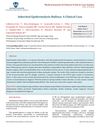 January 2020 in “Medical journal of clinical trials & case studies”
 This report details a case of dystrophic epidermolysis bullosa in a 37-year-old male with a recessive mutation in the CLO7A1 gene, affecting type VII collagen.
 September 2022 in “Anais Brasileiros de Dermatologia”
 This case study reports a female adult patient with annular elastolytic giant cell granuloma on the scalp, observed through dermoscopy showing multiple yellowish/orange follicular dots against an erythemato-whitish background.
 June 2001 in “Proceedings of SPIE”
 The authors concluded that low energy laser therapy may serve as a useful complementary treatment for skin diseases such as lichen planus, infectious finger pulpits, scalp alopecia, and crural ulcers.
 10 citations
,
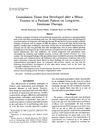
March 1990 in “The Journal of Dermatology”
10 citations
,
March 1990 in “The Journal of Dermatology” In this study, a psoriatic patient developed retinoid-induced granulation tissue after long-term oral etretinate therapy, suggesting prolonged use may lead to delayed wound healing.
22 citations
,
March 2023 in “Bioengineering” This review discusses stem cell therapy as a promising treatment for epidermolysis bullosa, highlighting preliminary successes in treating skin lesions but noting the need for further research on effectiveness and safety.
16 citations
,
October 2013 in “Anais Brasileiros de Dermatologia” In this case report, an elderly woman with erosive pustular dermatosis of the scalp showed complete closure of eroded areas after treatment with prednisone and topical tacrolimus, resulting in stable scarring alopecia.
 May 2020 in “JOJ Dermatology & Cosmetics”
 This report describes a rare case of Trichostasis Spinulosa on the heel, an uncommon location for this type of lesion.
 November 2022 in “Journal of Investigative Dermatology”
 This study identified 15 Iranian patients with PLEC variants linked to various plectinopathies and highlighted a novel association between a homozygous nonsense variant in PLEC and a rare combination of disorders including EB pruriginosa, muscular dystrophy, and congenital myasthenic syndrome.
September 2022 in “Health and Medical Journal” This case report describes a 19-year-old woman with systemic lupus erythematosus and telogen effluvium, who experienced new hair growth and increased hair density after 90 days of treatment with 2% topical minoxidil and oral keratin-based antioxidants.
 1 citations
,
April 2025 in “Clinical Cosmetic and Investigational Dermatology”
1 citations
,
April 2025 in “Clinical Cosmetic and Investigational Dermatology” This study reports two cases of erlotinib-induced erosive pustular dermatosis of the scalp in patients with non-small cell lung cancer, emphasizing the need for dermatological monitoring during EGFR inhibitor therapy.
 137 citations
,
October 2009 in “The American journal of pathology”
137 citations
,
October 2009 in “The American journal of pathology” This study found that matriptase, a membrane serine protease, is crucial for maintaining multiple types of epithelial tissues in mice, with its absence leading to severe organ dysfunction and increased permeability.
 1 citations
,
June 2019 in “Current developments in nutrition”
1 citations
,
June 2019 in “Current developments in nutrition” This case study reports that pancreatic enzyme replacement and fatty acid supplementation improved symptoms of fat malabsorption and essential fatty acid deficiency in a patient with EDS-4.
 9 citations
,
July 2021 in “Dermatology and Therapy”
9 citations
,
July 2021 in “Dermatology and Therapy” This review highlights promising recent advances in therapies for epidermolysis bullosa, including gene therapy and stem cell approaches, but reports no definitive cures and emphasizes the need for further research.
 2 citations
,
June 2021 in “PubMed”
2 citations
,
June 2021 in “PubMed” In this study, researchers re-evaluated biopsies from elderly patients with erosive pustular dermatosis of the scalp and identified plasma cell and lymphocyte infiltrates as key histological indicators for diagnosis, observing that high-potency topical steroids effectively healed the lesions.
 January 2018 in “The Kaohsiung journal of medical sciences”
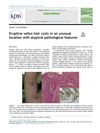
 This case report describes an atypical presentation of eruptive vellus hair cysts on the elbows, where standard diagnostic techniques were unreliable due to the loss of cystic structural integrity.
 11 citations
,
January 1993 in “Dermatology”
11 citations
,
January 1993 in “Dermatology” In this study, researchers found histopathological similarities between L-tryptophan eosinophilic myalgia syndrome and idiopathic eosinophilic fasciitis, with certain unique inflammatory features present in the former.
June 2005 in “Journal of Investigative Dermatology” A bull with a gene mutation was asymptomatic, synthetic retinoids cause hair loss, and new therapeutic targets were identified for skin diseases.
 July 1976 in “Archives of Dermatology”
 This correspondence reports that using cantharidin on warts can result in lymphangitis, and dermatologists should consider all potential complications of treatments.
This paper provides a comprehensive list of drugs including Ethamolin, Placidyl, Trecator-SC, Zarontin, Peganone, Didronel, and Lodine, detailing their indications, potential interactions, and reported adverse skin reactions, but it presents no new research findings.
January 2024 in “Frontiers research topics” This research abstract outlines the innovative approach of the Frontiers journal series, which aims to transform academic publishing by providing open access, interdisciplinary journals that employ a rigorous peer-review process to serve both scholarly communities and the public.
 4 citations
,
June 2021 in “Wounds-a Compendium of Clinical Research and Practice”
4 citations
,
June 2021 in “Wounds-a Compendium of Clinical Research and Practice” This study observed that erosive pustular dermatosis of the scalp in elderly patients was effectively treated with high-potency topical steroids, with plasma and lymphocyte dermal infiltrates helping to confirm diagnosis.
 August 2007 in “Microscopy and Microanalysis”
 Hair fibers break by cuticle cell slipping, shape changing, cuticle fraying, and surface cracking when stretched under specific conditions.
9 citations
,
March 2019 in “Molecular & cellular proteomics” In this study, around 1% of proteins in skin fibroblasts significantly changed in response to reductive stress, affecting collagens and MAPK signaling pathways.
1 citations
,
January 1984 December 2014 in “Belarusian State Pedagogical University repository (Belarusian State Pedagogical University)” This study suggests that β-Catenin and extracellular matrix components interact in a regulatory loop to influence fibroblast behavior and wound repair properties in dermal tissue.
8 citations
,
July 2023 in “Inflammation and Regeneration” This study found that ALKBH5 plays a critical role in wound re-epithelialization by enhancing the stability of PELI2 mRNA, and its absence delays wound healing. Supplementation with PELI2 can partially rescue this delay, pointing to potential new therapies for stubborn wounds.