 2 citations
,
August 2013 in “The Lancet. Diabetes & endocrinology”
2 citations
,
August 2013 in “The Lancet. Diabetes & endocrinology” This report discusses the FDA's third denial of approval for Aveed, a long-acting testosterone injection by Endo Pharmaceuticals, citing continued safety concerns including severe side effects.
 June 2019 in “Reactions Weekly” August 2002 in “Inpharma Weekly”
  1 citations
,
October 2023 in “Journal of clinical psychopharmacology”
1 citations
,
October 2023 in “Journal of clinical psychopharmacology” In this case report, a young male developed bilateral pleural effusion and persistent fever after starting divalproex sodium for bipolar disorder, which improved upon discontinuation of the drug, suggesting a possible link between divalproex sodium and pleural effusion.
August 2026 in “Revista Ibero-Americana de Humanidades, Ciências e Educação” This narrative review suggests that the association between weight-loss medications and telogen effluvium is primarily due to metabolic changes from rapid weight loss, rather than a direct pharmacological effect on hair follicles.
March 2023 in “Brazilian Journal of Health Review” This study demonstrated that the pharmacokinetic profiles of finasteride and doxazosin remain bioequivalent when administered in combination compared to when each drug is taken alone.
 8 citations
,
July 1990 in “Archives of Dermatology”
8 citations
,
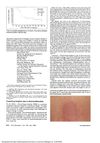
July 1990 in “Archives of Dermatology” This case report details a fixed-drug eruption in a woman linked to the use of dextromethorphan, marking it as a previously unreported skin reaction to this medication.
October 2025 in “Reactions Weekly” March 2023 in “Oxford University Press eBooks” January 2011 in “Reactions Weekly” 1 citations
,
March 2009 in “The Journal of Urology” This review discusses trials on therapies for benign prostatic hyperplasia and reports that combination treatment is more effective than monotherapy for symptom relief and slowing disease progression in men with moderate to severe symptoms and enlarged prostate glands.
2 citations
,
January 2012 in “Journal of Clinical & Experimental Dermatology Research” This study found that adding fexofenadine to DPCP treatment in non-atopic Alopecia areata patients did not significantly improve hair regrowth, but it did significantly reduce treatment-related discomfort.
 August 2024 in “medRxiv (Cold Spring Harbor Laboratory)”
 This study found that finasteride use is associated with both known and new adverse events, which vary by gender and age, as well as some events not previously listed in the drug insert.
 17 citations
,
June 1996 in “The Journal of Steroid Biochemistry and Molecular Biology”
17 citations
,
June 1996 in “The Journal of Steroid Biochemistry and Molecular Biology” In this study, FCE 28260 showed greater potency than finasteride in inhibiting 5α-reductase enzymes and reducing prostate DHT levels in rats.
 6 citations
,
December 2011 in “Drug Research”
6 citations
,
December 2011 in “Drug Research” This study concluded that Flaxin tablets and the reference formulation are bioequivalent in terms of absorption rate and extent when administered as a single 5 mg dose to healthy male volunteers.
November 2025 in “Drug Testing and Analysis” This study investigated the metabolic pathways of epristeride, a new Type II 5α‐reductase inhibitor, using in vitro models and found that its metabolites show significant interactions with key proteins, suggesting implications for its role in doping control.
January 2018 in “Digital Commons - PCOM (Philadelphia College of Osteopathic Medicine)” This systematic review of three randomized controlled trials found that topical eflornithine is an effective adjunctive therapy for reducing unwanted facial hair in women with hirsutism, with benefits lasting at least six months, although efficacy may diminish over time.
 39 citations
,
May 2011 in “Movement Disorders”
39 citations
,
May 2011 in “Movement Disorders” Finasteride may help reduce symptoms in male Tourette syndrome patients.
186 citations
,
December 2011 in “Molecules” This study reported that while no synthesized compounds surpassed finasteride in 5α-reductase inhibitory activity, certain 4-azasteroid-2-oximes exhibited notable inhibition.
 June 2026 in “Frontiers in Medicine”
 This study conducted a large-scale comparison using FAERS data to assess the post-marketing safety profiles of spironolactone, eplerenone, and finerenone, finding unique adverse event patterns for each drug and highlighting the need for personalized safety monitoring and further investigation in other pharmacovigilance databases.
March 2005 in “The Nurse Practitioner” This update provides information on new drug approvals but does not offer new clinical research findings.
July 2010 in “PharmacoEconomics & Outcomes News” January 2007 in “Zhōnghuá yàoxué zázhì” This study concluded that two exemestane preparations are bioequivalent, using a high-performance liquid chromatographic mass spectrometric method to measure concentrations in human plasma.
8 citations
,
November 2011 in “Journal of Medical Case Reports” This case report describes a 23-year-old Asian woman with fluoxetine non-responsive trichotillomania who showed significant improvement with bupropion and cognitive behavior therapy, though confirmation in larger trials is needed.
1 citations
,
January 2002 in “Yaoxue jinzhan” This study found that Epristeride and Finasteride reduced prostate development and testis weight in male rats, but only Finasteride appeared to impact reproductive function.
 115 citations
,
January 2001 in “American journal of clinical dermatology”
115 citations
,
January 2001 in “American journal of clinical dermatology” This study found that eflornithine 15% cream reduced unwanted facial hair growth more effectively than a placebo in women with hirsutism, but hair growth returned to pretreatment levels within 8 weeks of stopping treatment.
 7 citations
,
October 2017 in “Behavioural Pharmacology”
7 citations
,
October 2017 in “Behavioural Pharmacology” This study found that the antidepressant-like effect of fluoxetine in mice was only observed when a 5-minute pretest session was conducted, and this effect was blocked by the TSPO antagonist PK11195.
4 citations
,
November 2001 in “Journal of Neuropsychiatry” This case report from the University of Alabama, Birmingham describes a rare paradoxical reaction of increased agitation and hyperactivity in a patient with schizoaffective disorder treated with divalproex sodium.
 August 2007 in “Drug and therapeutics bulletin”
 This article reviews the prescription-only cream eflornithine for managing facial hirsutism in women and reports no new clinical results; the authors evaluate its potential role in treatment.
 April 2026 in “Brain Sciences”
 This pharmacovigilance study analyzed FAERS data and found that finasteride is more frequently associated with neuropsychiatric reactions like depression and suicide risk, especially in younger men using it for alopecia, compared to dutasteride.