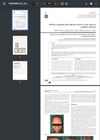
In this study, the authors emphasize the importance of accurately diagnosing congenital atrichia with papules—a condition marked by hair loss and papular skin lesions—differentiating it from other similar disorders to prevent unnecessary treatments and inform families about its benign but irreversible nature.
 1 citations
,
November 2023 in “Curēus”
1 citations
,
November 2023 in “Curēus” This case report describes a young male with trachyonychia with associated hypertrophic cutaneous lichen planus, reticular oral lichen planus, and nail lichen planus. The diagnosis was aided by dermoscopy and histopathology, highlighting the importance of accurate diagnosis for effective treatment and prognosis.
5 citations
,
May 2017 in “Journal of dermatological science” This study reviewed the genetic and phenotypic aspects of Olmsted syndrome, highlighting pathogenic mutations in TRPV3 and MBTPS2 genes and their association with specific skin manifestations like symmetrical keratoderma and hyperkeratotic plaques.
81 citations
,
March 2006 in “Journal of Investigative Dermatology” Mutations in the DSG4 gene cause specific hair and scalp issues.
 12 citations
,
November 1987 in “Pediatric dermatology”
12 citations
,
November 1987 in “Pediatric dermatology” This report identified longitudinal grooves in the hair shafts of four children, diagnosing them with uncombable-hair syndrome.
28 citations
,
June 1998 in “Clinical Genetics” This report describes a case of Ambras syndrome with a chromosomal inversion on chromosome 8, similar to a previous case, but not associated with altered androgen levels.
 24 citations
,
May 2012 in “International Journal of Dermatology”
24 citations
,
May 2012 in “International Journal of Dermatology” This review discusses the various causes and associations of eyelash trichomegaly, including congenital syndromes, acquired conditions, and drug effects, without reporting new clinical results.
 December 2025 in “Cureus”
 In this report, successful management of inherited acrodermatitis enteropathica, a zinc absorption disorder due to an SLC39A4 gene defect, was demonstrated in an infant through zinc supplementation.
April 1977 in “Pediatric Research”  August 2025 in “International Journal of Research in Dermatology”
 This case report highlights an atypical presentation of acrodermatitis enteropathica in an 18-year-old male, exhibiting symptoms like erythrokeratoderma variabilis with a positive response to high-dose oral zinc, underscoring the importance of considering zinc deficiency in unusual skin conditions.
 1 citations
,
June 2022 in “Movement disorders clinical practice”
1 citations
,
June 2022 in “Movement disorders clinical practice” This study reports a unique case of trichotillomania as a presenting sign in a patient with neurological Wilson's disease, confirmed by genetic testing and copper abnormalities.
 5 citations
,
March 2009 in “Pediatric Dermatology”
5 citations
,
March 2009 in “Pediatric Dermatology” The study found that pili bifurcati causes hair to intermittently split into two branches, each with its own outer layer.
September 2016 in “Journal of Dermatological Science” Polarizing light microscopy can easily and reliably diagnose congenital keratinizing disorders like Netherton syndrome.
1 citations
,
June 2022 in “Tidsskrift for Den norske legeforening” A young boy's uncombable hair is due to a rare genetic condition that usually improves over time.
27 citations
,
June 2015 in “Journal of Investigative Dermatology” This study found that mutations in the TRPV3 gene can cause a broader range of symptoms in Olmsted syndrome than previously recognized, including severe palmoplantar keratoderma without other classic features.
46 citations
,
March 2005 in “Endocrinology” In this study, ectoderm-targeted transgenic mice with glucocorticoid receptor overexpression exhibited multiple epithelial defects, suggesting the role of NF-kappaB and p63 dysfunction in ectodermal dysplasia syndromes.
 7 citations
,
July 2011 in “Survey of Ophthalmology”
7 citations
,
July 2011 in “Survey of Ophthalmology” This guide provides a comprehensive approach to diagnosing periocular hair disorders, which can range from benign conditions to those posing serious health risks.
April 2016 in “Journal of Investigative Dermatology” Mutations in the TSPEAR gene cause a new form of ectodermal dysplasia affecting hair and tooth development.
November 2023 in “International Journal of Trichology” This case report describes a male child with alopecia areata and renal dysgenesis, highlighting a possible coincidental association that may require future genetic investigation.
1 citations
,
January 2025 in “Pediatria i Medycyna Rodzinna” This case report of a 16-month-old girl with acrodermatitis enteropathica, who showed atypical symptoms and normal zinc serum levels, highlights how genetic testing and zinc supplementation led to marked improvement in her condition, underscoring the importance of accurate diagnosis in metabolic disorders.
4 citations
,
January 2019 in “Indian Dermatology Online Journal” This report discusses two cases of porokeratotic eccrine ostial and dermal duct nevus and porokeratotic eccrine and hair follicle nevus, suggesting they may represent a single clinical entity, but reports no therapeutic outcomes.
 April 2018 in “Nasza Dermatologia Online”
 This case report describes an 8-year-old child with Down's syndrome who presented with eruptive syringomas on the face and hand.
23 citations
,
July 2016 in “JAMA Ophthalmology” This study observed that CDH3-related congenital hypotrichosis with juvenile macular dystrophy presents with childhood-onset progressive chorioretinal atrophy and universally thin and sparse scalp hair.
 1 citations
,
January 2020 in “Skin appendage disorders”
1 citations
,
January 2020 in “Skin appendage disorders” This case study documents the co-existence of trichorhinophalangeal syndrome and loose anagen syndrome in a patient, highlighting a previously unreported association between the two conditions.
This study found that mutant Cx43 impairs fibroblast function during wound healing and reduces hair follicle cell proliferation, likely contributing to hair growth defects in ODDD patients.
November 2023 in “Вопросы современной педиатрии” This study reported that genetic testing is crucial for accurately diagnosing hypotrichosis, especially in cases with subtle symptoms or coexisting severe atopic dermatitis, as demonstrated in a young girl with a DSG4 gene mutation.
74 citations
,
October 2012 in “The American Journal of Human Genetics” This study found that loss-of-function mutations in the HOXC13 gene cause autosomal-recessive pure hair and nail ectodermal dysplasia, emphasizing its role in hair and nail development.
 109 citations
,
October 2007 in “American Journal of Human Genetics”
109 citations
,
October 2007 in “American Journal of Human Genetics” This study found that postnatal treatment with recombinant EDA normalized adult teeth, improved sweating, and restored normal lacrimation in dogs with XLHED, suggesting its potential as a treatment for the condition.
 July 2018 in “Kidney international”
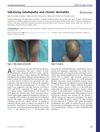
 This case study describes a 9-year-old girl with a homozygous EGFR gene mutation, presenting with tubulopathy and chronic dermatitis, whose ongoing symptoms and management offer insights into this rare genetic condition.
April 2011 in “www.virtualization.info” This report describes a case of trachyonychia with associated various types of lichen planus in a young male, highlighting the importance of accurate diagnosis for effective treatment.