 1 citations
,
April 2023 in “Frontiers in Genetics”
1 citations
,
April 2023 in “Frontiers in Genetics” This report on individuals with AEBP1-related classical-like EDS confirmed previous findings and identified hair loss as a potential characteristic feature of this rare condition for the first time. Additionally, cardiovascular complications observed in some individuals suggest that cardiovascular monitoring may be necessary.
 April 2020 in “International journal of research in dermatology”
 This case report presents an 8-year-old girl with congenital atrichia, marked by complete hair loss and papular lesions, linked to mutations in the human hairless gene.
 12 citations
,
January 2005 in “Pediatric Dermatology”
12 citations
,
January 2005 in “Pediatric Dermatology” Fox Fordyce disease might be more common in prepubertal girls than thought and can be managed with treatment.
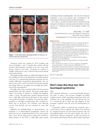
January 2026 in “Acta Dermato Venereologica” This source reports that four weeks of dupilumab treatment led to notable improvement in skin lesions, including multiple erythematous patches and papules on the face, back, and limbs.
 4 citations
,
February 2014 in “Journal of the European Academy of Dermatology and Venereology”
4 citations
,
February 2014 in “Journal of the European Academy of Dermatology and Venereology” Early diagnosis of hair tourniquet syndrome saved a baby's toe from being lost.
 4 citations
,
January 2014 in “Indian dermatology online journal”
4 citations
,
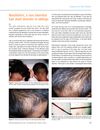
January 2014 in “Indian dermatology online journal” This article discusses the genetic hair disorder monilethrix, characterized by beaded, fragile hair due to defective keratin genes, and reports no effective treatment currently available; variability in severity was noted among affected siblings.
 January 2026 in “Cosmoderma”
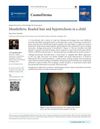
 In this clinical case study, a 9-year-old girl was diagnosed with monilethrix, a hereditary hair shaft disorder characterized by weak, beaded hair, with management focusing on minimizing hair trauma.
8 citations
,
January 2014 in “Indian Journal of Paediatric Dermatology” This case report describes a 4-year-old boy with congenital alopecia characterized by complete irreversible hair loss and papular lesions associated with keratin-filled cysts.
 March 2023 in “JAAD case reports”
 This article reviews the genetic foundations of keratins in maintaining epithelial tissue integrity and links specific keratin variants to diverse ichthyosis forms, without presenting new clinical findings.
4 citations
,
April 2012 in “The journal of investigative dermatology/Journal of investigative dermatology” This study developed a mouse model lacking keratin 16 to replicate palmoplantar lesions, which may help uncover the molecular mechanisms driving these lesions in pachyonychia congenita and focal non-epidermolytic palmoplantar keratoderma.
3 citations
,
June 2004 in “Työväentutkimus Vuosikirja” This article reviews the roles of several signaling pathways and molecules, including FGFs, Hh, Notch, TGF, and Wnt, in the development of teeth and hair follicles, but reports no new findings.
 18 citations
,
December 2006 in “Clinical dysmorphology”
18 citations
,
December 2006 in “Clinical dysmorphology” This article reviews the case of a 2-year-old boy with rhombencephalosynapsis and considers its potential links to Gomez–López-Hernández syndrome, suggesting further research into its genetic causes; no new clinical results are reported.
7 citations
,
May 1988 in “International Journal of Dermatology” This case report describes an 18-year-old man with pili annulati, characterized by a "shagreened" appearance of the hair shaft with alternate bright and dark bands and wide holes throughout the cortex.
 2 citations
,
May 2021 in “Case reports in dermatological medicine”
2 citations
,
May 2021 in “Case reports in dermatological medicine” This report describes a 28-year-old male with type 1 diabetes who presented with acrodermatitis enteropathica symptoms, highlighting potential challenges in blood glucose control linked to zinc deficiency.
39 citations
,
September 2018 in “American Journal of Medical Genetics Part A” This case report describes a 32-month-old girl with a newly identified pediatric disorder linked to a de novo mutation in the ODC1 gene, mirroring symptoms seen in a transgenic mouse model.
 4 citations
,
October 2008 in “International Journal of Dermatology”
4 citations
,
October 2008 in “International Journal of Dermatology” This case report highlights a rare presentation of hair-thread tourniquet syndrome in a two-year-old child, emphasizing that prompt identification and removal of the constricting fiber is crucial for successful treatment and prevention of tissue damage.
 6 citations
,
August 1993 in “Archives of Dermatology”
6 citations
,
August 1993 in “Archives of Dermatology” This article describes the first documented case of acquired uncombable hair syndrome in a 39-year-old woman, contributing to the understanding of this rare condition.
5 citations
,
February 2015 in “Ophthalmic plastic and reconstructive surgery” This study describes two new types of dermal keratinous cysts of the eyelids, derived from the pilosebaceous apparatus, each presenting distinct management challenges.
5 citations
,
August 1925 in “Archives of dermatology” This article presents a case of an 8-year-old boy with Recklinghausen's disease showing features such as café-au-lait spots, alopecia, and developmental anomalies, but reports no new findings beyond observation.
4 citations
,
April 1983 in “The Journal of Dermatology” This case report describes a 15-year-old Japanese girl with juvenile hypothyroidism who developed hypertrichosis and hyperkeratosis due to a keratin plug inhibiting hair growth on her back and arms.
39 citations
,
July 1997 in “American Journal of Medical Genetics” This study confirmed linkage of Clouston syndrome in a large Indian family to the 13q11-12.1 region, suggesting it shares a genetic basis with French Canadian cases.
2 citations
,
September 2004 in “Experimental Dermatology” This study found that desmosomal adhesion plays a crucial role in epithelial morphogenesis and cell positioning, equivalent in importance to that of adherens junctions.
 July 2025 in “Dermatology Practical & Conceptual”
 Topical eyedrops may cause eyelash whitening and skin lightening around the eyes.
July 2021 in “Anais brasileiros de dermatologia/Anais Brasileiros de Dermatologia” This article reports on a family with six members diagnosed with monilethrix, highlighting varying degrees of alopecia linked to this rare hair shaft defect.
20 citations
,
August 2003 in “Clinical and Experimental Dermatology” In this study, a novel E583V missense mutation in the hairless gene was identified in an Italian family with atrichia with papular lesions, reinforcing the significance of zinc-finger and LXXLL domains in this condition.
23 citations
,
December 2008 in “Pediatric neurology” This study reports two new cases of Gomez-Lopez-Hernandez syndrome and suggests that trigeminal anesthesia and/or partial scalp alopecia may be key criteria for diagnosis.
7 citations
,
July 2006 in “Journal of cutaneous pathology” This case report documents the first known instance of an ectopic sebaceous gland and duct within a hair follicle in a 21-year-old male with persistent acneiform eruption.
16 citations
,
January 2010 in “Journal of Korean medical science/Journal of Korean Medical Science” This case report presents the first genetically confirmed case of acrodermatitis enteropathica in Korea, identifying compound heterozygous mutations in the SLC39A4 gene in an 8-month-old boy.
 October 2023 in “Indian dermatology online journal”
 This report describes a case study of a 23-year-old female exhibiting multiple trichodiscomas, a type of benign tumor of the hair follicular discs common in familial cases and potentially linked to Birt-Hogg-Dube syndrome, though genetic testing was not performed due to financial constraints.
 5 citations
,
January 2018 in “Acta Dermatovenerologica Alpina Pannonica et Adriatica”
5 citations
,
January 2018 in “Acta Dermatovenerologica Alpina Pannonica et Adriatica” This case study highlights congenital atrichia with papular lesions as a cause of total body hair loss, characterized by the absence of hair follicles and the presence of skin-colored papules.