April 2002 in “Postgraduate medicine” This case report describes a 4-year-old African American boy with tinea capitis characterized by itchy, scaly patches and hair loss, diagnosed through microscopic examination after initial treatments were only partially effective.
1 citations
,
June 2011 in “Journal of Dermatological Case Reports” This case report describes a 38-year-old patient with trichomycosis axillaris, successfully treated with shaving, 3% erythromycin cream, and clotrimazole powder.
12 citations
,
June 2011 in “Journal of Dermatological Case Reports” This case report describes successful treatment of trichomycosis axillaris, a bacterial infection of hair shafts, using shaving and topical antibiotics, resulting in complete odor elimination within weeks.
5 citations
,
July 1996 in “Journal of Cutaneous Medicine and Surgery” This study explains that while trichothiodystrophy and xeroderma pigmentosum share genetic defects, TTD patients primarily exhibit issues in transcription initiation, not the increased skin cancer risk seen in XP.
26 citations
,
May 1991 in “Clinical and experimental dermatology” In this study, oral etretinate resulted in increased hair length and loss of beading in a childhood monilethrix case, while the scalp's keratosis pilaris persisted.
1 citations
,
March 2022 in “JAAD case reports” This case report describes a rare occurrence of injection site reactions in a 77-year-old woman with eosinophilic fasciitis using subcutaneous methotrexate, marking the first documented instance in this patient population.
 May 2025 in “Pediatric Dermatology”
 This systematic review identified topical and oral minoxidil as the most effective treatments for monilethrix, but noted the varying efficacy of oral retinoids and other treatments.
 January 2018 in “Our Dermatology Online”
 This case report describes a carpenter who presented with contact dermatitis and trichopathy with whitish nodules in the axillary hair.
 22 citations
,
September 2015 in “Clinical lymphoma myeloma & leukemia/Clinical lymphoma, myeloma and leukemia”
22 citations
,
September 2015 in “Clinical lymphoma myeloma & leukemia/Clinical lymphoma, myeloma and leukemia” This review describes the various cutaneous manifestations of essential thrombocythemia and how treatments like hydroxycarbamide, interferon-alfa, and anagrelide may lead to skin complications, but does not report new clinical findings.
This report describes a 7-year-old girl with monilethrix who showed significant improvement while on acitretin treatment, but symptoms returned after stopping the medication.
 4 citations
,
December 2013 in “International Journal of Dermatology”
4 citations
,
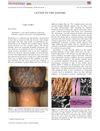
December 2013 in “International Journal of Dermatology” This correspondence discusses nasal sporotrichosis in children and does not report any clinical results.
 1 citations
,
February 2018 in “Australasian journal of dermatology”
1 citations
,
February 2018 in “Australasian journal of dermatology” Advanced imaging techniques are crucial for accurately diagnosing Monilethrix, a rare hair disorder.
1 citations
,
June 2016 in “Medicina” This article reviews monilethrix, a rare genetic hair disorder causing brittle hair and alopecia, and emphasizes the need for clinical diagnosis and characteristic tricoscopic findings.
 24 citations
,
July 1983 in “Clinical and Experimental Dermatology”
24 citations
,
July 1983 in “Clinical and Experimental Dermatology” Tigason improved hair growth in a boy with monilethrix without side effects.
43 citations
,
April 1996 in “Journal of Investigative Dermatology”  10 citations
,
May 1978 in “Acta Dermato Venereologica”
10 citations
,
May 1978 in “Acta Dermato Venereologica” In this study, seven patients with generalized toxic erythema developed sterile pustules localized to hair follicles or sweat ducts, with most having a history of medication, solvent exposure, or infection.
9 citations
,
October 1947 in “The Lancet” 1 citations
,
November 1947 in “The Lancet” 28 citations
,
October 2000 in “International Journal of Dermatology” This case report details a 37-year-old man who developed eosinophilic pustular dermatosis after previously resolving herpes zoster, with successful treatment using itraconazole and cycloproxolamine.
 January 2025 in “Journal of the European Academy of Dermatology and Venereology”
 This study highlights that Trichophyton mentagrophytes genotype VII, primarily transmitted sexually among men who have sex with men, has established itself in Europe, necessitating awareness and surveillance to prevent its spread.
3 citations
,
November 1998 in “Pediatrics in review” This article reviews various dermatophyte infections, particularly tinea capitis, and discusses their clinical presentations, diagnosis, and treatment, but reports no new clinical findings.
4 citations
,
May 2020 in “The journal of pediatrics/The Journal of pediatrics” This case report details the diagnosis of monilethrix in a 4-year-old boy, characterized by brittle hair and specific dermoscopic findings, and highlights the condition's hereditary nature and management through avoiding mechanical hair damage.
4 citations
,
November 1998 in “Pediatrics in review” This article reviews the characteristics and treatment options for various dermatophyte infections, highlighting that systemic treatment is essential for tinea capitis while topical treatments are generally effective for other types.
 14 citations
,
November 1987 in “Journal of The American Academy of Dermatology”
14 citations
,
November 1987 in “Journal of The American Academy of Dermatology” A woman developed a severe skin reaction called toxic epidermal necrolysis after taking the antibiotic cephalexin.
 62 citations
,
June 2015 in “Sexually Transmitted Infections”
62 citations
,
June 2015 in “Sexually Transmitted Infections” This study identifies sexual activity as a significant potential transmission route for Trichophyton interdigitale, causing tinea genitalis among travelers to South East Asia.
 April 2017 in “Journal of Investigative Dermatology”
 In this study, deep phenotyping of 68 patients with XPD gene defects successfully separated individuals by clinical diagnosis and survival status, potentially improving diagnosis and prognosis for xeroderma pigmentosum and trichothiodystrophy.
April 2012 in “Neuropediatrics” This article reviews the genetic and phenotypic characteristics of Trichothiodystrophy and discusses the associated DNA repair defects, but does not report new clinical findings.
 January 2013 in “The Pan African medical journal”
 This report describes two cases of monilethrix in Afghan siblings, detailing the hair disorder's clinical presentation and potential influences on hair growth, such as hormonal changes and iron supplementation.
 1 citations
,
August 1946 in “Archives of dermatology”
1 citations
,
August 1946 in “Archives of dermatology” This case presentation describes an adult with tinea capitis and related symptoms who was found to have a Trichophyton gypseum infection.
27 citations
,
April 2012 in “Pediatrics in review” This article reviews approaches to diagnosing and treating dermatophytosis and pityriasis versicolor, noting a significant change in the epidemiology of tinea capitis and highlighting the limitations of certain diagnostic techniques.